


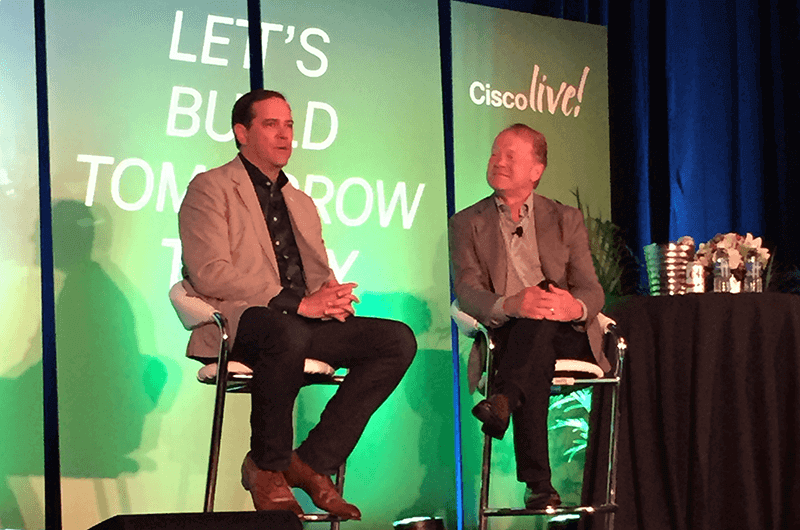
In a significant milestone for the networking giant, Chuck Robbins today marks his 10th anniversary as Chief Executive Officer of Cisco Systems, having assumed the role on July 26, 2015, following the retirement of longtime leader John Chambers. Robbins’ leadership has propelled Cisco into a new era of software-defined networking, subscription models, and cloud-native infrastructure, building on the foundation laid by Chambers during his two-decade tenure that drove historic expansion in global internet infrastructure.
John Chambers’ Era: Building the Internet’s Backbone
John Chambers led Cisco as CEO from January 1995 to July 2015, guiding the company through the dot-com boom and establishing it as a cornerstone of internet infrastructure. Under his leadership, Cisco’s annual revenue grew from approximately $1.9 billion to $49.2 billion. Chambers’ aggressive acquisition strategy—over 180 deals—enabled Cisco to dominate enterprise networking, security, IP telephony, and emerging markets like data centers, video, and wireless. His approach focused on integrating acquired companies’ cultures and technologies while retaining key talent, though not all deals succeeded in a challenging industry.
Chambers navigated Cisco through the dot-com bust of 2000-2001, when the company’s stock fell over 80%, by refocusing on profitability, cost-cutting, and innovations like voice over IP (VoIP). This resilience transformed Cisco into a diversified, efficient leader with soaring post-bust profitability. Known for his customer-first philosophy and dyslexia-informed empathetic leadership, Chambers fostered a collaborative culture. He also championed the “Internet of Everything,” anticipating the rise of connected devices and digital transformation.
Key Acquisitions Under Chambers
- Crescendo Communications (1993, $89M): Catalyst switches, marking Cisco’s entry into switching.
- StrataCom (1996, $4B): ATM and frame relay switching technology.
- Cerent Corp. (1999, $6.9B): Optical transport gear.
- ArrowPoint Communications (2000, $5.7B): Content switching.
- Scientific Atlanta (2005, $6.9B): Set-top boxes and video infrastructure.
- WebEx (2007, $3.2B): Online collaboration.
- Starent Networks (2009, $2.9B): Mobile packet core technology.
- Tandberg (2010, $3.3B): Video conferencing.
- Meraki (2012, $1.2B): Cloud-managed Wi-Fi and networking.
- Sourcefire (2013, $2.7B): Cybersecurity.
These acquisitions helped Cisco achieve market leadership in 18 product categories by 2015.
Product Milestones
Chambers’ era introduced transformative products, including the Catalyst switch line, Cisco IOS software for unified network management, the Unified Computing System (UCS) in 2009 for data center infrastructure, TelePresence video conferencing in 2006, and advancements in IP telephony that disrupted traditional phone systems.
Chuck Robbins’ Tenure: Modernizing for a Cloud and AI Era
Chuck Robbins, who joined Cisco in 1997 and led its global sales and partner organization, became CEO with a mandate to modernize Cisco’s portfolio for the cloud and software era. His leadership has emphasized recurring revenue through SaaS and security offerings, major operational restructuring, and adaptation to hybrid work and AI-driven network automation. Robbins has accelerated Cisco’s growth in cybersecurity and AI infrastructure, advocated for global privacy regulations, and prioritized workforce diversity and humanitarian policies.
“Cisco has always been about connecting the unconnected,” Robbins said in a 10th-anniversary reflection. “As we look to the future, our role in securely powering AI infrastructure and the next evolution of the internet is more critical than ever.”
🌐 Why it Matters: Cisco’s leadership transition a decade ago reflected a broader shift in the tech industry toward software-defined infrastructure and subscription-based services. Chambers’ legacy established Cisco as the backbone of the internet, while Robbins has worked to reposition it for a multi-cloud, AI-accelerated world.