


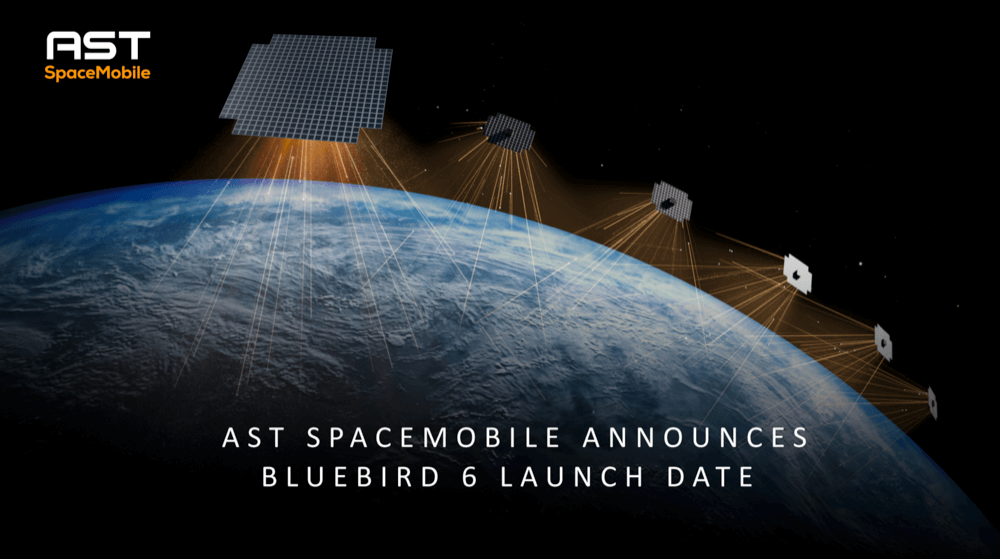
AST SpaceMobile scheduled the launch of BlueBird 6, its first next-generation direct-to-smartphone satellite, for December 15 from the Satish Dhawan Space Center in India. The U.S.-licensed satellite introduces a major hardware upgrade for the company’s space-based cellular broadband network, featuring a nearly 2,400-square-foot (222.9 m²) phased array—3.5× larger than previous BlueBirds and designed to deliver 10× more data capacity.
The deployment marks the opening phase of AST SpaceMobile’s accelerated production cycle. The company reports that components equivalent to 40 satellites are slated for completion by early 2026, supported by almost 500,000 square feet (46,450 m²) of global manufacturing and operations space, including 400,000 square feet (37,160 m²) in the United States. AST SpaceMobile employs nearly 1,800 people globally, with the large majority based in the U.S.
The launch of BlueBird 6 will initiate a rapid cadence of up to five orbital missions by the end of Q1 2026, with launches every one to two months as AST SpaceMobile targets a constellation of 45–60 satellites by the end of 2026. This configuration is designed to support continuous direct-to-phone cellular broadband coverage across the United States and select international markets. Launch schedules remain dependent on provider readiness and weather conditions.
• BlueBird 6 launches December 15 from India
• First next-gen satellite with 2,400 ft² (222.9 m²) phased array, 10× data capacity
• 3.5× size increase versus BlueBirds 1–5
• Up to five orbital launches planned by end of Q1 2026
• Targeting 45–60 satellites launched by end of 2026
• 500,000 ft² (46,450 m²) global facilities; 1,800 employees
• Public livestream available on AST SpaceMobile’s YouTube channel
“Our next-generation satellites will soon enable ubiquitous cellular broadband coverage direct to everyday smartphones from space,” said Abel Avellan, Founder, Chairman and CEO of AST SpaceMobile. “As an American company, we are proud to demonstrate U.S. leadership in space innovation while pioneering the next era of global connectivity.”
🌐 Analysis
AST SpaceMobile’s next-gen architecture significantly increases surface area and throughput, positioning the company to compete more directly with satellite-to-device efforts from SpaceX/Starlink, Globalstar/Apple, and Lynk Global. The timing aligns with AST’s recently expanded partnerships with U.S. carriers and its production build-out announced earlier this year. With the company targeting near-continuous U.S. coverage by 2026, industry attention will focus on launch execution, network performance, and integration with terrestrial operator cores.