


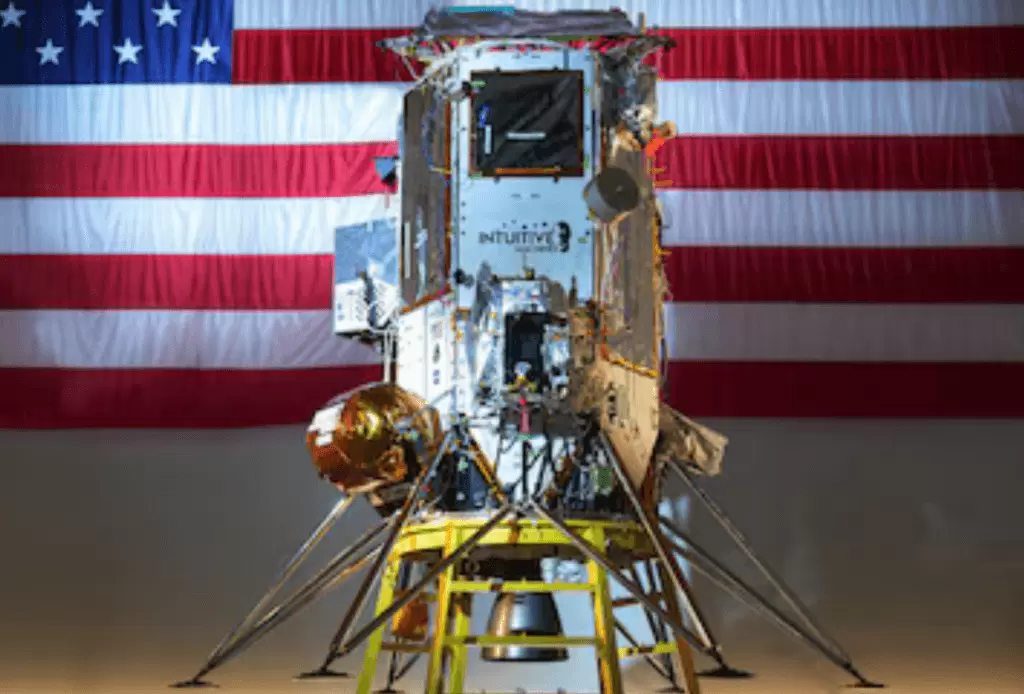
Nokia and Intuitive Machines have deployed the first cellular network infrastructure on the Moon as part of the IM-2 mission to the lunar south pole region. Although the Athena lander tipped over upon landing, significantly limiting available solar power, Nokia’s system briefly operated within a narrow 25-minute power window, successfully activating and transmitting telemetry data back to Earth. This demonstrated the fundamental capability of Nokia’s Lunar Surface Communications System (LSCS) and validated commercial terrestrial technology for use in harsh lunar environments.
The Nokia-built network briefly operated within the constrained power window resulting from the lander’s unfavorable solar panel orientation caused by its tipping over during landing. Despite these challenges, Nokia’s base station, radio, and core network components demonstrated operational readiness, communicating effectively with mission control in California. However, due to severe temperature drops experienced by Intuitive Machines’ Nova-C Micro-Nova Hopper module after the landing, the intended first cellular call on the lunar surface could not be established.
This demonstration is part of NASA’s Commercial Lunar Payload Services (CLPS) program, aimed at developing technology for sustained lunar exploration. Although not all mission objectives were met, Nokia validated that terrestrial-based cellular technology could function in the lunar environment, marking a critical advancement for future lunar and Mars communications infrastructure. Nokia and Intuitive Machines intend to apply these lessons in subsequent lunar missions.
• Nokia successfully activated the first lunar cellular network despite the Athena lander tipping over on touchdown.
• Network briefly operated during a limited 25-minute power window due to compromised solar panel positioning.
• Nokia’s Lunar Surface Communications System demonstrated full system functionality including telemetry transmissions to Earth.
• Communication validated between Nokia’s lunar equipment and Intuitive Machines’ ground station.
• Extreme lunar temperatures prevented establishing device-level cellular connection due to delayed module activation.
• NASA’s CLPS program facilitated the mission to advance technology for future space exploration.
• Nokia utilized commercial terrestrial technology hardened specifically for harsh lunar environments.