


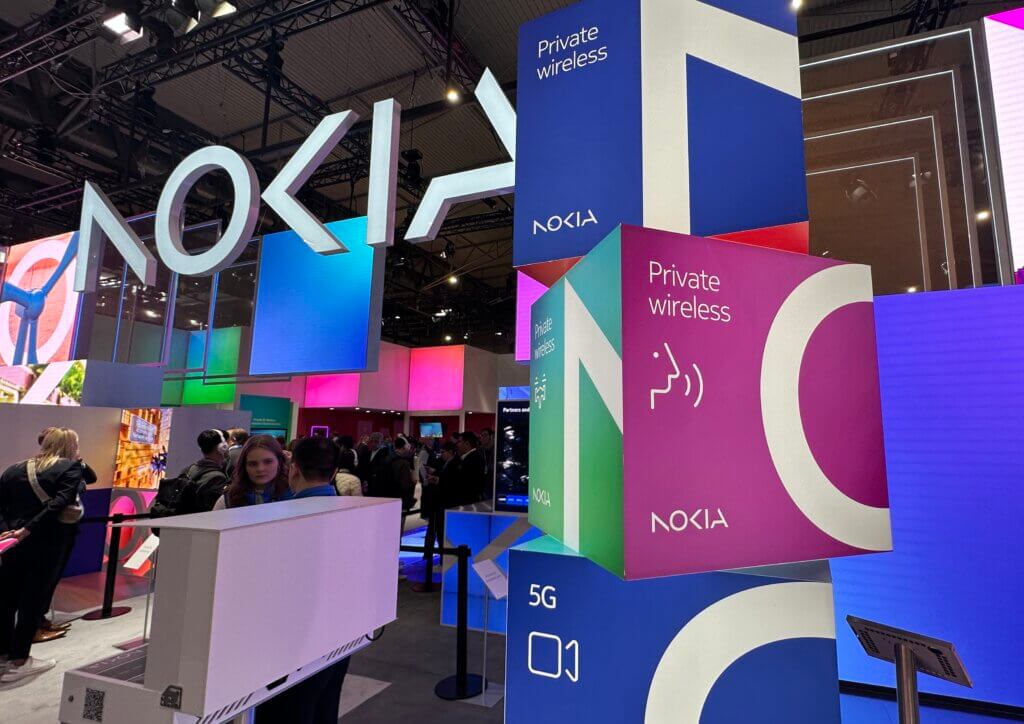
Nokia unveiled its new Autonomous Network Fabric (ANF), an integrated intelligence layer designed to drive network automation across all domains in an open, multi-vendor, cloud-native environment. The platform combines telco-trained AI models, large language models (LLMs), observability, explainable AI, and security to enable operators to evolve towards fully autonomous networks with minimal human intervention. Nokia also expanded its partnership with Google Cloud to make ANF deployable as a SaaS solution on public, private, and hybrid cloud platforms.
The Autonomous Network Fabric addresses the growing challenge of managing disaggregated and complex telecom networks—where legacy OSS systems, fragmented data silos, and isolated automation efforts often limit operational agility. The new solution brings unified data management, AIOps services, and autonomous domain services together into one architecture that can span RAN, transport, and core networks. It is aligned with TM Forum’s autonomous network framework and supports operators in progressing toward Level 4 and Level 5 automation maturity.
Key capabilities of Nokia’s ANF include 360-degree observability across network domains, shared data management using a modern data mesh architecture, explainable AI based on telco-trained LLMs, and the ability to mine and apply new automation patterns. The ANF is intent-driven, allowing operators to define high-level business outcomes—such as customer experience KPIs, SLA compliance, or energy-saving targets—without needing to specify how the system achieves those results. This approach helps streamline operations, reduce OPEX, and unlock new revenue streams from AI-powered network services.
The partnership with Google Cloud will leverage advanced AI tools such as Vertex AI and BigQuery to enrich Nokia’s platform with generative AI and agentic-driven workflows. Example use cases include real-time monitoring and anomaly detection, automated remediation of performance issues, dynamic scaling of network resources, and improved subscriber experience management. Nokia and Google Cloud are already collaborating with a major European operator to deploy ANF in production networks.
The ANF also offers flexible deployment models—supporting on-premises, private cloud, and public cloud environments—enabling operators to evolve toward full autonomy at their own pace. Nokia emphasized that the fabric is designed to be open and interoperable across multi-vendor, multi-technology environments, making it easier for CSPs to protect existing investments while modernizing their automation stack.
“In an era of increasingly complex and vulnerable networks, customers are eager for fully autonomous networks, which depend on good data. There is no good AI without good data. Nokia’s Autonomous Network Fabric lays the foundation and applies our deep network expertise and agentic AI-optimized workflows together with Google Cloud to accelerate customer outcomes,” said Kal De, SVP Product and Engineering, Cloud and Network Services, Nokia.
- Nokia Autonomous Network Fabric provides cross-domain observability, AI-driven automation, and explainable AI
- Features telco-trained LLMs, unified data mesh, and integrated security
- Supports TM Forum Level 4/5 autonomous network goals
- Delivered via expanded Nokia-Google Cloud partnership: SaaS, on-prem, hybrid cloud
- Use cases: real-time anomaly detection, automated remediation, elastic scaling, service monetization
- Designed to simplify operations, lower OPEX, enhance customer experience, and accelerate new service launches
- Fully open architecture supports multi-vendor, multi-cloud environments