


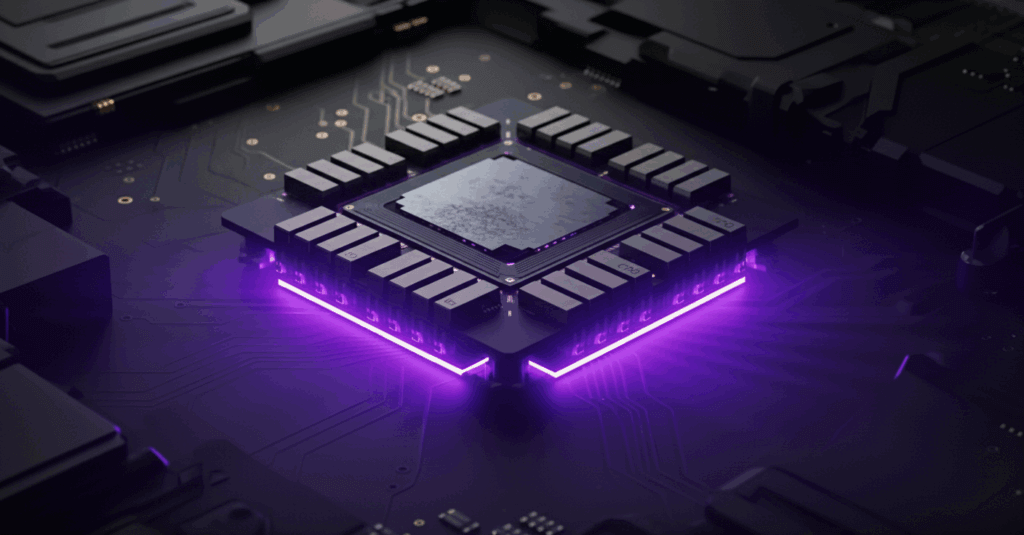
OpenAI has signed a multi-year collaboration with Broadcom to co-develop and deploy 10 gigawatts of OpenAI-designed AI accelerators and networking systems, marking one of the largest infrastructure partnerships in the company’s history. The new systems will be built around custom accelerators designed by OpenAI and connected entirely through Broadcom’s Ethernet-based scale-up and scale-out networking solutions. Deployment of full rack systems is scheduled to begin in the second half of 2026, with rollout continuing through 2029 across OpenAI facilities and partner data centers worldwide. Financial terms were not disclosed.
The collaboration extends OpenAI’s long-standing relationship with Broadcom, which already provides custom silicon, PCIe, and optical interconnects for leading AI infrastructure. The new systems will integrate Broadcom’s Ethernet switching, SerDes, and optical technologies to achieve high-bandwidth, power-efficient interconnects suitable for AI model training and inference at global scale. Both companies describe the initiative as essential to meeting exploding AI compute demand and to enabling the next phase of frontier model development.
“Partnering with Broadcom is a critical step in building the infrastructure needed to unlock AI’s potential,” said Sam Altman, co-founder and CEO of OpenAI. “Developing our own accelerators adds to the broader ecosystem of partners building the capacity required to push the frontier of AI.”
Executive discussion. OpenAI posted a 30-minute discussion between Sam Altman, Greg Brockman, Hock Tan, and Charlie Kawwas.

🌐 Analysis:
OpenAI’s Broadcom deal makes headlines for scale and architectural direction, but it notably reveals no explicit financial or equity incentives. In contrast, both the NVIDIA and AMD arrangements include particularly generous financial commitments, signaling deeper stakes and symbiotic incentives beyond mere procurement.
In its recently announced partnership with NVIDIA, OpenAI committed to deploying at least 10 GW of NVIDIA systems, and NVIDIA in turn offered to invest up to $100 billion in OpenAI progressively as each gigawatt is deployed. That works out to an average of $10 billion per gigawatt of deployment, providing OpenAI with substantial capital support tied directly to infrastructure expansion. The capital infusion is not purely symbolic: it helps mitigate OpenAI’s upfront investment burdens for data center construction, power, and deployment. At the same time, NVIDIA secures a long-term, high-volume customer locked into its hardware and software stack, effectively underwriting its next-generation architecture as the anchor reference customer. Some analysts view this as creating “circular revenue” risk, where investment flows from NVIDIA to OpenAI and then returns via OpenAI’s purchases of NVIDIA hardware—potentially inflating perceived demand.
The AMD agreement also carries ambitious financial and equity elements. Under the definitive supply contract, OpenAI will deploy 6 GW of AMD compute using the Instinct MI450 series (and future generations) beginning in the second half of 2026. In return, OpenAI receives warrants to buy up to 160 million AMD shares—which would represent approximately 10 percent ownership, contingent on milestone achievements. The structure effectively gives OpenAI a deep financial stake in AMD’s success, aligning interests over performance, adoption, and market value. AMD has suggested this deal could generate tens of billions in revenue over years from OpenAI and related channels.
Comparing across the three deals:
- The NVIDIA arrangement offers direct capital investment matched with deployment scale, making OpenAI a favored, well-capitalized anchor partner.
- The AMD deal entangles OpenAI through equity upside via warrants, embedding OpenAI as a quasi-strategic investor in AMD’s future performance.
- The Broadcom deal, by contrast, lacks disclosed financial incentives, royalties, or equity implications, making it more of a traditional joint engineering / procurement arrangement rather than a deeply vested partnership.
Strategically, these financial structures indicate that OpenAI isn’t simply buying compute capacity — it is embedding itself into the financial and product roadmaps of its hardware partners. With NVIDIA and AMD, OpenAI ensures aligned incentives: the hardware suppliers benefit from OpenAI’s growth, and OpenAI secures privileged access, co-optimization, and capital support. This dual alignment helps offset risk as OpenAI transitions toward its own custom accelerators via the Broadcom path — giving it optionality rather than total dependency on internal hardware development.
In sum, the NVIDIA and AMD deals reveal OpenAI’s willingness to underwrite its compute expansion with bold financial commitments and embedded equity incentives — shaping the hardware supplier landscape as much as it sources from it.
The Broadcom deal follows a series of strategic hardware and infrastructure partnerships OpenAI has pursued over the past two months. In September, OpenAI finalized agreements with TSMC to manufacture its first in-house AI accelerator, codenamed Orion, using 3nm process technology. It also signed multi-year supply and co-optimization agreements with Samsung for advanced HBM4 memory stacks and SK hynix for next-generation DRAM modules. Earlier this month, OpenAI confirmed a collaboration with ASML and Lam Research to secure leading-edge lithography and deposition capacity for its chip development roadmap.
Together, these moves signal OpenAI’s transition from a primarily software-driven company to a vertically integrated AI systems builder—mirroring the approach of hyperscalers such as Google (TPU), Amazon (Trainium), and Microsoft’s recently announced Athena accelerator project. Broadcom’s choice of Ethernet-based interconnects aligns with the industry’s pivot away from proprietary fabrics, with NVIDIA, AMD, and Intel each promoting interoperable Ethernet standards for AI data centers.
🌐 We’re tracking the latest developments in semiconductors. Follow our ongoing coverage at: https://convergedigest.com/category/semiconductors/