


PsiQuantum and Lockheed Martin signed a memorandum of understanding to accelerate the development of quantum computing applications for aerospace and defense. The agreement deepens a long-standing collaboration between the two companies and aims to create quantum algorithms for national security, aerospace modeling, and advanced materials research. The effort will leverage PsiQuantum’s Construct platform—its end-to-end software suite for designing and optimizing algorithms for fault-tolerant quantum systems—as part of the work to develop “utility-scale” quantum computing.
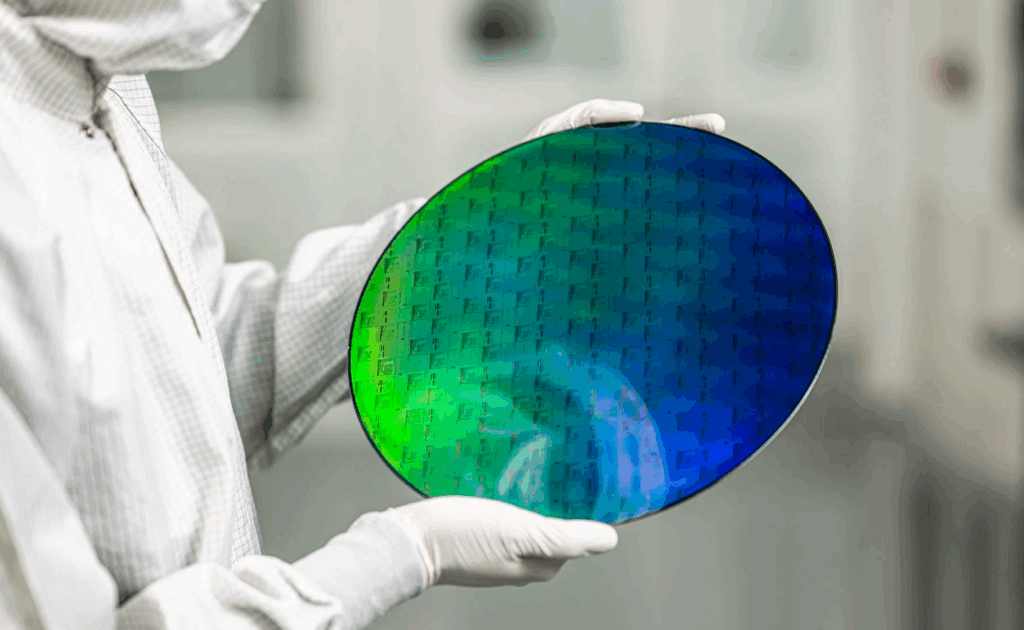
The companies plan to jointly explore projects that apply quantum algorithms to computationally intensive challenges such as fluid dynamics, propulsion design, stress-strain modeling, and thermal and materials simulations—areas where today’s classical supercomputers fall short. PsiQuantum, which recently secured over $1 billion in Series E funding, is developing photonic-based quantum systems that aim to achieve scalability through semiconductor manufacturing and cryogenic integration. The partnership aligns with Lockheed Martin’s “21st Century Security” strategy, which prioritizes emerging technologies capable of delivering mission-ready performance.
“Real, useful quantum computing will begin transforming the aerospace industry in a few short years, and now is the time for companies to prepare to seize the fullest potential of this technology,” said Mark Brunner, Executive Vice President for PsiQuantum’s U.S. Public Sector team.
• The partnership targets fault-tolerant quantum computing for aerospace modeling and defense applications.
• PsiQuantum will provide its Construct software suite as the foundation for algorithm design and collaboration.
• Lockheed Martin will focus on identifying practical quantum use cases across its aerospace and defense portfolio.
• Quantum computing promises to address PDE- and chemistry-based problems in propulsion, materials, and flight dynamics.
• PsiQuantum raised more than $1 billion in Series E funding to build the first commercially viable fault-tolerant quantum computer.
🌐 Analysis:
PsiQuantum’s deepening relationship with Lockheed Martin positions the startup as one of the most credible U.S. players in fault-tolerant quantum computing. Its photonic approach, compatible with established semiconductor fabs, offers a plausible path to scaling beyond the limitations of trapped-ion and superconducting systems pursued by rivals such as IonQ, Rigetti, and IBM. For Lockheed Martin, the collaboration builds on its decade-long interest in quantum research—dating back to its early investments in D-Wave systems—and signals a renewed push to integrate quantum solutions into aerospace simulation and mission systems. As national defense priorities increasingly include quantum-secure communications and advanced modeling, this partnership underscores how quantum computing is moving from lab research toward practical deployment across critical infrastructure.