Commonwealth Fusion Systems (CFS) raised $863 million in a Series B2 round, marking the largest private capital raise among deep tech and energy companies since its own $1.8 billion Series B in 2021. The round brings total funding for CFS to nearly $3 billion, which represents about one-third of all private investment in fusion companies globally. The company is now positioned as the leader in the race to commercialize fusion energy.
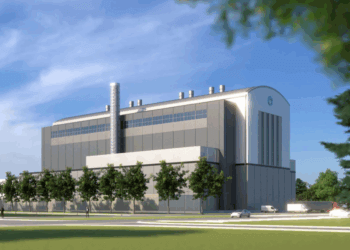
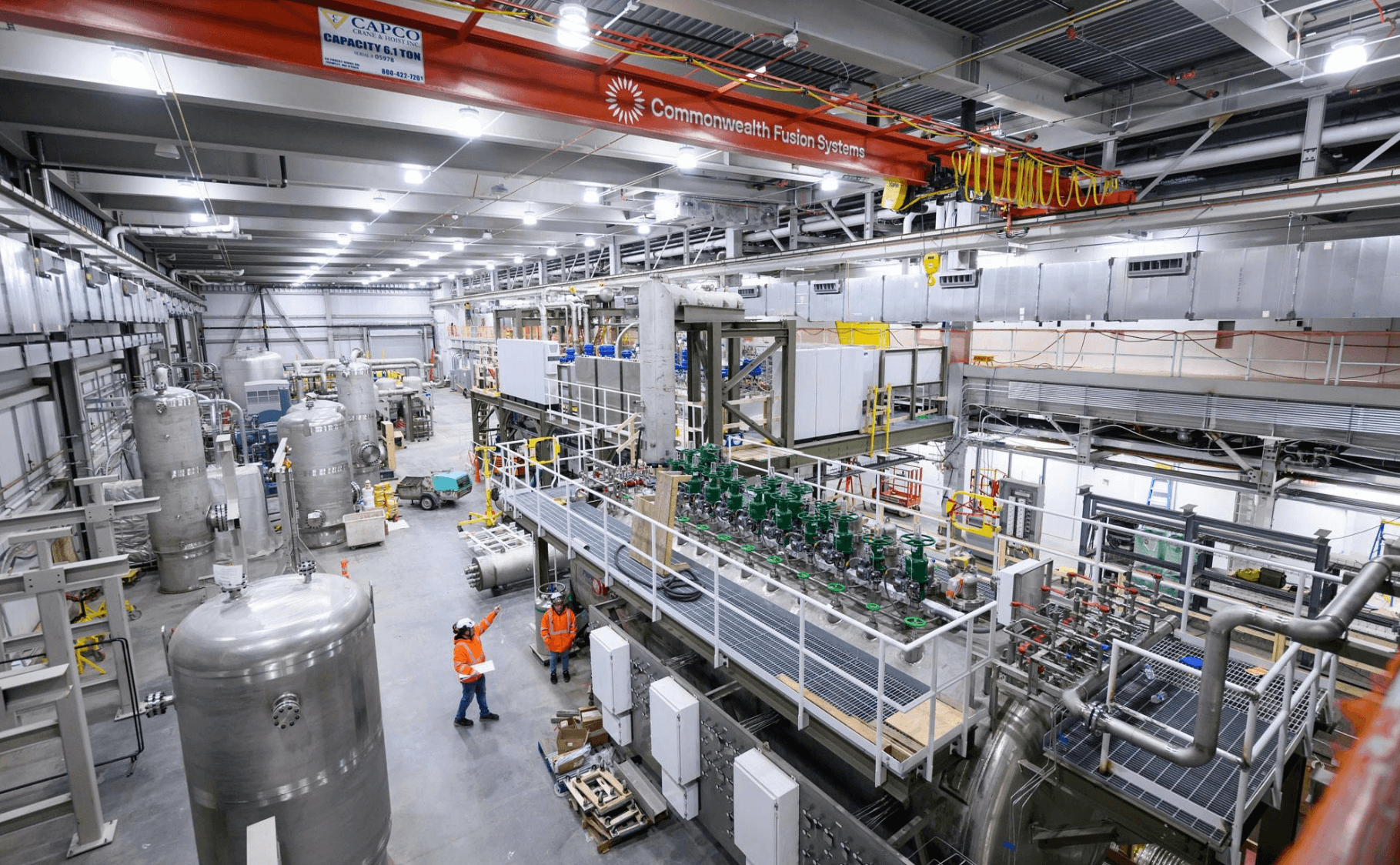
CFS will use the funds to complete SPARC, its demonstration fusion machine under construction in Devens, Massachusetts, and advance its first grid-scale ARC fusion power plant planned for Chesterfield County, Virginia. Google, already a major investor, has agreed to buy half of ARC’s projected power output. The latest funding round attracted a wide range of investors, including Counterpoint Global (Morgan Stanley), NVIDIA’s NVentures, Stanley Druckenmiller, Galaxy Interactive, Planet First Partners, and a consortium of 12 Japanese companies led by Mitsui & Co. and Mitsubishi Corp.
The oversubscribed round drew back existing investors such as Breakthrough Energy Ventures, Eni, Google, Khosla Ventures, Lowercarbon Capital, Emerson Collective, and Tiger Global. CFS highlighted its advances in high-temperature superconducting magnet technology and its accelerated execution on SPARC as key factors in investor confidence. “Investors recognize that CFS is making fusion power a reality. They see that we are executing and delivering on our objectives,” said Bob Mumgaard, CEO and Co-founder of CFS.
• Raised $863 million in Series B2, the largest round in deep tech and energy since 2021
• Nearly $3 billion raised to date, one-third of all private fusion capital worldwide
• Funds to complete SPARC demonstration reactor in Massachusetts and advance ARC power plant in Virginia
• Google agreed to buy half of ARC’s output once operational
• New investors include Counterpoint Global, NVIDIA’s NVentures, Stanley Druckenmiller, Galaxy Interactive, and Japanese consortium led by Mitsui & Mitsubishi
• Existing investors such as Breakthrough Energy Ventures, Eni, Google, and Khosla Ventures expanded their commitments
“Investors recognize that CFS is making fusion power a reality. They see that we are executing and delivering on our objectives,” said Bob Mumgaard, CEO and Co-founder of Commonwealth Fusion Systems.
🌐 Analysis: CFS continues to consolidate its leadership position in fusion by securing nearly one-third of the global private investment in the sector. With SPARC nearing completion and ARC moving forward in Virginia, CFS stands apart from rival startups such as Helion and TAE Technologies, both of which are also raising large rounds. The involvement of global industrial players and major financial institutions underscores growing conviction that fusion may play a role in meeting surging demand for electricity, particularly as AI data centers accelerate energy use worldwide.
🌐 Analysis: CFS’ raise comes amid a surge of nuclear-related investment activity that Converge Digest has tracked throughout 2025. Beyond fusion, multiple fission-based projects are advancing in parallel — including Kairos Power’s Hermes 2 molten salt reactor in Tennessee, Equinix’s partnership with Radiant on micro-reactors, and Microsoft-linked efforts around nuclear-powered cloud campuses. We’ve also reported on U.S. and European moves to tie small modular reactors (SMRs) directly to hyperscale and sovereign AI data centers, as operators seek stable carbon-free baseload capacity to counter the grid stress from large-scale AI clusters. This broader nuclear momentum — both fusion and fission — reflects growing recognition that data center growth will require clean, on-demand gigawatt-scale power.
🌐 We’re tracking the latest developments in nuclear energy for data centers. Follow our ongoing coverage at: https://convergedigest.com/tag/nuclear/
Nuclear • Fission • Fusion — 2025 Timeline (Converge Digest)
View live “nuclear” feed →- Fission
Sabey Data Centers looks to nuclear with TerraPower (Natrium)
Collaboration explores 345 MW Natrium reactor with molten-salt storage (peaks to 500 MW) for SDC sites; TerraPower’s first plant targets operation by 2030.
- Fission
Aalo unveils Aalo-1 modular reactor for AI data centers
Non-nuclear prototype and 40,000 sq ft (3,716 m²) factory; “Aalo Pod” bundles five sodium-cooled units into a 50 MWe plant designed for onsite DC power.
- Policy
Google calls for permitting reform & support for SMRs
Position paper urges “clean firm” power expansion (SMRs, advanced geothermal), faster transmission build, and LPO support to meet AI-era load growth.
- Fission
Meta signs 20-year, 1,121 MW PPA with Constellation (Clinton, IL)
Deal begins 2027; replaces expiring ZEC support, adds 30 MW uprate, and preserves >1,100 local jobs while matching DC load with carbon-free power.
- Fission
Amazon expands nuclear PPA with Talen to up to 1,920 MW
Power from Susquehanna via PJM; ramps by 2032 with SMR exploration and grid upgrades for Pennsylvania AI campuses.
- Fusion
Google signs 200 MW fusion offtake with CFS (ARC, Virginia)
Largest known corporate fusion PPA; contingent on SPARC achieving Q>1; ARC targets early 2030s grid connection.
- Fission
Oklo + Vertiv pair reactors with data-center cooling
Pilot at first Aurora site will drive integrated power + thermal designs for hyperscale/colo DCs using reactor heat and electricity.
- Hybrid
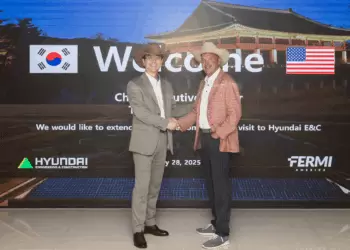
Fermi America taps Hyundai E&C for nuclear-powered AI grid
“HyperGrid” campus near Amarillo targets up to 11 GW across nuclear + CCGT + solar + storage to serve 18M sq ft of AI DCs.
- Fission Advanced
Equinix expands nuclear partnerships (Oklo, Radiant, RR-SMR, Stellaria)
500 MW Oklo pre-purchase; 20 Radiant microreactors; LOI for up to 250 MWe Rolls-Royce SMRs (NL); 500 MWe Stellaria molten-salt B&B; +100 MW Bloom SOFC.
- Fission
Aalo raises $100M to build Aalo-X and co-located DC
Series B to reach zero-power criticality in 2026; first nuclear plant + experimental data center co-build; roadmap to factory “Aalo Pods.”
- Fission
Google + TVA + Kairos: first Gen-IV plant for DCs (Hermes 2)
50 MW fluoride-salt-cooled (KP-FHR) unit in Oak Ridge from 2030; pathway to 500 MW for Google by 2035; first U.S. utility PPA for Gen-IV power.