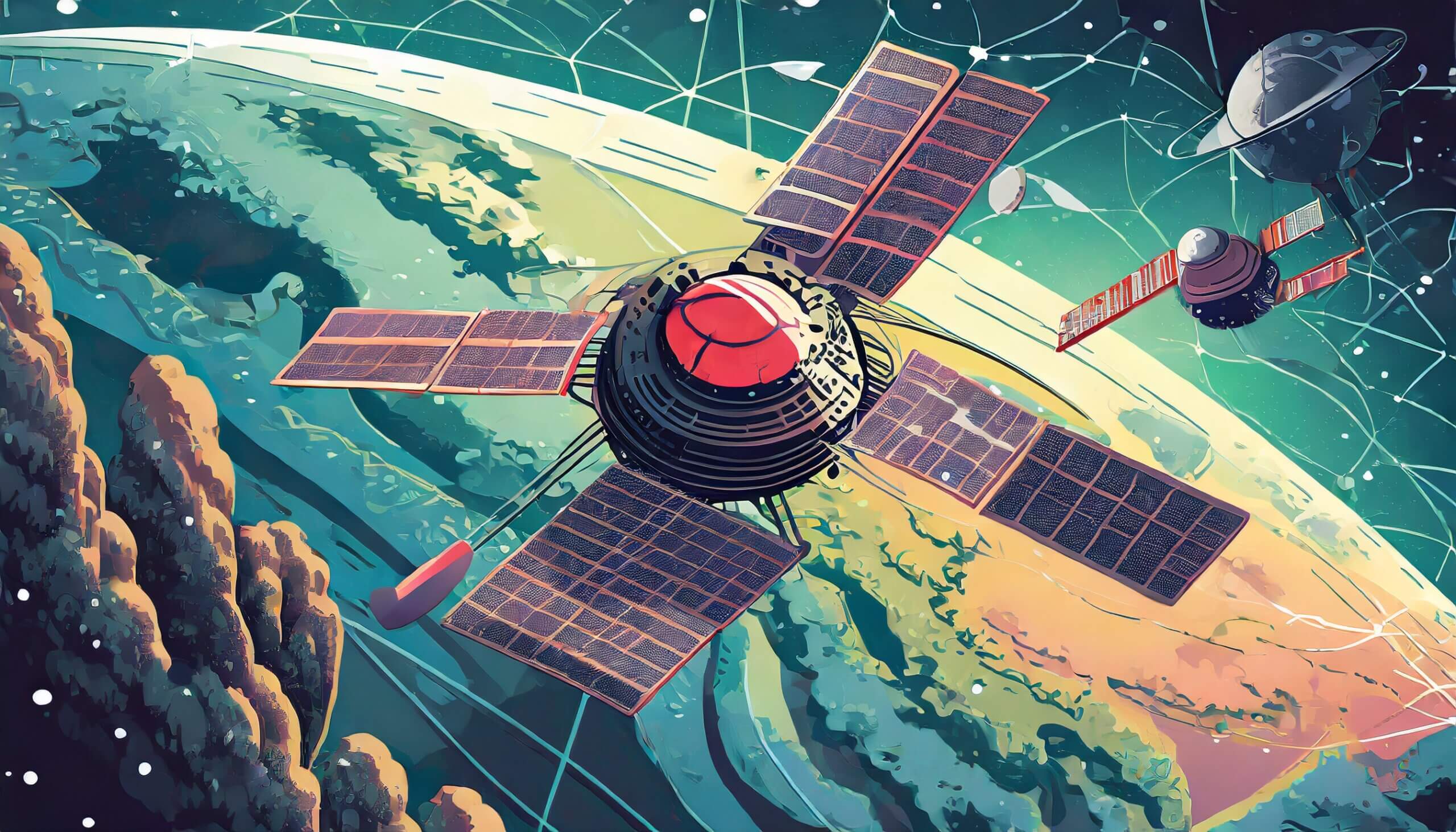
Earlier this week, IonQ finalized its acquisition of Capella Space, a U.S.-based provider of synthetic aperture radar (SAR) satellite technology, in a strategic move to pioneer a global space-based quantum key distribution (QKD) network. The integration of Capella’s commercial satellite infrastructure with IonQ’s quantum networking capabilities marks a significant step toward secure quantum communications linking space and Earth.
The acquisition positions IonQ to develop the first quantum-enabled Earth observation platform, allowing Capella’s existing government and enterprise customers to leverage ultra-secure communications and enhanced SAR remote sensing. The QKD network aims to prevent the interception of encryption keys—a fundamental capability in the creation of a global quantum internet.
This move builds on IonQ’s recent initiatives to expand its quantum networking footprint, including partnerships with ID Quantique, the U.S. Air Force Research Laboratory (AFRL), and the Applied Research Laboratory for Intelligence and Security (ARLIS). Together, these efforts are advancing the development of secure, distributed quantum technologies for defense and intelligence missions.
- IonQ acquires Capella Space to integrate quantum technologies with SAR satellite infrastructure
- Goal: establish the world’s first space-based quantum key distribution (QKD) network
- Platform will enable quantum-secure global communications and enhanced Earth observation
- Builds on IonQ’s existing collaborations with ARLIS, AFRL, and ID Quantique
- Capella’s current customer base to gain access to new quantum-secure services
“We have an exceptional opportunity to accelerate our vision for the quantum internet, where global QKD will play a foundational role in enabling secure communications,” said Niccolo de Masi, CEO of IonQ.
🌐 Why it Matters: Space-based QKD is a potential enabler for ultra-secure global communications, particularly in national security, defense, and finance sectors. By merging Capella’s orbital infrastructure with IonQ’s quantum hardware, this initiative moves quantum networking out of the lab and into real-world, spaceborne deployment—ushering in the era of quantum-secure data transmission.
Other notable space-based QKD initiatives include:
- China’s Micius Satellite (2016): The first satellite to demonstrate QKD between space and ground stations, achieving entanglement-based and decoy-state QKD across thousands of kilometers.
- European Union’s QUARC/QKD-SAT Projects: ESA is funding multiple initiatives, including the SAGA (Secure And Global Access) project and a future EAGLE-1 satellite with SES to deploy QKD across the EU.
- Singapore’s Centre for Quantum Technologies: Partnered with national space agencies to test QKD payloads on CubeSats (e.g., SpooQy-1 mission).
- Japan’s NICT and Mitsubishi Electric: Have launched small satellites and conducted QKD feasibility experiments, including photon pair transmission from orbit.
- U.S. Defense Advanced Research Projects Agency (DARPA): Exploring QKD and quantum networking under various programs such as the Quantum Apertures and Quantum Network Testbed initiatives.
IonQ’s acquisition of Capella Space signifies a U.S.-based commercial push into this high-stakes arena, with the potential to complement or compete with government-led efforts.
🌐 We’re tracking the latest developments in quantum networking. Follow our ongoing coverage at: https://convergedigest.com/quantum