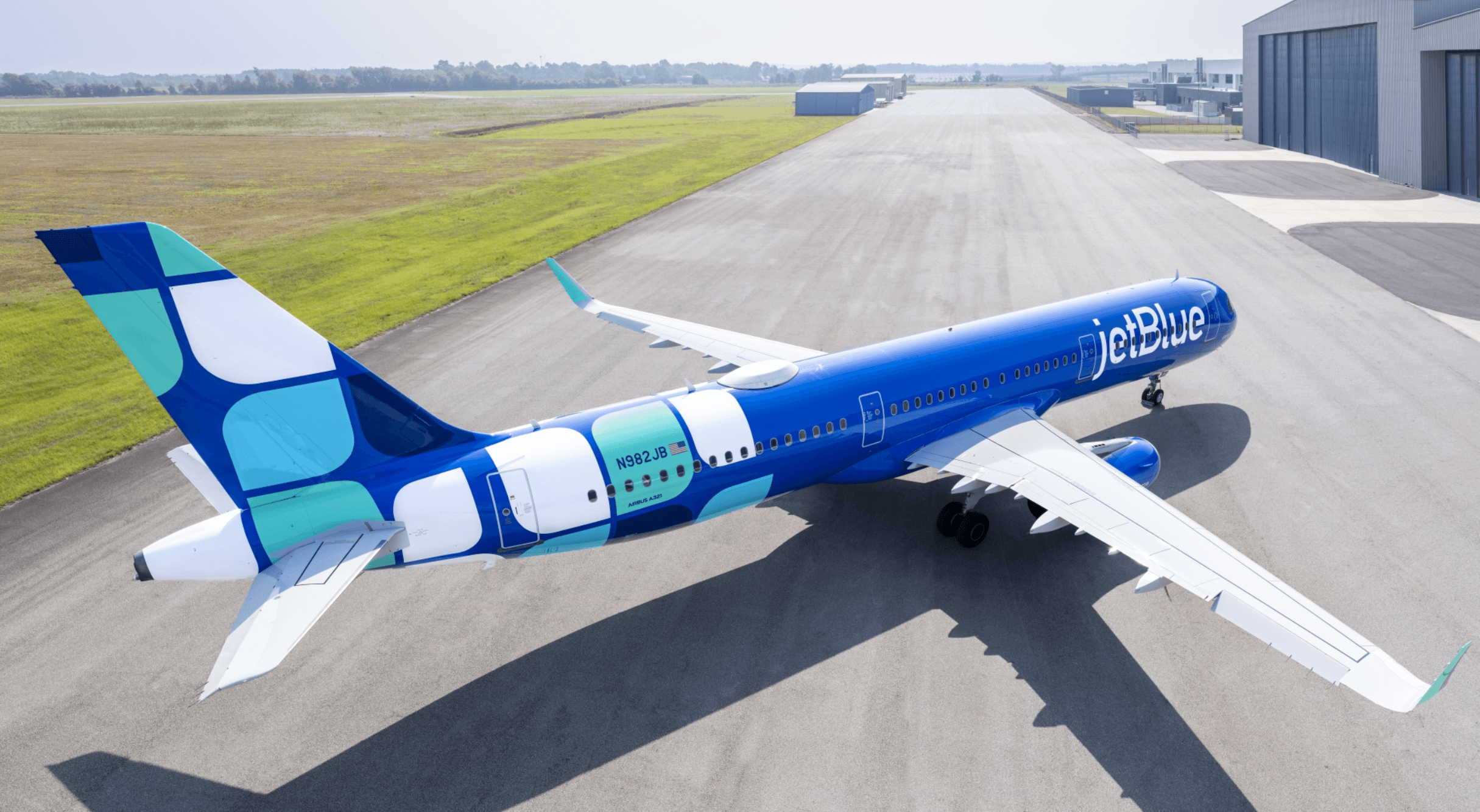
Amazon’s Project Kuiper landed its first airline customer, with JetBlue announcing plans to integrate the low Earth orbit (LEO) satellite network into its Fly-Fi service beginning in 2027. The agreement builds on JetBlue’s decade-long offering of free in-flight Wi-Fi and marks Kuiper’s first commercial aviation win as it expands beyond residential, enterprise, and government markets.
Kuiper satellites orbit between 590 and 630 km (367–391 miles) above Earth, much lower than geostationary systems at 36,000 km (22,369 miles). This design cuts latency and increases reliability, allowing passengers to stream, make video calls, and work during flights. The Kuiper aviation terminal, a Ka-band phased array antenna, supports download speeds up to 1 Gbps per device, promising far more bandwidth than many existing in-flight systems.

The JetBlue announcement follows Kuiper’s deal with Airbus to integrate the service into its aircraft catalog. With more than 100 satellites now in orbit and a Florida hub at Kennedy Space Center supporting accelerated launch campaigns, Amazon is positioning Kuiper to compete against SpaceX’s Starlink and Viasat in the in-flight connectivity market.
- JetBlue will introduce Kuiper-powered Fly-Fi in 2027 while maintaining free access for passengers
- Kuiper satellites operate in LEO for lower latency and improved reliability
- Aviation antenna delivers up to 1 Gbps per device, supporting bandwidth-intensive applications
- Amazon has also partnered with Airbus for factory-installed Kuiper connectivity
- More than 100 Kuiper satellites are now operational as Amazon ramps toward commercial service
“Our agreement with Project Kuiper marks an exciting leap forward for us as the hands-down leader in onboard connectivity,” said Marty St. George, president of JetBlue.
🌐 Analysis: Project Kuiper’s entry into commercial aviation puts it in direct competition with Starlink, which already has partnerships with major airlines including United, Hawaiian, airBaltic, Air New Zealand, and Qatar Airways. Unlike Starlink, which moved quickly to capture early aviation market share, Kuiper is targeting integration through strategic OEM deals like Airbus while leveraging Amazon’s capital strength to build out its constellation. JetBlue’s adoption suggests a willingness among airlines to diversify providers, which could set up a three-way competitive dynamic among Kuiper, Starlink, and Viasat for the future of in-flight broadband.
Starlink’s Announced Airlines as of 04-September-2025
| Airline / Market | Region | Deployment Status |
|---|---|---|
| Hawaiian Airlines | U.S. (Transpacific) | Active since 2023, free Starlink Wi-Fi on long-haul flights |
| United Airlines | U.S. (Mainline & Regional) | Fleetwide rollout through 2025, free for MileagePlus members |
| Qatar Airways | Middle East | Starlink Wi-Fi active on Boeing 777 fleet since late 2024 |
| Air New Zealand | Oceania | Fleet rollout underway, offering Starlink Wi-Fi to passengers |
| airBaltic | Europe | Fleetwide Starlink rollout (2023–2025) with free Wi-Fi |
| Private Jet Market | Global (BizAv) | Starlink Aviation launched 2022; available for private jets via installation kits |