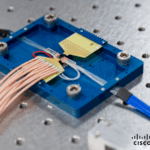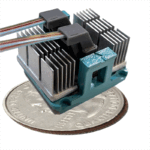
Rigetti Computing secured a $5.8 million, three-year contract from the Air Force Research Laboratory (AFRL) to develop superconducting quantum networking technologies in collaboration with Dutch startup QphoX. The project focuses on enabling entanglement between superconducting qubits and optical photons—an essential step for creating scalable quantum networks. Rigetti will contribute its superconducting qubit technology, while QphoX provides microwave-to-optical photon transduction systems.
Quantum networking is seen as a pathway to distributed quantum computing, where multiple quantum processors are networked together, and as a foundation for a secure quantum internet. A critical technical challenge is converting microwave signals, which control superconducting qubits, into optical photons that can travel long distances over fiber networks while preserving their quantum state. The project builds on prior joint demonstrations where Rigetti’s qubits and QphoX’s transducers enabled optical single-shot qubit readout.
The AFRL effort also ties into its telecom-based Quantum Local Area Networks (QLANs) in Rome, New York, where heterogeneous quantum interconnects are being pursued for defense and research applications. The integration of superconducting qubits with optical networking could ultimately provide the U.S. Department of Defense with advanced capabilities in quantum communications and secure information transfer.
- Contract: $5.8 million, three-year AFRL award
- Partners: Rigetti Computing (U.S.) and QphoX (Netherlands)
- Goal: Develop microwave-to-optical transducers for entanglement distribution
- Applications: Distributed quantum computing, secure quantum internet, DoD communications
- Builds on: Previous qubit-transducer demonstrations with single-shot optical readout
“By joining Rigetti’s leadership in designing, fabricating, and operating superconducting qubits with QphoX’s world-class transduction technology, and AFRL’s expertise in hybrid networked quantum systems, this is an exciting opportunity to advance superconducting quantum networking,” said Dr. Subodh Kulkarni, Rigetti CEO.
🌐 Analysis: This collaboration underscores growing global momentum in quantum networking, with U.S. defense agencies investing to ensure secure and scalable quantum communications. Rigetti is positioning its superconducting qubits as building blocks for larger distributed systems. QphoX, meanwhile, provides critical photonic interfaces that address one of the biggest bottlenecks in superconducting quantum systems—long-range connectivity. Competitors including IBM, Quantinuum, and PsiQuantum are also advancing networked quantum strategies, suggesting that heterogeneous interconnects could become a decisive factor in future quantum architectures.