OpenAI has completed a sweeping recapitalization that simplifies its dual structure and strengthens its nonprofit mission to ensure that artificial general intelligence (AGI) benefits all of humanity. The nonprofit—now renamed the OpenAI Foundation—retains control of the for-profit entity, now called OpenAI Group PBC, and holds an equity stake currently valued at about $130 billion, making it one of the most well-resourced philanthropic entities globally. The reorganization followed nearly a year of review with the California and Delaware Attorneys General and establishes clearer governance and accountability mechanisms.
The Foundation will direct an initial $25 billion toward two areas: accelerating health research through open and responsibly built frontier health datasets and scientific grants, and developing AI resilience technologies to safeguard critical systems such as power grids, hospitals, and financial institutions. These initiatives build upon OpenAI’s earlier $50 million People-First AI Fund. The new structure ensures that as OpenAI’s commercial success grows, its nonprofit arm will gain resources to support global public-interest projects.
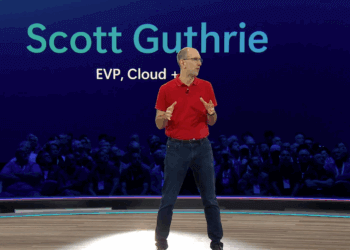
As part of this transition, Microsoft and OpenAI signed a new definitive agreement redefining their long-term partnership. Microsoft now holds an investment in OpenAI Group PBC valued at $135 billion, representing roughly 27% ownership on an as-converted diluted basis. The partnership maintains Microsoft’s exclusive rights to OpenAI’s IP and Azure API services until AGI is independently verified. Key revisions extend Microsoft’s IP rights for models and products through 2032, while clarifying that OpenAI may now jointly develop certain non-API products with other partners and can serve non-API workloads on any cloud provider. Microsoft also gains the ability to independently pursue AGI research.
Additional terms include OpenAI’s commitment to purchase an incremental $250 billion in Azure cloud services, the removal of Microsoft’s right of first refusal for compute contracts, and the ability for OpenAI to offer API access to U.S. national security customers on any cloud. OpenAI may now also release open-weight models that meet capability and safety standards.
• OpenAI Foundation equity stake valued at $130B, controlling OpenAI Group PBC
• $25B commitment focused on health breakthroughs and AI resilience infrastructure
• Microsoft investment valued at $135B, equal to ~27% ownership in OpenAI Group PBC
• Extended IP rights through 2032; independent expert panel to verify AGI milestone
• OpenAI commits to $250B in additional Azure spending; gains flexibility in partnerships
“We believe that the world’s most powerful technology must be developed in a way that reflects the world’s collective interests,” OpenAI said. “This recapitalization gives us the ability to keep pushing the frontier of AI with a structure that ensures progress serves everyone.”
🌐 Analysis: The reorganization marks a decisive governance reset for OpenAI, aligning its philanthropic and commercial ambitions under a unified mission. Microsoft’s revised stake and long-term IP rights underscore continued strategic interdependence while granting both sides more autonomy ahead of AGI’s arrival. The move also mirrors a broader industry shift toward mixed for-profit and public-benefit structures, as seen in Anthropic’s long-term benefit trust and Google DeepMind’s alignment with Alphabet.