• Home
  • Events Calendar
  • Blueprint Guidelines
  • Privacy Policy
  • Subscribe to Daily Newsletter
  • NextGenInfra.io
No Result
View All Result
Converge Digest
Thursday, April 16, 2026
  • Home
  • Events Calendar
  • Blueprint Guidelines
  • Privacy Policy
  • Subscribe to Daily Newsletter
  • NextGenInfra.io
No Result
View All Result
Converge Digest
No Result
View All Result

Home » Netia tests Nokia’s Photonic Service Engine 3 super coherent tech

Netia tests Nokia’s Photonic Service Engine 3 super coherent tech

April 3, 2019
in All
A A

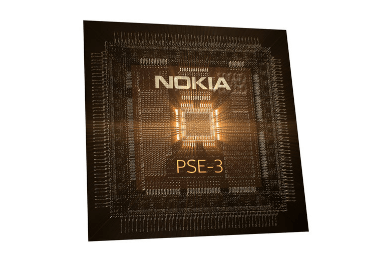
Polish service provider Netia conducted the first field trial of Nokia’s Photonic Service Engine 3 (PSE-3) super coherent technology over a live production network. In the trial, wavelengths driven by the Nokia PSE-3 and operating at 62-68 Gbaud traversed Netia’s flex-grid infrastructure in 75GHz channels. Network paths currently supporting 100G and 200G wavelengths were shown to support of greater than 300G and 500G respectively, more than doubling network capacity.

Netia’s WDM backbone based on the Nokia 1830 Photonic Service Switch (PSS) with flex-grid technology, which enables a seamless upgrade to high baud-rate wavelengths, allowing the carrier to more than double supported data rates for links of any distance. Nokia said its PSE-3 powered line cards will significantly improve fiber capacity  while lowering costs and simplifying operations.

As the largest alternative network operator in Poland with over 50,000 kilometers of fiber connecting more than 80 percent of the A and B class office buildings throughout Poland, Netia is experiencing tremendous growth in demand for both consumer offerings and MEF-certified business services.

Grzegorz Bartler, member of the board and CTO at Netia, said: “Netia continues to invest in our infrastructure to ensure our customers benefit from the most technologically advanced network in Poland. The results of this field trial mean that our backbone network, originally designed for a total capacity of 8.8 terabits-per-second, now has a proven roadmap to 29 Tbps, ensuring we can continue to keep up with the rapid growth of our business and consumer services.”

https://www.nokia.com/about-us/news/releases/2019/04/03/nokia-and-netia-conduct-first-field-trial-of-photonic-service-engine-3-super-coherent-technology-over-live-production-network/

Nokia’s PSE-3 chipset leverages probabilistic constellation shaping

Tuesday, March 06, 2018  Nokia  

Nokia unveiled its Photonic Service Engine 3 chipset featuring probabilistic constellation shaping (PCS) that pushes fiber-optic performance close to the Shannon limit to fully exploit channel capacity.

PCS is a new modulation technique pioneered by Nokia Bell Labs that the company says enables maximum capacity over any distance and on any fiber – from metro to subsea – increasing capacity up to 65% over currently deployed networks while reducing power by 60%. This includes 200G rates over most terrestrial and subsea links, as 400G over most shorter distances.

The PSE-3 chipset, which is the first coherent digital signal processor to implement PCS, provides finely adjustable wavelength capacity from 100G to 600G with a single, uniform modulation format, baud rate, and channel size. This simplifies network operations and planning.

Tags: Blueprint columnsNokia
ShareTweetShare
Previous Post

Intel to introduce 100G Ethernet adapter

Next Post

NEC and Ceragon announce alliance for 5G wireless backhaul

Staff

Staff

Related Posts

BerryComm Expands Central Indiana Fiber with Nokia
5G / 6G / Wi-Fi

Telefónica Germany Awards Nokia a 5-Year RAN Modernization Deal

November 26, 2025
NVIDIA to Invest $1B in Nokia, Partnership for AI-RAN and Data Center Networking
Financials

Nokia Canada Breaks Ground on New Ottawa Innovation Campus

November 25, 2025
Nokia Integrates MantaRay SON into NTT DOCOMO’s Multi-Vendor 5G Network
5G / 6G / Wi-Fi

Nokia Integrates MantaRay SON into NTT DOCOMO’s Multi-Vendor 5G Network

November 24, 2025
Nokia Secures $45M U.S. Grant to Advance Open Wireless Networks
All

Nokia Commits $4 Billion to U.S. R&D and Manufacturing

November 21, 2025
NVIDIA to Invest $1B in Nokia, Partnership for AI-RAN and Data Center Networking
AI Infrastructure

Nokia Reorganizes Into Two Segments for the AI Era

November 19, 2025
Nokia Lands Major 5G Modernization Deal with Telecom Italia
All

Nokia Lands Major 5G Modernization Deal with Telecom Italia

November 17, 2025
Next Post
NEC and Ceragon announce alliance for 5G wireless backhaul

NEC and Ceragon announce alliance for 5G wireless backhaul

Please login to join discussion

Categories

  • 5G / 6G / Wi-Fi
  • AI Infrastructure
  • All
  • Automotive Networking
  • Blueprints
  • Clouds and Carriers
  • Data Centers
  • Enterprise
  • Explainer
  • Feature
  • Financials
  • Last Mile / Middle Mile
  • Legal / Regulatory
  • Optical
  • Quantum
  • Research
  • Security
  • Semiconductors
  • Space
  • Start-ups
  • Subsea
  • Sustainability
  • Video
  • Webinars

Archives

Tags

5G All AT&T Australia AWS Blueprint columns BroadbandWireless Broadcom China Ciena Cisco Data Centers Dell'Oro Ericsson FCC Financial Financials Huawei Infinera Intel Japan Juniper Last Mile Last Mille LTE Mergers and Acquisitions Mobile NFV Nokia Optical Packet Systems PacketVoice People Regulatory Satellite SDN Service Providers Silicon Silicon Valley StandardsWatch Storage TTP UK Verizon Wi-Fi
Converge Digest

A private dossier for networking and telecoms

Follow Us

  • Home
  • Events Calendar
  • Blueprint Guidelines
  • Privacy Policy
  • Subscribe to Daily Newsletter
  • NextGenInfra.io

© 2025 Converge Digest - A private dossier for networking and telecoms.

No Result
View All Result
  • Home
  • Events Calendar
  • Blueprint Guidelines
  • Privacy Policy
  • Subscribe to Daily Newsletter
  • NextGenInfra.io

© 2025 Converge Digest - A private dossier for networking and telecoms.

This website uses cookies. By continuing to use this website you are giving consent to cookies being used. Visit our Privacy and Cookie Policy.
Go to mobile version