• Home
  • Events Calendar
  • Blueprint Guidelines
  • Privacy Policy
  • Subscribe to Daily Newsletter
  • NextGenInfra.io
No Result
View All Result
Converge Digest
Saturday, April 11, 2026
  • Home
  • Events Calendar
  • Blueprint Guidelines
  • Privacy Policy
  • Subscribe to Daily Newsletter
  • NextGenInfra.io
No Result
View All Result
Converge Digest
No Result
View All Result

Home » CORD and xRAN Consortium Partner in Software-based Extensible RAN

CORD and xRAN Consortium Partner in Software-based Extensible RAN

February 27, 2017
in All
A A

CORD and xRAN consortium partner to develop carrier grade software-based, extensible RAN February 23rd The CORD Project, an open source project seeking reinvent network access via enabling data centre economics and cloud agility in the central office, announces an agreement to partner with xRAN Foundation to collaborate on standardising and promoting a software-based, extensible RAN (xRAN) architecture.

The partnership is intended to deliver a carrier grade, open reference implementation of xRAN specifications within M-CORD for a next generation RAN architecture. Designed to address the challenges associated with closed, proprietary RAN systems and the future demands of 5G, the CORD Project and xRAN are combining two ecosystems of service providers, vendor and open source communities.

Through the initiative, the xRAN consortium will focus on developing software-defined standards for the architecture and interface definitions for next-generation RAN; the CORD community will focus on implementing xRAN standard APIs, a RAN controller based on ONOS and example RAN control applications for the M-CORD platform leveraging both open and closed hardware from multiple vendors.

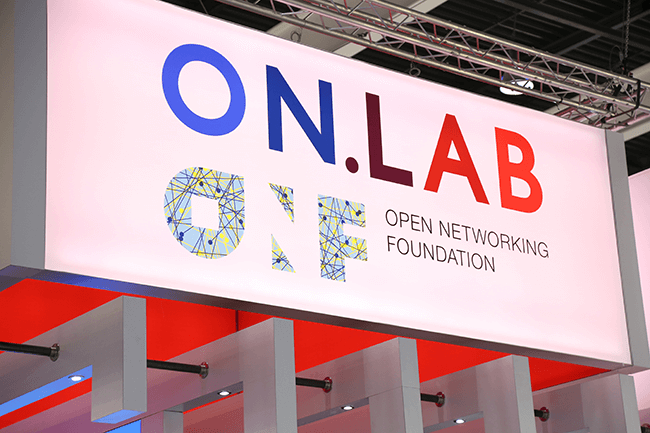
As part of the partnership, ON.Lab has announced the appointment of Dr. Sachin Katti, Professor of EE and CS at Stanford University, as chief scientist for mobility to guide the integration of xRAN with M-CORD.

The collaboration is expected to establish a symbiotic relationship between standards and API specifications and reference implementations, and thereby allow the use of specifications to help improve the reference implementation, while experience with the reference implementation can help improve specifications. In addition, extended engagement with the open networking ecosystem will help to create software- defined standards and a reference implementation, and help speed the adoption of software defined RANs.

Founded in October 2016, the xRAN consortium has developed standardised RAN control interfaces that allow carrier applications to programmatically control multi-vendor RAN infrastructure and have been adopted by carriers. xRAN aims to decouple the RAN control plane from the user plane, build a modular eNB software stack that operates on COTS hardware and release open north- and south-bound interfaces.

Members of the xRAN consortium include AT&T, Deutsche Telekom and SK Telecom, plus Intel, Texas Instruments, Aricent, Radisys and Stanford University.

Regarding the partnership, Andre Fuetsch, president of AT&T Labs and CTO, commented, “AT&T has been a founding member and active supporter of both xRAN and CORD, and the time is right for xRAN and M-CORD to come together… the xRAN and M-CORD partnership will allow the building of mobile access networks with the ability to customise and optimise the RAN and to more quickly create new services…”.

https://www.linuxfoundation.org/announcements/cord-project-and-xran-consortium-align-to-build-carrier-grade-software-for-next

Tags: Blueprint columnsCORDLinux FoundationON.LabONDOND News
ShareTweetShare
Previous Post

ZTE Shows its 5G Pre-commercial Base Stations

Next Post

Huawei and Softbank Complete 3.5 GHz Massive MIMO with CA Test

Staff

Staff

Related Posts

OpenInfra Joins the Linux Foundation to Drive Open Source Infrastructure
All

OpenInfra Joins the Linux Foundation to Drive Open Source Infrastructure

March 12, 2025
Sylva Project Charts the Future of Telco Cloud for 5G and Beyond
5G / 6G / Wi-Fi

Sylva Project Charts the Future of Telco Cloud for 5G and Beyond

December 13, 2024
Linux Foundation to form the High Performance Software Foundation
5G / 6G / Wi-Fi

SoftBank Joins LF Networking as Platinum Member

November 13, 2024
CAMARA Delivers First Major Release with 25 Telecom APIs 
5G / 6G / Wi-Fi

CAMARA Delivers First Major Release with 25 Telecom APIs 

September 16, 2024
free5GC Transitions to Linux Foundation for Open Source 5G 
5G / 6G / Wi-Fi

free5GC Transitions to Linux Foundation for Open Source 5G 

September 16, 2024
Linux Foundation to form the High Performance Software Foundation
Data Centers

Linux Foundation to form the High Performance Software Foundation

November 13, 2023
Next Post
Huawei and Softbank Complete 3.5 GHz Massive MIMO with CA Test

Huawei and Softbank Complete 3.5 GHz Massive MIMO with CA Test

Please login to join discussion

Categories

  • 5G / 6G / Wi-Fi
  • AI Infrastructure
  • All
  • Automotive Networking
  • Blueprints
  • Clouds and Carriers
  • Data Centers
  • Enterprise
  • Explainer
  • Feature
  • Financials
  • Last Mile / Middle Mile
  • Legal / Regulatory
  • Optical
  • Quantum
  • Research
  • Security
  • Semiconductors
  • Space
  • Start-ups
  • Subsea
  • Sustainability
  • Video
  • Webinars

Archives

Tags

5G All AT&T Australia AWS Blueprint columns BroadbandWireless Broadcom China Ciena Cisco Data Centers Dell'Oro Ericsson FCC Financial Financials Huawei Infinera Intel Japan Juniper Last Mile Last Mille LTE Mergers and Acquisitions Mobile NFV Nokia Optical Packet Systems PacketVoice People Regulatory Satellite SDN Service Providers Silicon Silicon Valley StandardsWatch Storage TTP UK Verizon Wi-Fi
Converge Digest

A private dossier for networking and telecoms

Follow Us

  • Home
  • Events Calendar
  • Blueprint Guidelines
  • Privacy Policy
  • Subscribe to Daily Newsletter
  • NextGenInfra.io

© 2025 Converge Digest - A private dossier for networking and telecoms.

No Result
View All Result
  • Home
  • Events Calendar
  • Blueprint Guidelines
  • Privacy Policy
  • Subscribe to Daily Newsletter
  • NextGenInfra.io

© 2025 Converge Digest - A private dossier for networking and telecoms.

This website uses cookies. By continuing to use this website you are giving consent to cookies being used. Visit our Privacy and Cookie Policy.
Go to mobile version