by John Trobough, president at Narus
Now that RSA is underway I wanted to take some time to cover five key themes being talked about at the event.
Machine Learning
Machine Learning is at the top of my list. As the frequency of attacks, the sophistication of the intrusions, and the number of new networked applications increase, analysts cannot keep up with the volume, velocity, and variety of data.
The use of machine learning is gaining critical mass fueled by the bring your own device (BYOD) and Internet of Things (IOT) trends. This technology can crunch large data sets, adapt with experience, and quickly generate insight or derive meaning from the data. With machine assistance, analysts spend less time on data-processing duties, and focus more time on problem solving and defense bolstering activities. Machine learning brings new insights to network activity and malicious behavior, and is accelerating the time to resolve cyber threats.
Data Visualization
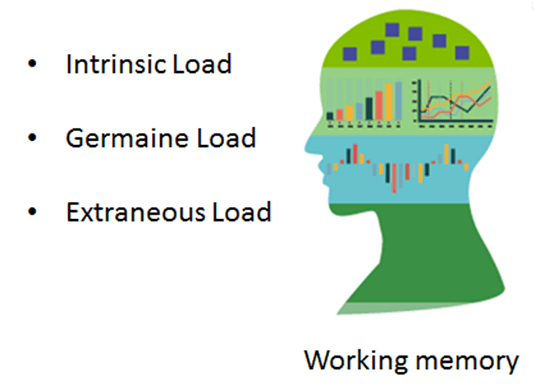
 The historic and rudimentary approach of taking tabular data and presenting it in colorful pie charts and graphs does not deliver insight. According to ESG research, 44 percent of organizations classify their current security data collection as “big data” and another 44 percent expect to classify their data collection and analysis as “big data” within the next two years. With the explosive growth of volume and variety of data, analysts are experiencing cognitive overload. Their brains cannot process information fast enough. The challenge is to display insight and conclusions from data analysis in a clear way to facilitate rapid response.
Symbolic representations, like visual threat fingerprints, will be required for quick interpretation and comparison before diving into details. Data visualization design will need to incorporate best practices including:
•Context-aware controls, that appear only when required
•Seamless integration, providing flow from one task to the next without assumed knowledge about the source of the data
•Human factor principles, to display data, analysis, and controls in ways that enhance clarity and usability.
Context
According to Gartner, the use of context-aware security helps security technologies become more accurate and enhance usability and adoption in response to cyber threats.
If we define context as the information required to answer the questions “what,” “how” and “why,” context will provide the understanding needed to better assess the threats and resolve them faster.
The advancements made in data visualization enable organizations to determine when something isn’t right on their network. Context takes this further by allowing organizations to determine what their network activity is supposed to look like and how data visualization and context fit together.
Internet of Things (IoT)
Connected devices have become a hot and desirable trend. ABI Research estimates there will be more than 30 billion wirelessly connected devices by 2020. This machine-to-machine (M2M) conversation offers new opportunities for innovation, generates a plethora of new data streams and also creates new threat vectors.
Today, there is a desire for deeper connectivity in the workplace and home. For the business, IoT provides a range of benefits, from increasing operational efficiency to better managing resources and expanding existing business models. As for the consumer, IoT assists with safety, health, everyday planning and more.
However, all this connectivity compounds security challenges. It’s one thing for your refrigerator to tell you you’re out of milk, but it’s quite another for hackers to use refrigerators to access your network and steal your data or initiate attacks on other networks.
Consumerization of Security
It’s no longer just about the impact that weak security has on the enterprise but also how it is affecting consumers. More and more people are producing and storing their own data and creating their own private clouds, but are still in the dark about how to properly protect it.
According to cybersecurity expert Peter W. Singer, it’s not just weak passwords, such as “password” and “123456” that cybercriminals are after. Usually, cybercriminals are after the ability to change a password with information acquired from public records (i.e. mother’s maiden name). With sophisticated threats looming all over the web, it’s only a matter of time before most consumers are faced with a stiff test on protecting their digital assets.
As consumers become more conscious of security and privacy issues, they will want to know how to prevent their identity from being stolen with just a click of a mouse. Many consumers will turn to the vendors, including retail and banking, for answers, and many vendors will turn to security providers.
Our Opportunities and Challenges
The security landscape faces a future of tremendous growth. More than ever, security is underlying all business practices. In a digital economy where connected devices are everything, security is critical and cannot be an afterthought. Security is not something that you layer on. Instead we should assume we will face a threat and be prepared to respond. While there will be many conversations happening at RSA on a multitude of other security topics, you can be sure these five themes will be heard loud and clear.
About the Author

John Trobough is president of Narus, Inc., a subsidiary of The Boeing Company (NYSE: BA). Trobough previously was president of Teleca USA, a leading supplier of software services to the mobile device communications industry and one of the largest global Android commercialization partners in the Open Handset Alliance (OHA). He also held executive positions at Openwave Systems, Sylantro Systems, AT&T and Qwest Communications.
About the Company
 Narus, a wholly owned subsidiary of The Boeing Company (NYSE:BA), is a pioneer in cybersecurity data
analytics. The company’s patented advanced analytics help enterprises, carriers and government
customers proactively identify and accelerate the resolution of cyber threats. Using incisive intelligence
culled from visual interactive and underlying data analytics, Narus nSystem identifies, predicts and
characterizes the most advanced security threats, giving executives the visibility and context they need to
make the right security decisions, right now, by letting them know what’s happening, why, and what to do
about it. And because Narus solutions are scalable and deployable to any network configuration or
business process, Narus boosts the ROI from existing IT investments. Narus is a U.S.-based company,
incorporated in Delaware and headquartered in Sunnyvale, Calif. (U.S.A.), with regional offices around
the world.