2013 should be an eventful year in the network and communications industry. Given the intense focus on 4G and LTE, it helps to have a sense of what’s next in wired and wireless networks.
Five Top Predictions for Networking
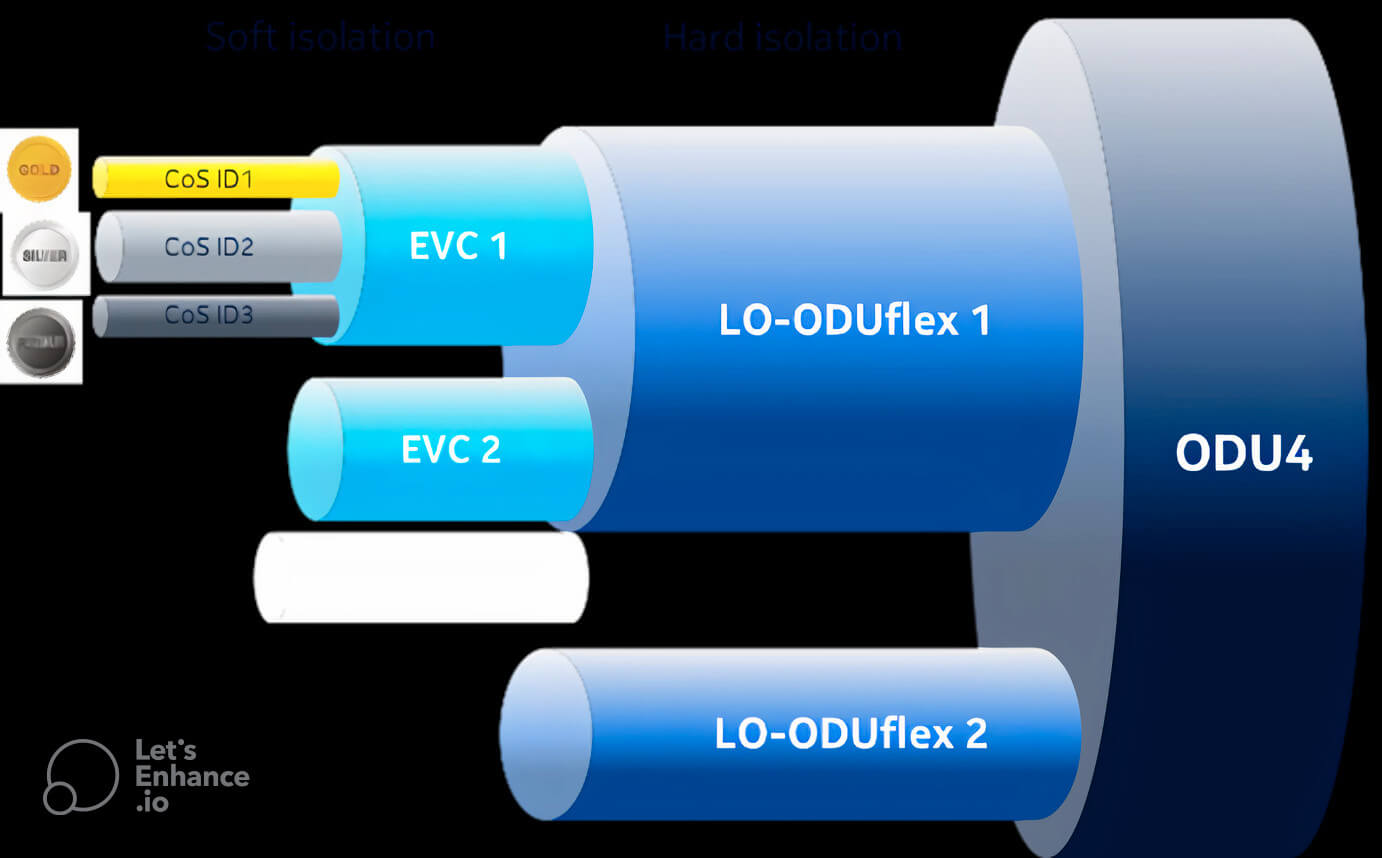
Data and video surges cause a shift from a single class of service to multiple classes of service in the backhaul network: In 2013, we’ll see a shift from a single class of service to multiple classes of service to address the demands of the end-users and maximize profitability for backhaul operators by avoiding costly over-builds. Currently all traffic on a network goes through a single pipe whether it be video or audio. With multiple classes of service, mobile operators will better be able to handle the unprecedented growth of data and achieve significant savings by only delivering services users pay for. Multiple classes of service also enable service providers to allocate network resources for services that matter, rather than providing a “dumb pipe” for all traffic and at all times. Customers, as well as content providers, are willing to pay for those differentiated services.

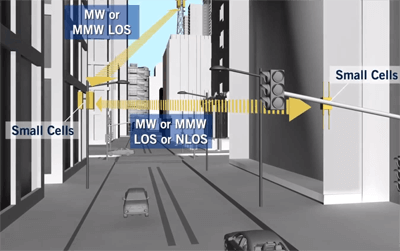
Carriers finally trial small cell deployments: There is a lot of buzz around small cells and how they will be instrumental in LTE network rollouts. 2013 will be the main trial year for carriers in outdoor small cell deployment, with carriers increasing RFQs for small cell equipment and their backhaul networks. As outdoor small cells will primarily be deployed on lamp posts and traffic signs in addition to the outside of buildings, they will require connectivity besides fiber. 80% of small cell backhaul will be over microwave or millimeter-wave links. Additionally, more than half of the growth in small cells will come from the APAC region.
Carrier LTE deployments will double to create 200+ commercial LTE networks: As more and more consumers buy devices with LTE capabilities, the demand for LTE services is increasing and carriers will need to invest in their radio access networks. Today’s LTE networks are focused on providing basic coverage for LTE devices, but can’t support a large number of LTE devices on the network. In 2013, there will be a growing emphasis on moving towards increasing both coverage and capacity of LTE networks with the corresponding infrastructure investments. TD-LTE will also see more acceptance and trials, as it reduces carrier costs and requires fewer spectrum licenses.
Carriers figure out a way to provide value added services to businesses over cloud: Most business services in the past were primarily about delivering a pipe for transferring data between enterprise locations. But with enterprise (IT) services increasingly moving to the cloud, the demand for Ethernet business service is surging. 2013 will be the year when carriers figure out how to make money off of their networks by securely connecting customers to public and private clouds, and helping enterprise customers manage networks and infrastructure, increased use of mobile devices and a more mobile workforce in general. This will allow carriers to provide additional revenue generating services to their business customers, manage service level agreements, and be able to charge for different levels of service, and services that can change based on time-of-day.
Carriers and OEMs implement IEEE1588v2-based timing on a large scale: Radio networks require very precise timing in order to work. Until now, carriers have been focused on how to move their backhaul traffic to packet-based networks. In 2013, these packet networks will enter the next stage, where carriers are moving to their timing packet-based as well and the IEEE 1588v2 Precision Time Protocol will be the de-facto standard. Overall we’ll see a shift from awareness to actual implementation and deployment. There will be a concerted effort in the industry to define a standard mechanism for accurate time-of-day and phase delivery for LTE and LTE-Advanced networks based on IEEE 1588v2 technology.
Mobile devices are here to stay and only getting more prevalent. According to the Worldwide Mobile Industry Handbook, there will be 8.5 billion mobile subscribers worldwide by 2016, and Cisco’s Visual Networking Index predicts mobile data traffic to increase 26-fold over a five-year span. Wireless networks, especially for mobile access, as well as Enterprise networks, must naturally evolve to keep up.
Give that, these predictions are what Vitesse sees as top network infrastructure trends for 2013. How accurate are they? Who knows. We won’t know until this time next year when we gaze into the crystal ball again. In the meantime, what do you think?
About the Authors
 Martin Nuss joined Vitesse in November 2007 and is the vice president of technology and strategy and the chief technology officer at Vitesse Semiconductor. With more than 20 years of technical and management experience, Mr. Nuss is a Fellow of the Optical Society of America and a member of IEEE. Mr. Nuss holds a doctorate in applied physics from the Technical University in Munich, Germany. He can be reached at nuss@vitesse.com.
 Uday Mudoi is the director of product marketing at Vitesse Semiconductor. He holds a Bachelor of Science degree in electrical engineering from the Indian Institute of Technology, Kharagpur, a master’s degree in computer science from North Carolina State University, Raleigh, and an MBA from Columbia University, New York, N.Y. He can be reached at uday@vitesse.com.
About Vitesse