• Home
  • Events Calendar
  • Blueprint Guidelines
  • Privacy Policy
  • Subscribe to Daily Newsletter
  • NextGenInfra.io
No Result
View All Result
Converge Digest
Tuesday, May 5, 2026
  • Home
  • Events Calendar
  • Blueprint Guidelines
  • Privacy Policy
  • Subscribe to Daily Newsletter
  • NextGenInfra.io
No Result
View All Result
Converge Digest
No Result
View All Result

Home » FCC Requires USF Support from VoIP, Increased Fees from Wireless

FCC Requires USF Support from VoIP, Increased Fees from Wireless

June 20, 2006
in Uncategorized
A A

The FCC voted to adopt two proposals for boosting contributions for the Universal Service Fund (USF).

First, the FCC will raise the existing wireless “safe harbor” percentage used to estimate interstate revenue from 28.5 percent to 37.1 percent of total end-user telecommunications revenue to better reflect growing demand for wireless services. This interim wireless safe harbor was last updated in 2002. Wireless carriers continue to retain the option to base contributions on their actual revenues or on traffic studies that estimate their actual interstate revenues.

Second, the FCC will expand the base of USF contributions by extending universal service contribution obligations to providers of interconnected VoIP service. For interconnected VoIP providers, the FCC establishes a safe harbor percentage of interstate revenue at 64.9 percent of total VoIP service revenue. Interconnected VoIP providers also may calculate their interstate revenues based on their actual revenues or by using traffic studies.

“Maintaining the stability of the universal service contribution system is one of the Commission’s most important responsibilities. We take an interim step today to ensure the stability of the fund by raising the wireless safe harbor and broadening the contribution base to include interconnected VoIP providers. We take these actions because we recognize the changing telecommunications marketplace, said FCC Chairman Kevin Martin.

In a statement, FCC Commissioner Michael Copps commented: “I think the jury may still be out on whether today’s action actually puts enough additional funds into the universal service fund as DSL’s non-participation takes out. By some accounts DSL providers contribute $350 million a year to the fund, perhaps more…. I don’t see with slam-dunk certainty that contributions from interconnected VoIP (which is, for all its impressive growth, still a relatively nascent industry) and from wireless carriers (whose possibly increased use of traffic studies could lead to unforeseen consequences) offset the funds lost by DSL’s non-participation. Surely it would be an intolerable result to end up with the fund having less revenue, not more, for the foreseeable future. Last summer we pledged this result would not happen. Nine months later we seem to accept the possibility of a diminished fund.”http://www.fcc.gov

  • Every year, the nation’s universal service fund (USF) pays out approximately $673 million for low-income programs and about $3.0 billion to support high-cost rural services.
  • In May 2006, the FCC voted to adopt an order that requires facilities-based broadband Internet access providers and interconnected VOIP providers to provide Law Enforcement Agencies (LEAs) with all of the resources of the Communications Assistance for Law Enforcement Act (CALEA), enacted in 1994.
Tags: AllService Providers
ShareTweetShare
Previous Post

BT Launches Total Broadband

Next Post

OpVista Raises $28 Million for ROADMs

Staff

Staff

Related Posts

Blueprint: Building wholesale networks with OTN
All

Blueprint: Building wholesale networks with OTN

December 20, 2022
Huawei and Orange achieve 157 Tbps over 120km fiber link

Huawei and Orange achieve 157 Tbps over 120km fiber link

December 20, 2022
Oracle opens cloud region in Chicago
All

Oracle opens cloud region in Chicago

December 20, 2022
BT trials C-RAN in Leeds
All

BT trials C-RAN in Leeds

December 19, 2022
BT to combine Enterprise and Global units to create BT Business

BT to combine Enterprise and Global units to create BT Business

December 19, 2022
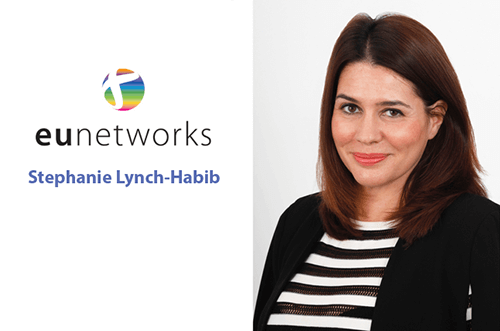
euNetworks appoints Stephanie Lynch-Habib to President

euNetworks appoints Stephanie Lynch-Habib to President

December 19, 2022
Next Post

Telco Systems to Acquire Metrobility Optical Systems

Please login to join discussion

Categories

  • 5G / 6G / Wi-Fi
  • AI Infrastructure
  • All
  • Automotive Networking
  • Blueprints
  • Clouds and Carriers
  • Data Centers
  • Enterprise
  • Explainer
  • Feature
  • Financials
  • Last Mile / Middle Mile
  • Legal / Regulatory
  • Optical
  • Quantum
  • Research
  • Security
  • Semiconductors
  • Space
  • Start-ups
  • Subsea
  • Sustainability
  • Video
  • Webinars

Archives

Tags

5G All AT&T Australia AWS Blueprint columns BroadbandWireless Broadcom China Ciena Cisco Data Centers Dell'Oro Ericsson FCC Financial Financials Huawei Infinera Intel Japan Juniper Last Mile Last Mille LTE Mergers and Acquisitions Mobile NFV Nokia Optical Packet Systems PacketVoice People Regulatory Satellite SDN Service Providers Silicon Silicon Valley StandardsWatch Storage TTP UK Verizon Wi-Fi
Converge Digest

A private dossier for networking and telecoms

Follow Us

  • Home
  • Events Calendar
  • Blueprint Guidelines
  • Privacy Policy
  • Subscribe to Daily Newsletter
  • NextGenInfra.io

© 2025 Converge Digest - A private dossier for networking and telecoms.

No Result
View All Result
  • Home
  • Events Calendar
  • Blueprint Guidelines
  • Privacy Policy
  • Subscribe to Daily Newsletter
  • NextGenInfra.io

© 2025 Converge Digest - A private dossier for networking and telecoms.

This website uses cookies. By continuing to use this website you are giving consent to cookies being used. Visit our Privacy and Cookie Policy.
Go to mobile version