By: Julius Francis, Head of Product Marketing & Strategy, Juniper Networks
Despite the world’s transition to remote operations nearly overnight, customers have maintained high expectations that their experiences would remain seamless throughout the COVID-19 pandemic. To keep pace with these expectations, service providers have had to shift their priorities to focus on automation in order to deliver reliable, efficient and scalable network operations despite surging traffic patterns and challenges posed by new disparate workforce models.
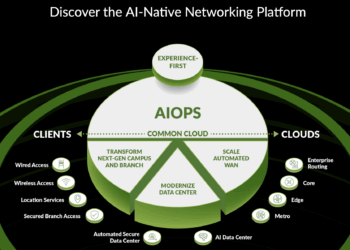
In fact, a study by Ernst & Young found that the main driver of automation adoption in telecommunications is the optimization of customer experience. Nearly four-fifths of respondents cited that the importance of optimizing the customer experience was the key reason for their adoption of artificial intelligence (AI). This concept is known as ‘Experience-First Networking,’ which requires a high level of automation to ensure large-scale networks are run reliably and efficiently.

However, the benefits of network automation extend not only to customer experience, but also to other critical areas where the network plays a foundational role, including Smart Cities, 5G growth, the introduction of AI for new applications and more.
The Vital Role of Networks in Emerging Applications and Smart Cities
There’s no doubt automated networking will play a vital role in the emergence of smart cities. In a recent report by ESI ThoughtLab, North American cities, including 40 in the United States, have more advanced digital services and digital infrastructure than their international counterparts. According to the report, cities in North America are the most prepared to deliver government services built on AI, the Internet of Things (IoT) and cloud-based software.
Beyond the United States, we’re seeing the emergence of smart cities around the world. In Singapore, one of the highest ranked smart cities in the world, there are impressive advances to the city’s technology infrastructure and ongoing digital initiatives. The smart city’s efforts were especially helpful in returning their citizens to normalcy during the COVID-19 pandemic – the government used smart facility management, IoT and surveillance to create advanced, safe and livable urban environments.
With more than two-thirds of the world’s population expected to live in cities by 2050, networks are poised to play a foundational role in supporting the future of smart cities. As planning takes shape, connectivity will need to incorporate a blend of emerging applications and technologies that will require a strong network infrastructure centered around a secure, scalable and automated multi-cloud environment. Leveraging automation and AI will be extremely important in gathering and analyzing the large amounts of data these cities produce, while allowing networks to make real-time decisions for an overall assured service experience.
The Growth of 5G
While 5G rollouts slowed in the past year due to the pandemic, we’re now seeing rollouts quickly progressing around the world. This is crucial, as the right 5G infrastructure is required to deliver the next generation of services and experiences to consumers, enterprises and government.
It’s important to note that AI and automation are required to reduce the operational costs and complexities of 5G networks by automating complex network functionalities and effectively using data to make decisions and solve problems. With massive speeds, huge connection densities and ultra-low-latency experiences, automation will be a critical aspect of 5G rollouts.
Further, with the expansion of 5G, we’re sure to see progress in new consumer applications (e.g., gaming and augmented/virtual/mixed reality), as well as 5G for industry verticals, consumer broadband, enterprise broadband, cloud-managed services and more. As such, service providers should expect to invest in AI and automation to manage 5G networks, ensuring they are optimized to provide assured service experiences to customers.
Tapping AI for Greater User Experience
While network operators have long relied on manual processes for managing connectivity and fixing issues that arise, this approach has consistently introduced human error into the process. The past year made it more evident that connectivity will always be in demand; therefore, it’s no surprise to see service providers continue to invest in open, agile network architectures that enable them to respond, innovate and scale smartly – driven by the expansion of 5G networks, smart cites and other emerging technologies.
AI-powered automation has the power to transform the way of designing, building and running networks by taking the guesswork out of network operations, removing human error and improving the decision-making process. This will allow service provides to deliver a consistent and assured service experience for both operations and customers.
As the rise of emerging technologies make networks more complex and workforces become more dispersed, service providers must embrace the concept of ‘Experience-First Networking’ and formally place automation at the forefront of their customer experience investment priorities.