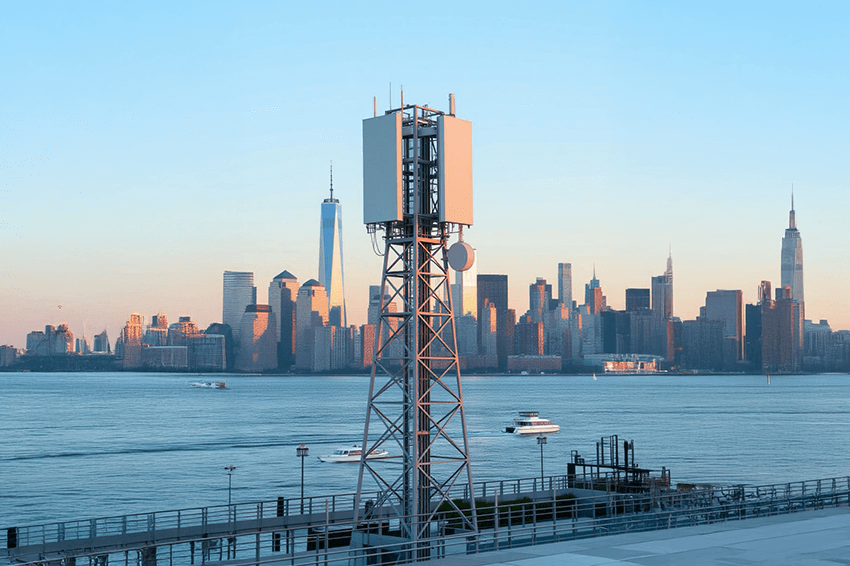
AT&T has launched a USD 14 billion network modernization program with Ericsson to overhaul its nationwide wireless infrastructure, introducing a comprehensive set of hardware, software, and supply chain improvements. The project aims to manage surging traffic loads while reducing power consumption across thousands of cell sites. North American mobile data traffic more than doubled between 2019 and 2024, and AT&T’s 5G volumes rose 96% in 2024 alone, underscoring the need for large-scale upgrades.
The modernization replaces legacy radios with Ericsson’s latest dual- and tri-band platforms, which simplify tower configurations and reduce energy use by up to 25%. Massive MIMO units, such as 64T dual-band arrays, add capacity while cutting power compared with earlier deployments. Ericsson’s Cloud RAN framework provides a cloud-native compute layer that allows flexible resource allocation, accelerating the rollout of new features.
Software automation complements these hardware upgrades. Ericsson’s Micro Sleep TX disables idle transmitters during low-traffic periods, while AI-driven rApps dynamically optimize power levels and spectrum use. The Cloud Log Analyzer Tool (CLAT), now active in AT&T facilities, ensures radios are properly diagnosed before shipping, reducing false returns from 40% to 12%. On the logistics side, Ericsson’s Digital Twin solution uses drone-captured 3D models of towers to reduce site revisits, while direct shipping and local repair centers minimize unnecessary transport. These measures collectively avoid nearly 23,000 metric tons of carbon emissions annually and eliminate 2.6 million miles of transport—equivalent to removing more than 5,300 cars from the road.
Key elements of the solution:
- Dual- and tri-band radios consolidate spectrum bands, cutting tower footprint and energy use
- Massive MIMO units deliver higher capacity with 22–25% lower power consumption
- Cloud RAN supports cloud-native, open architectures for faster scaling
- Micro Sleep TX automatically powers down radios during off-peak periods
- AI-powered rApps continuously optimize network performance and energy efficiency
- CLAT diagnostics cut logistics waste by reducing false equipment returns
- Digital Twin site models streamline design, eliminating ~2 site visits per location
- Supply chain redesign avoids nearly 23,000 metric tons of CO2 annually via local repairs and direct shipping
“Our modernization strategy aims to deliver the exceptional network experience our customers deserve. With the deployment of next-generation technology and infrastructure, we are boosting capacity, coverage, and performance—all while enhancing operational efficiency,” said Todd Zeiler, Vice President of Network Construction and Engineering at AT&T.
“Energy efficiency is a key focus of this transformation. We are deploying hardware that is 20% more efficient than previous generations, combined with advanced software that powers down radios during periods of low traffic,” added Paul Challoner, VP and CTO for the Global Customer Unit AT&T at Ericsson.
| Element | Description | Impact |
|---|---|---|
| Dual & Tri-band Radios | Consolidates multiple frequency bands into single units | Simplifies towers, reduces equipment, cuts power up to 25% |
| Massive MIMO | Replaces two 64T single-band radios with one dual-band 64T | Boosts capacity, 22–25% lower power consumption |
| Cloud RAN | Cloud-native compute for radio resource allocation | Faster feature deployment, higher network flexibility |
| Micro Sleep TX | Disables idle transmissions in low-traffic windows | Cuts energy use during off-peak periods |
| AI-powered rApps | Real-time optimization of radio parameters | Improves energy efficiency, network responsiveness |
| CLAT Diagnostics | On-site tool validating radio faults before shipping | Reduces false returns from 40% to 12%, lowers logistics costs |
| Digital Twin Planning | Drone-based 3D modeling of towers and sites | Eliminates ~2 site visits per location, saves 2,900 tons CO2/year |
| Supply Chain Redesign | Direct vendor shipping + local repair centers | Cuts 22,963 tons CO2 annually, 2.6M transport miles avoided |
🌐 Analysis: AT&T’s overhaul demonstrates a layered approach to telecom modernization, with efficiency engineered at every level—radio design, AI-based optimization, and supply chain logistics. While Verizon and T-Mobile are pursuing Massive MIMO and early Open RAN deployments, AT&T’s supply chain redesign and Digital Twin integration set a new bar for combining performance upgrades with environmental gains. For Ericsson, this deal reinforces its leadership in Open RAN and Cloud RAN deployments in the U.S., intensifying competition with Nokia and Samsung as operators scale toward 5G Standalone.
/