by Sonal Puri, CEO of Webscale Networks
With the end of the year comes the inevitable flood of predictions about the evolution of various technologies in the coming year. And while predictions about upcoming security threats and malware are likely to come in droves, there’s one area that is sure to get easily overlooked: what’s going to evolve in companies’ back-end systems in the New Year. Organizations’ networks and infrastructures will see some changes in 2016, and those changes should come from surprising places.
The Death of the Traditional ADC

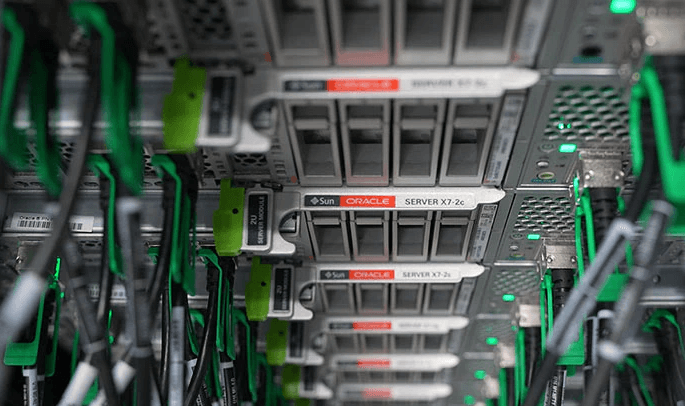
Everyone understands that the rise of cloud computing will mean the beginning of the end for on-premise datacenters and server rooms. But one technology that gets overlooked is the application delivery controller (ADC). Traditional ADCs are physical boxes that sit in server rooms and control the distribution of website visitor requests to different servers. But as more companies move their servers to the cloud, there will no longer be a need for a physical product to handle web traffic distribution. Furthermore, if companies have a hybrid on-premise-plus-cloud deployment, it won’t make sense for them to use a box in their server room in addition to a SaaS version in the cloud. A SaaS version can transition across different cloud providers, managed services, and the data center, but for obvious reasons a physical ADC can’t.
The end of traditional ADCs will also be a bad sign for the middleware companies putting these boxes together. It’s likely that vendors such as F5 and Citrix will announce plans for cloud expansion next year, but it’s also likely that these plans will fizzle out. It’s highly possible that ADC vendors will become part of the trend of server vendors working directly with SaaS vendors, and leaving appliance middleware creators out in the cold. In the business world, it’s almost impossible for the old players to take on the new, more nimble players and succeed. For example, look at what happened to Blockbuster when it tried to take on Netflix, or the fight between Amazon and Barnes & Noble.
SSL Encryption Becomes Ubiquitous
SEO has evolved from a buzzword to a business strategy, and everyone is looking for a boost in page ranking over their competitors. But one of the lesser known strategies for boosting page ranking is “forcing” SSL encryption. Last year, Google announced that it had started determining if a website secures the entire user session by HTTPS – and, if it did, Google would raise the site owner’s page ranking. This news has gone under the radar until recently, but Symantec just published a white paper outlining how this process works. As Google is pretty much ubiquitous with searching, we’ll see a lot more companies adopting SSL encryption in 2016. While this technology has been out there for a while, its new marketing potential will prove to be much more of an impetus than will its security benefits.
Slow is the New Down
One of the biggest problems for organizations’ websites is an increased lack of patience from visitors when it comes to website performance. Website applications can go down, and companies won’t realize it because their old and unsophisticated monitoring tools typically report only if a website has crashed completely. When it comes to user satisfaction, however, a slow and unresponsive website is just as damaging to your brand as a downed website. Research has revealed that 47% of consumers expect a web page to load in two seconds or less, and 40% will completely abandon a website that takes more than three seconds to load. As was evident during this year’s Cyber Monday shopping, these experiences are not limited to small e-commerce businesses, but big players as well. With dynamic websites that require that every user see something different when visiting, infrastructure managers need to be looking at services that not only predict traffic surges and scale appropriately, but also self-heal in the event of a failure.
How to Prepare
What’s the best way to address these changes? More important than any particular solution is the need for organizations to be mindful of what users expect when visiting their websites. If an organization has cloud deployments or other infrastructure changes on the horizon, be sure that those changes can scale to meet future needs as well as present needs. Consider for example how social media and new customer engagement tools have transformed how we reach our customers, and the speed of their response. Think also about how your team will manage this growing infrastructure as you expand into new territories, new countries and across multiple public, private and hybrid cloud environments. In the end, improving an organizations’ infrastructure is about thinking how to meet the needs of users and customers, and how to ensure that if you do strike gold, with the right promotion, at the right time, that your website isn’t going down, while your sales are going up.
About the Author
 Sonal Puri serves as the Chief Executive Officer of Webscale Networks (previously Lagrange Systems). Prior to Lagrange, she was the Chief Marketing Officer at Aryaka Networks and led sales, marketing and alliances for the pioneer in SaaS for global enterprise networks. Sonal has more than 18 years of experience with Internet Infrastructure in sales, marketing, corporate and business development and channels. Previously, Sonal headed business development and corporate strategy for the Application Acceleration business unit, and the Western US Corporate Development team at Akamai Technologies working on partnerships, mergers and acquisitions. Sonal also ran global business operations, channels, business development and the acquisition for Speedera Networks (AKAM) and held key management roles in sales, marketing and IT at Inktomi, CAS and Euclid. Sonal holds a Master’s degree in Building Science from the University of Southern California, and an undergraduate degree in Architecture from the University of Mumbai, India.

Got an idea for a Blueprint column? We welcome your ideas on next gen network architecture.
See our guidelines.