by Prayson Pate, CTO, Edge Cloud, ADVA
I used to ask the question: Why do customers of managed services care about NFV?
My answer was: They don’t. But they do care about the benefits of NFV, such as choice, services on demand, and new commercial models such as pay-as-you-go and try-before-you-buy.
But the situation has changed. Now, customers looking at managed services are asking for virtualized solutions. Our sources show that half of end-user tenders for managed services call for universal CPE (uCPE) by name. They want the benefits of a managed service, combined with the benefits of virtualization, without the headaches of doing it themselves.
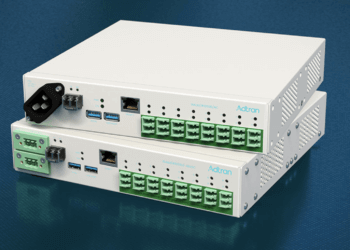
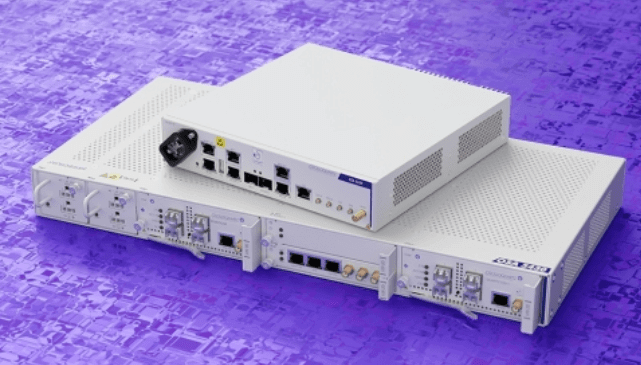
And, in case you forgot, uCPE is the replacement of a stack of communications devices (e.g., router, firewall, SD-WAN endpoint, etc.) with software applications running on a standard server.
Why are end-users asking for uCPE?
End-user reasons for virtualized services and uCPE
 Here are some of the top reasons that end users are asking for virtualized solutions delivered using uCPE. These reasons apply whether the end-user is consuming a managed service or they are operating their own overlay network services.
Dynamic services delivered on-demand. This is probably the biggest reason. End-users want to be able to choose and change their services in real-time. They know if a service is delivered using a stack of dedicated appliances, then every service change means changing appliances – at every site. This is no longer acceptable, as it is costly, slow and it does not scale.
Usage-based services. End users can consume cloud resources on a pay-as-you-go basis, with no commitments. They want to be able to consume their managed communications services in the same way.
Try-before-you-buy services. Almost every paid service on the internet has a free trial period. End users expect the same with their communications services. Once a site is served by a uCPE hosting device, any service can be offered on a trial basis. This is great for end-users, but why would the service provider and VNF supplier support this model? Because their incremental cost is zero, and the acceptance rate is high. Try-before-you-buy is a win-win for all parties.
User-managed applications. Enterprises want to take advantage of multi-cloud hosting. That includes on-premises hosting to meet requirements for latency, security and bandwidth. They want those benefits, but without having to manage their own hardware. They see managed edge cloud hosting on uCPE as the answer.
Decouple hardware from software and break vendor lock-in. This one is standard for service providers, but it may surprise you to learn that it affects enterprises also. I recently talked to an enterprise that is operating their own SD-WAN network. Their favorite SD-WAN supplier was acquired by one of the big guys. As a result, their pricing went up, and the availability of the endpoint devices got much worse. To make a change meant ripping and replacing every endpoint. They do not want to be in this situation again. By moving to uCPE, they enable a future change of SD-WAN supplier – without changing the installed hardware.
Self-operated network versus managed services
Before we go on, I would like to comment on the eternal debate about whether to run your own network or use managed services. This topic has been well-hashed, but the advent of virtualized services on uCPE changes the equation. It provides more benefits than an appliance-based approach. But it introduces the complexity of a multi-vendor system. The complexity is going to be acceptable for some larger enterprises. But many others will find that a managed and virtualized service gives them all the advantages without the drawbacks (as described here).
Real-world example: before uCPE and with uCPE
Let’s take a look at how the advantages of a virtualized service delivered with uCPE can benefit an end-user. Assume that you are opening a new store or branch office, and you need internet connectivity, VPN, and managed security. Here is a step-by-step comparison of the end-user experience.

I don’t know about you, but I like the “with uCPE” model a lot better!
The cloud is spreading to telecom
End users are increasingly moving their applications to the cloud, and they understand the benefits of doing so. End users expect the same cloud benefits of flexibility, speed and software-centric development in their communications services. NFV and uCPE are how we bring the power of the cloud to communications services – and to end-users.