The Institute for Telecommunication Sciences (ITS) has given a passing grade to a Citizens Broadband Radio Service (CBRS) Environmental Sensing Capability (ESC) system developed by CommScope and Google.
ITS, which is part of the National Telecommunications and Information Administration (NTIA), is the official test lab that has been tasked with confirming the performance of ESCs.
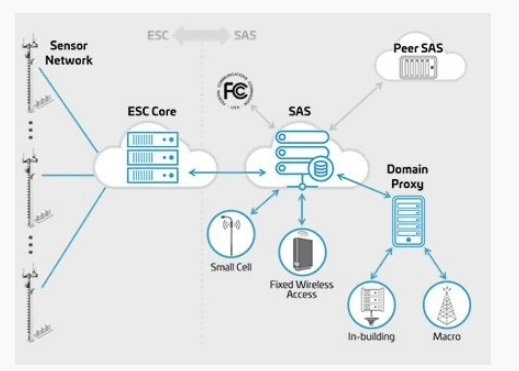
CBRS provides 150 MHz of spectrum in the 3.5 GHz band in the U.S. CBRS spectrum is managed by Spectrum Access Systems (SASs) but will require an ESC network to detect federal radar operations. The ESC will alert the SASs of federal radar activity, and SASs will then reconfigure nearby CBRS devices to operate without interfering with federal operations.

“Our ESC sensor has passed all required testing for certification – demonstrating that we can detect all current and future radar waveforms and our respective SASs can protect incumbent users,” said Mat Varghese, Senior Product Manager, Wireless Services, Google. “This is an important milestone and we are looking ahead toward commercial operations in CBRS.”
“We are pleased that our ESC sensor, as expected, has passed all testing from the lab and is on track for the next phase,” said Mike Guerin, vice president of Integrated Solutions, CommScope. “We look forward to initial commercial deployment and working with customers and federal agencies to ensure success.”
The joint CommScope/Google ESC network is currently being deployed and is expected to be completed by the end of the year. CommScope and Google will each own and operate independent SAS systems which will provide service using the jointly operated ESC network.
CommScope and Google develop Environmental Sensing for CBRS
 CommScope and Google agreed to jointly develop, deploy and operate an Environmental Sensing Capability (ESC) network for the Citizens Broadband Radio Service (CBRS) market.
CBRS spectrum is managed by Spectrum Access Systems (SASs), which require an ESC network to sense radar operation. The ESC will alert the SASs of naval radar operations so the connected SAS systems can reconfigure spectrum allocations for nearby CBRS devices to operate without interfering with naval activity.
The companies said they will each provide independent SAS services and jointly operate the ESC network. The ESC network is engineered for high availability with the built-in redundancy and fault detection necessary to provide this key enabling capability. As part of this collaboration, both companies share responsibility for overall network design.
Google has developed the ESC sensor and cloud decision engine and will operate the cloud that communicates with each SAS. CommScope will deploy and manage the operation of the physical network. CommScope and Google are working with the FCC and other governmental agencies to obtain certification of the ESC.