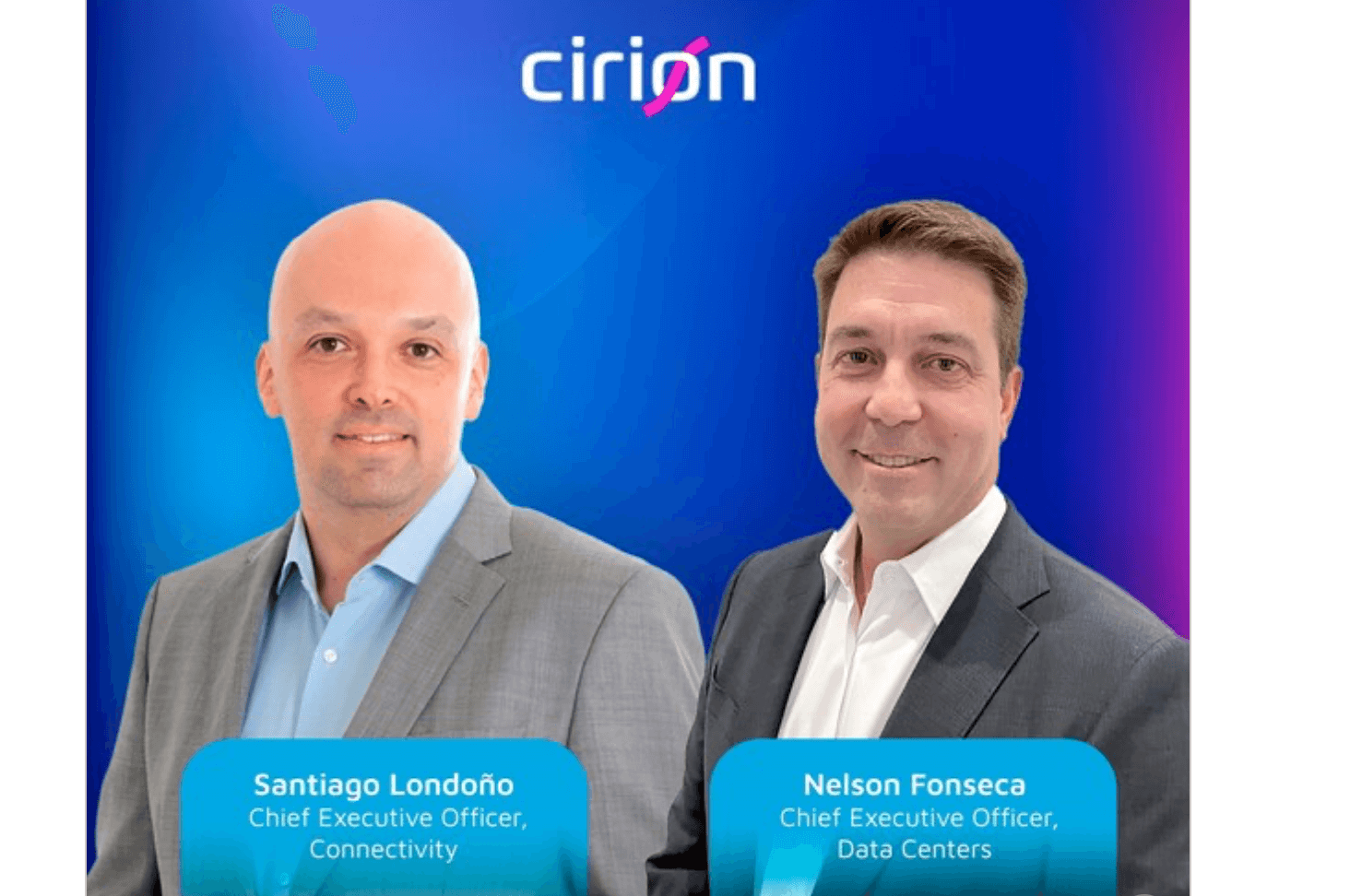
Cirion Technologies announced the appointment of Santiago Londoño and Nelson Fonseca as Chief Executive Officers of its Connectivity and Data Center businesses, respectively, marking a key leadership transition aligned with the company’s operational split into two core business units. Both executives will report directly to the Board of Directors. Outgoing CEO Facundo Castro, who led Cirion through its 2022 carve-out from Lumen Technologies, will remain on the company’s board.
Santiago Londoño, who joined Cirion in April 2025 as President of Connectivity, brings over 25 years of telecom experience from roles at Millicom, Liberty Latin America, and McKinsey. Nelson Fonseca, appointed President of Data Centers in 2024, previously served as CEO of Cyxtera and has overseen Cirion’s recent data center expansions in Peru and Chile. Their promotions come as Cirion aims to sharpen its strategic focus, drive growth, and capitalize on accelerating demand for digital infrastructure across Latin America.
The leadership handoff follows Cirion’s decision to formally separate its Data Center and Connectivity operations, a move expected to enhance customer alignment and operational agility while leveraging shared infrastructure and capabilities. The company currently serves over 5,500 customers across the region and operates a vast terrestrial and subsea fiber network alongside a growing data center portfolio.
Leadership Details:
- Santiago Londoño: CEO, Connectivity (Joined Cirion in April 2025; ex-Millicom, Liberty, McKinsey)
- Nelson Fonseca: CEO, Data Centers (Joined in Feb 2024; ex-Cyxtera CEO)
- Facundo Castro: Stepped down as CEO, joins Board (CEO since 2022)
Cirion Technologies was established in 2022 following its carve-out from Lumen Technologies, one of the largest U.S.-based telecom companies. The divestiture, backed by Stonepeak, a leading infrastructure investment firm, aimed to create a focused Latin American digital infrastructure provider. Headquartered in Miami, Florida, Cirion inherited and now operates Lumen’s extensive network assets in Latin America, including over 90,000 kilometers of fiber routes and more than a dozen data centers across key regional markets such as Brazil, Argentina, Chile, Colombia, and Mexico.