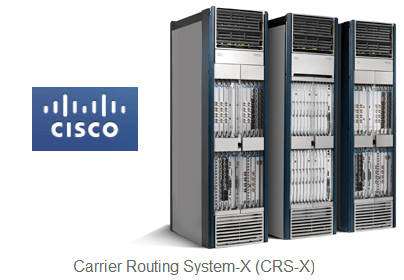
Cisco is extending its core routing product line with a new model boasting 400 Gbps per slot capacity and the ability to scale to multi-chassis configuration with nearly 1 petabit per second capacity. The platform is engineered for high densities of 10 GE, 40 GE and 100 GE in core service provider networks. The scalability enables up to 64×100 GE ports in one chassis. The platform is powered by a new set of custom ASICs developed in-house.

The Cisco Carrier Routing System-X (CRS-X), which will ship later this year, retains IOS-XR and line-card compatibility with the previous CRS models while offering 10 times the capacity of the original CRS-1, which was introduced in 2004.
Key innovations include Cisco AnyPort technology allowing the use of new CMOS-based line card (Cisco CPAK) to reduce power consumption, reduce the cost of sparing, and increase deployment flexibility. For example, each interface can be configured for either single port 100 Gigabit Ethernet, 2×40 GE, or 10 x10 GE and either short-, long-, or extended-reach optics by selecting a specific CPAK transceiver.
The CRS-X architecture also allows for IP and optical layer convergence. The CRS-X can be configured with integrated optics or the new Cisco nV optical satellite. Both allow for a single IP and optical system that utilizes Cisco’s nLight technology for control plane automation. The nV optical satellite deployments operate as a single managed system with the Cisco CRS Family to reduce operational expense and deliver high-density 100 GE scaling.
Cisco noted that it has shipped more than 10,000 CRS systems since 2004.
“Cisco’s flagship networking platforms are designed with investment protection for decades and beyond, unlike other technology providers, which force operators to rip and replace their products on a regular basis. Service providers, large educational and research networks, and government agencies around the world are preparing for the next-generation Internet and the increasing demand for video, collaboration and distributed computing. Cisco CPAK technology and 400 Gbps per slot CRS-X demonstrate Cisco’s commitment to leading the industry in IP core technology and protecting the investment of our existing CRS customers,” stated Surya Panditi, senior vice president and general manager, Cisco’s service provider networking group.
http://newsroom.cisco.com/press-release-content?type=webcontent&articleId=1208192
- In March 2103, isco showcased its new 100 Gbps, CMOS-based transceiver technology at this week’s OFC/NFOEC 2013 event in Anaheim, California. The new technology, which Cisco describes a breakthrough for the rollout of 100G services, is powered by Cisco’s nLight silicon.

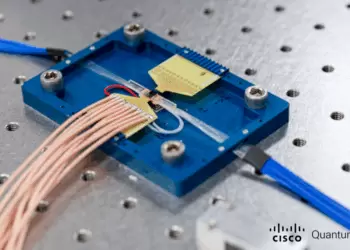
By integrating advanced optics in complementary metal oxide semiconductor (CMOS) technology, Cisco is able to significantly increase face-plate density for 100G pluggable optics.
The Cisco “CPAK” transceiver, which will initially be available on the Cisco ONS 15454 MSTP 100 G coherent transponder, reduces space and power requirements by over 70 percent compared with alternative transceiver form factors, such as CFP. Future routing and switching line cards will also incorporate CPAK technology. Cisco’s first line card to incorporate CPAK technology is the 100Gbps CPAK Coherent DWDM line card, compatible with the ONS 15454 MSTP platform. The card uses Cisco’s 100GE IEEE standards-based LR4, SR10 and ER4 CPAK pluggables on the client interface and Cisco’ ultra long-haul coherent technology on the network facing (trunk) interface.
In addition, Cisco announced that its 100G DWDM powered by nLight technology can cover distances of up to 4,800 km without the need for signal regeneration. The density of the technology enables 6 x 100G Transponders in a 6 RU chassis, or the equivalent of 8.4 Terabits of I/O in a single rack.