By Martin Nuss, Vitesse Semiconductor
As 2013 draws to a close, it’s time to ponder what’s next. We know connections are growing, as previously unconnected devices are now joining smart phones and tablets in the network, but how will they be networked? Furthermore, how will networks handle these additional connections, which are only going to grow faster in 2014? And lastly, how will all of these links be secured? Many advanced technologies have been developed for these exact questions. Here’s what I see coming to the forefront in 2014.
The Internet of Things: The Next All-Ethernet IP Network
Today’s world is defined by networking – public, private, cloud, industrial, you name it. Eventually everything will be connected, and mostly connected wirelessly. According to Morgan Stanley projections, 75 billion devices will be connected to the Internet of Things (IoT) by 2020. Clearly all these devices will need to be networked, and must be securely accessible anywhere, anytime.

Proprietary communications and networking protocols have long dominated networking within Industrial applications. With higher bandwidth and increased networking demands in Industrial process control, Smart-Grid Energy Distribution, Transportation, and Automotive applications, and Industrial networks are transitioning to standards-based Ethernet networking.
Networks within the broad-based Industrial applications realm will need many of the same capabilities developed for Carrier Ethernet, such as resiliency, high availability, accurate time synchronization, low power, security, and cloud connectivity. In 2014, we believe IoT will be the next network moving entirely to Ethernet-IP based in the Carrier Ethernet space. We also believe security, timing, reliability and deterministic behavior will become important requirements for these connected networks.
Network Security Sets Sights On Authentication, Authorization, Accounting (AAA) and Encryption
There will be more than 10 billion mobile devices/connections by 2017, including more than 1.7 billion M2M connections, according to Cisco’s most recent Visual Networking Index projections. As the number of network connections increase, so do the vulnerabilities. Anything with an IP address is theoretically hackable, and networking these devices without physical security heightens risk.
Security has long been an important issue, and the continued strong growth in the number of mobile Internet connections will bring more challenges in 2014. Operators will need to rely on the most advanced technologies available. New mobile devices with bandwidth-hungry applications, and the small cell networks needed to support them, exponentially multiply the number of network elements required in mobile networks. Long gone are the days of network equipment residing solely in physically secure locations like a central office or a macro base station. The network edge is particularly vulnerable because it is part of the Carrier network, but not physically secure. New types of access points directly exposed to users pose the obvious security concern. The BYOD trend introduces a new layer of vulnerable access points for enterprises to protect. Small cells are also particularly susceptible to hackers, as they are often installed outdoors at street level or indoors in easy-to-reach locations. Strong encryption of these last mile links can provide the necessary confidentiality of data. Authentication, authorization, and the corresponding accounting trails will ensure both the users and the equipment remain uncompromised.
In 2014, we expect that encryption and AAA will become key topics as Carrier equipment migrates to lamp posts, utility poles, and traffic signals. Encryption directly at the L2 Ethernet layer makes the most sense, especially as service providers offer more Carrier Ethernet Layer 2 (L2) VPN services. Fortunately, new MACsec technologies make it a viable option for wired and wireless WAN security.
SDN Looks Promising, But Carriers’ 2014 Focus Will Be On NFV
Software Defined Networking (SDN) and Network Function Virtualization (NFV) are widely discussed, but realization in Carriers’ networks is still some time away. Unlike datacenters, where SDN can be rolled out relatively easily, Carriers must modernize their complex operational structures before implementing SDN.
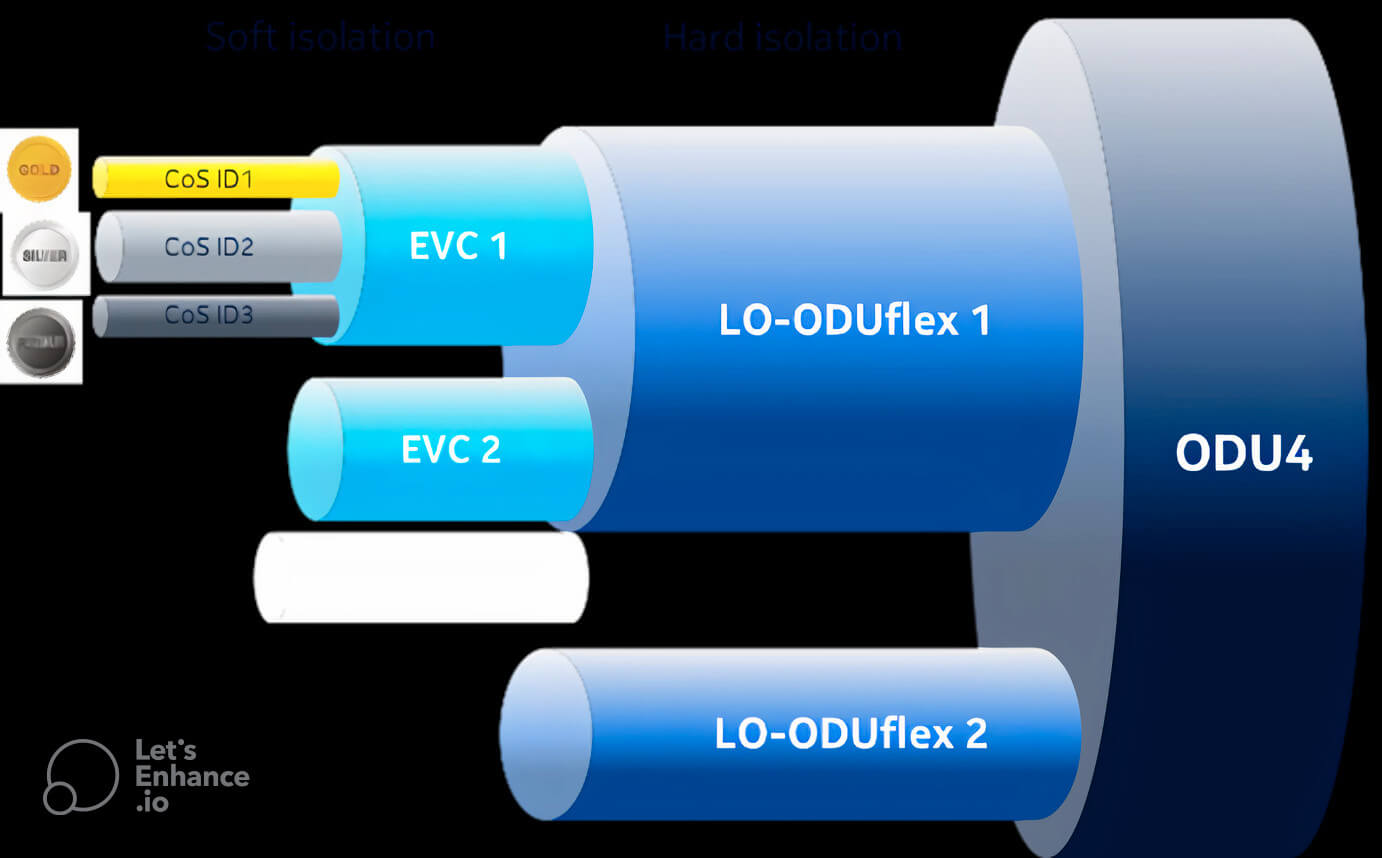
SDN’s biggest potential benefit to Carrier networks is its ability to create multiple, virtual private networks on top of a single physical network, which distributes costs by allowing multiple customers and service providers to securely share the same network. However, the entire network needs to support SDN in order to do that. On the other hand, NFV is about testing and deploying new services at the IP Edge faster and with lower CapEx. How? It’s made possible by creating the service in software, rather than with dedicated hardware. As long as the equipment at the network edge is NFV-ready, Carriers can create new services in centralized and virtualized servers. This captures Carriers’ imagination, since NFV promises a faster path to revenue with less risk and investment required. One of the first NFV applications we will see is Deep Packet Inspection (DPI). Because SDN requires spending money in order to save money, expect to see more Carrier attention to NFV in 2014.
4G RAN Sharing Becomes Widespread, Later Followed by 5G
Many see 5G as the next big thing, but beyond ‘more bandwidth’ little is defined, and the business drivers aren’t as clear as they were for 4G/LTE. We anticipate 5G will not fully materialize until 2020. Again, operators will need to upgrade networks for its deployment, and this might provide an opportunity to unify fixed, mobile, and nomadic network access.
In 2014, expect RAN sharing to become much more commonplace, with the financially strongest MNOs (Mobile Network Operators) installing the RAN infrastructure and leasing capacity back to other wireless service providers. This will allow participating operators to trade off CapEx and OpEx considerations. SDN (Software Defined Networking) will play a major role in slicing the RANs any way possible to partition the network infrastructure, while also virtualizing many aspects of the RAN.
 About the Author
Martin Nuss, Ph.D. is Vice President, Technology and Strategy and Chief Technology Officer at Vitesse Semiconductor. Dr. Nuss has over 20 years of technical and management experience. He is a recognized industry expert in timing and synchronization for communications networks. Dr. Nuss serves on the board of directors for the Alliance for Telecommunications Industry Solutions (ATIS) and is a fellow of the Optical Society of America and IEEE member. He holds a doctorate in applied physics from the Technical University in Munich, Germany.
About Vitesse