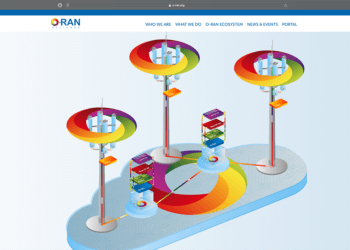
In the rapidly evolving landscape of mobile telecommunications, Open Radio Access Network (Open RAN) stands out as a transformative paradigm shift. Traditional Radio Access Networks (RANs), which form the backbone of cellular connectivity, have long been dominated by proprietary, integrated systems from a handful of vendors. This has led to vendor lock-in, high costs, and limited innovation. Open RAN seeks to dismantle these barriers by promoting disaggregated, interoperable, and software-driven architectures. At its core, Open RAN enables operators to mix and match components from different suppliers, fostering competition, reducing costs, and accelerating technological advancements.
As of 2025, Open RAN is no longer a nascent concept but a maturing technology with real-world deployments and growing ecosystem support. This article delves into its origins and mission, key technical principles, the standards development efforts by the O-RAN Alliance, the role of government programs in its adoption, persistent market obstacles, notable implementations, and the promising path forward.
Origins and Mission
The roots of Open RAN trace back to the mid-2010s, amid growing concerns over the concentration of power in the RAN market. Major telecom operators, frustrated by dependency on a few giants like Ericsson, Nokia, and Huawei, began advocating for openness. In 2016, the xRAN Forum was established to promote extensible RAN architectures, while the C-RAN Alliance focused on centralized RAN solutions. These efforts culminated in 2018 with the formation of the O-RAN Alliance through the merger of these groups, initially comprising five founding operators: AT&T, China Mobile, Deutsche Telekom, NTT DOCOMO, and Orange.
The O-RAN Alliance’s mission is to reshape the RAN industry toward more intelligent, open, virtualized, and fully interoperable mobile networks. By defining open interfaces and standards, it aims to create a diverse ecosystem where vendors of varying sizes can compete, driving innovation and cost efficiencies. This mission aligns with broader industry trends like 5G rollout and the push for supply chain diversification, especially in light of geopolitical tensions that highlighted risks in relying on single-country suppliers.
Today, the Alliance boasts over 300 members, including 32 mobile network operators, and has expanded its scope to include intelligence via AI and machine learning (ML) integration. Its vision extends beyond 5G to influence 6G development, emphasizing automation and sustainability.
Key Technical Principles
Open RAN is built on several foundational principles that differentiate it from traditional RANs. First and foremost is disaggregation: The RAN is broken down into modular components—the Radio Unit (RU), Distributed Unit (DU), and Centralized Unit (CU)—which can be sourced from different vendors. This contrasts with monolithic base stations where hardware and software are tightly coupled.
A second principle is open interfaces. Open RAN adheres to standardized interfaces, such as the O-RAN fronthaul (between RU and DU) and midhaul (between DU and CU), ensuring interoperability. These interfaces are based on 3GPP standards but extended by O-RAN specifications to support multi-vendor environments.
Third, virtualization and cloud-native design play a pivotal role. Components like the DU and CU can run as virtualized network functions (VNFs) or cloud-native functions (CNFs) on commercial off-the-shelf (COTS) hardware, often in edge or central clouds. This enables scalability, flexibility, and easier upgrades.
Intelligence is another cornerstone, embodied in the RAN Intelligent Controller (RIC). The RIC comes in near-real-time (for sub-second decisions) and non-real-time (for broader optimization) variants, leveraging AI/ML to automate network management, optimize resource allocation, and enhance performance. For instance, xApps and rApps (applications running on the RIC) can dynamically adjust beamforming or handle traffic surges.
Finally, white-box hardware promotes commodity servers and radios, reducing costs and encouraging innovation. Security is woven in, with principles like zero-trust architecture to mitigate risks in disaggregated systems. These principles collectively aim to make RANs more agile, cost-effective, and future-proof.
Standards Development of the O-RAN Alliance
The O-RAN Alliance drives standards through 11 working groups (WGs) and focus groups, covering architecture, interfaces, security, and testing. Since its inception, it has published hundreds of specifications, with 60 new or updated documents released since March 2025 alone, bringing the total to 134 in current versions.
Key developments include the O-RAN architecture reference model, which builds on 3GPP but adds open fronthaul (O-FH) specifications for enhanced interoperability. Recent releases emphasize 6G readiness, such as a research report on “Generative AI Use Cases and Requirements on 6G Network,” exploring AI integration for network optimization and native GenAI services. White papers like “O-RAN Enabling 5G Private Networks” highlight advantages in private deployments, while “Agile Approach to Open RAN Deployment” shares best practices from operators like Bell Canada.
The Alliance collaborates with bodies like ETSI (for transposition into regional standards), 3GPP (for 6G coordination), and the O-RAN Software Community (OSC), which develops open-source software for testing and integration. Initiatives like Global PlugFests and the Certification and Badging Program, supported by Open Testing and Integration Centres (OTICs), ensure compliance and build ecosystem confidence.
Nokia leads in contributions, accounting for about 17% of technical inputs over the past three years, underscoring the Alliance’s collaborative ethos. A joint workshop with 3GPP in April 2025 marked progress toward unified 6G standards.
Influence of Government Programs
Government initiatives have been instrumental in accelerating Open RAN adoption, particularly to enhance supply chain resilience and competition. In the United States, the National Telecommunications and Information Administration (NTIA) has led efforts through the Public Wireless Supply Chain Innovation Fund, with over 90 applications requesting nearly $3 billion in its third round by May 2025. NTIA tests indicate Open RAN is “rapidly advancing” toward maturity, though less so than single-vendor solutions.
The U.S. has invested heavily to counter Huawei dominance, with policies under both Biden and Trump administrations promoting Open RAN for secure 5G networks. Internationally, Japan collaborates with the U.S. on scaling Open RAN, funding verification tests to mature the technology. The UK and EU have similar programs, like the UK’s Open Networks Programme, offering grants for trials.
These efforts provide funding, testing facilities, and policy incentives, influencing operators to prioritize Open RAN in procurements. For example, government-backed events like the Open RAN Technical Summit bring together analysts and experts to discuss advancements. Overall, public sector investment has shifted Open RAN from a niche to a strategic priority, especially for private networks and national security.
Market Obstacles
Despite progress, Open RAN faces significant hurdles. Interoperability remains a top challenge; inconsistent outputs from OTICs and varying vendor implementations lead to integration issues. End-to-end performance in multi-vendor setups often lags behind proprietary systems, with higher total cost of ownership (TCO) due to integration efforts.
Maturity gaps persist, as products are “less mature than single-vendor solutions,” per U.S. government tests. Security concerns in disaggregated architectures, such as potential vulnerabilities at open interfaces, require robust zero-trust measures. Economic factors, including deferred deployments due to higher upfront costs, have slowed adoption.
System integrator expertise is scarce, as O-RAN is still evolving, and testing challenges like inconsistent standards hinder scalability. Reports suggest barriers like these could delay widespread rollout, with operators needing clearer paths to overcome them. Addressing these requires stronger collaboration, standardized testing, and proven TCO reductions.
Implementations
Open RAN deployments are gaining traction, with several operators leading the way. Rakuten Mobile in Japan pioneered a fully virtualized, Open RAN-based 4G/5G network, now expanding with Symphony to MobiFone in Vietnam for one of Southeast Asia’s first Open RAN networks by 2025.
In the U.S., DISH Network’s greenfield 5G deployment exemplifies Open RAN’s potential for rapid infrastructure buildout, using multi-vendor components for nationwide coverage. Orange plans to deploy solely Open RAN-compliant equipment starting 2025, following successful trials.
Other examples include Vodafone’s pilots in Europe and AT&T’s collaborations with Ericsson for hybrid Open RAN integration. Industry events like PlugFests have tested resilience, with recent demonstrations advancing integration. Forecasts predict momentum post-2025, with Open RAN comprising 15-20% of global deployments by 2030. Private networks, such as those in manufacturing, benefit from O-RAN’s flexibility, as highlighted in Alliance white papers.
Path Forward
Looking ahead, Open RAN’s trajectory is optimistic, with market projections valuing it at $3.98-6.53 billion in 2025 and reaching $46.73 billion by 2032. Analysts like Dell’Oro predict Open RAN accounting for 5-10% of RAN revenues in 2025, growing to over 25% by 2029, driven by AI integration.
The evolution toward AI-RAN—merging AI with Open RAN—promises smarter networks, with dynamic tuning and monetizable services. 6G preparations, including GenAI use cases, position Open RAN as a foundation for future networks. Challenges like TCO will ease with maturity, and no major multivendor setbacks are expected in 2025.
Sustainability, through energy-efficient hardware, and private wireless growth (>20% in 2025) will fuel adoption. Collaboration among stakeholders, bolstered by government support, will bridge gaps, ensuring Open RAN’s role in a diverse, resilient telecom future.
Conclusion
Open RAN represents a pivotal evolution in mobile networks, promising openness, innovation, and efficiency. From its operator-driven origins to ongoing standards work and government-backed accelerations, it addresses longstanding industry pain points. While obstacles like interoperability persist, successful implementations and a clear path toward AI-enhanced, 6G-ready systems signal a bright future. As adoption scales, Open RAN could democratize telecommunications, benefiting operators, vendors, and end-users alike.
(Word count: 2,156)