• Home
  • Events Calendar
  • Blueprint Guidelines
  • Privacy Policy
  • Subscribe to Daily Newsletter
  • NextGenInfra.io
No Result
View All Result
Converge Digest
Sunday, April 19, 2026
  • Home
  • Events Calendar
  • Blueprint Guidelines
  • Privacy Policy
  • Subscribe to Daily Newsletter
  • NextGenInfra.io
No Result
View All Result
Converge Digest
No Result
View All Result

Home » FCC grants approvals to four more next-gen satellite constellations

FCC grants approvals to four more next-gen satellite constellations

November 21, 2018
in All
A A

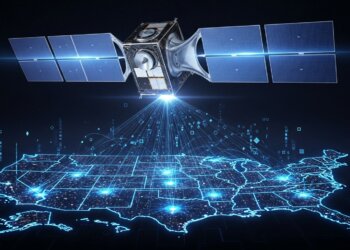
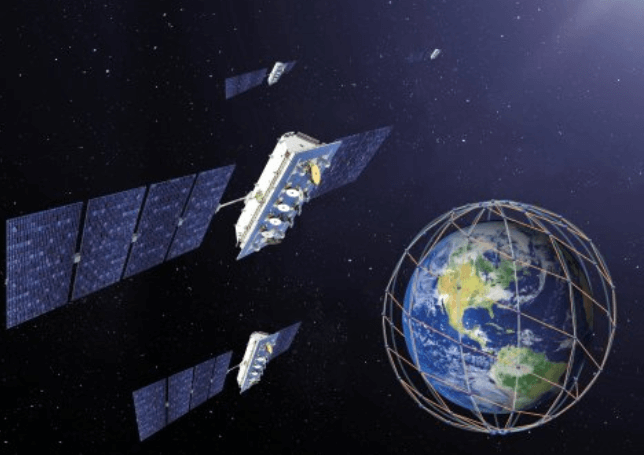
Earlier this month, the FCC approved the requests of four companies seeking to deploy next-gen satellite constellations:

Space Exploration Holdings (SpaceX) — authorized to construct, deploy, and operate a new very-low-Earth orbit constellation of more than 7,000 satellites using V-band frequencies.  The FCC also granted SpaceX’s request to add the 37.5-42.0 GHz, and 47.2-50.2 GHz frequency bands to its previously authorized NGSO constellation.  SpaceX now has the flexibility to provide both diverse geographic coverage and the capacity to support a wide range of broadband and communications services for residential, commercial, institutional, governmental, and professional users in the United States and globally.

Kepler Communications — has been granted a request for U.S. market access with certain conditions.  The FCC will allow Kepler to offer global connectivity for the Internet of Things, especially sensors and other intelligent devices as well as other FSS offerings using its proposed constellation of NGSO satellites in the 10.7-12.7 GHz and 14.0-14.5 GHz frequency bands.  Kepler’s proposed NGSO system, consisting of 140 satellites, is licensed by Canada.

Telesat Canada (Telesat) — has been granted its request for U.S. market access with certain conditions in the 37.5-42.0 GHz, and 47.2- 50.2 GHz frequency bands. The Commission’s action enables Telesat to offer high-speed, low-latency communication services in the United States using its proposed constellation of NGSO satellites enhancing competition among existing and future FSS satellite systems.  Telesat’s proposed NGSO system, consisting of 117 satellites, is licensed by Canada. 

LeoSat — has been granted its request for U.S. market access with certain conditions in the 17.8-18.6 GHz, 18.8-19.4 GHz, 19.6-20.2 GHz, 27.5-29.1 GHz, and 29.5-30.0 GHz frequency bands, using its proposed constellation of NGSO satellites.  Today’s action facilitates the provision of new and innovative satellite broadband services in the United States by LeoSat, including high-speed connectivity for enterprises and underserved communities.  LeoSat’s proposed NGSO system consists of 78 satellites, which will operate under the ITU filings of France and a planned authorization from the Netherlands. 

To date, the FCC has granted 13 market access requests and satellite applications to nine companies for NGSO FSS constellations seeking authority to provide next-generation connectivity across the country in the past 18 months.  The Commission continues to process additional requests.

Tags: Blueprint columnsFCC
ShareTweetShare
Previous Post

T-Mobile tests 5G on 600 MHz spectrum

Next Post

Angola Cables partners with South Africa’s Broadband Infraco

Staff

Staff

Related Posts

FCC Targets Upper C-Band for 5G and 6G Expansion — Winners and Losers
5G / 6G / Wi-Fi

FCC Targets Upper C-Band for 5G and 6G Expansion — Winners and Losers

November 1, 2025
FCC issues 2.5 GHz licenses from Auction 108
Clouds and Carriers

FCC Moves to Expel Hong Kong Telecom from U.S.

October 20, 2025
FCC Targets Faster Satellite Approvals and Expanded Spectrum
Space

FCC Targets Faster Satellite Approvals and Expanded Spectrum

October 6, 2025
FCC adds $791 million in RDOF funding for broadband
Legal / Regulatory

FCC Targets Chinese-Controlled “Bad Labs” in First Enforcement Action

September 9, 2025
FCC issues 2.5 GHz licenses from Auction 108
Legal / Regulatory

FCC Moves to Ease Environmental Rules that Impede Fiber and 5G Expansion

August 7, 2025
Ground-Station-as-a-Service Gets Green Light in FCC Rule Update
Space

Ground-Station-as-a-Service Gets Green Light in FCC Rule Update

August 7, 2025
Next Post
Angola Cables partners with South Africa’s Broadband Infraco

Angola Cables partners with South Africa's Broadband Infraco

Please login to join discussion

Categories

  • 5G / 6G / Wi-Fi
  • AI Infrastructure
  • All
  • Automotive Networking
  • Blueprints
  • Clouds and Carriers
  • Data Centers
  • Enterprise
  • Explainer
  • Feature
  • Financials
  • Last Mile / Middle Mile
  • Legal / Regulatory
  • Optical
  • Quantum
  • Research
  • Security
  • Semiconductors
  • Space
  • Start-ups
  • Subsea
  • Sustainability
  • Video
  • Webinars

Archives

Tags

5G All AT&T Australia AWS Blueprint columns BroadbandWireless Broadcom China Ciena Cisco Data Centers Dell'Oro Ericsson FCC Financial Financials Huawei Infinera Intel Japan Juniper Last Mile Last Mille LTE Mergers and Acquisitions Mobile NFV Nokia Optical Packet Systems PacketVoice People Regulatory Satellite SDN Service Providers Silicon Silicon Valley StandardsWatch Storage TTP UK Verizon Wi-Fi
Converge Digest

A private dossier for networking and telecoms

Follow Us

  • Home
  • Events Calendar
  • Blueprint Guidelines
  • Privacy Policy
  • Subscribe to Daily Newsletter
  • NextGenInfra.io

© 2025 Converge Digest - A private dossier for networking and telecoms.

No Result
View All Result
  • Home
  • Events Calendar
  • Blueprint Guidelines
  • Privacy Policy
  • Subscribe to Daily Newsletter
  • NextGenInfra.io

© 2025 Converge Digest - A private dossier for networking and telecoms.

This website uses cookies. By continuing to use this website you are giving consent to cookies being used. Visit our Privacy and Cookie Policy.
Go to mobile version