IBM Targets 2026 Quantum Advantage With New Nighthawk and Loon Processors
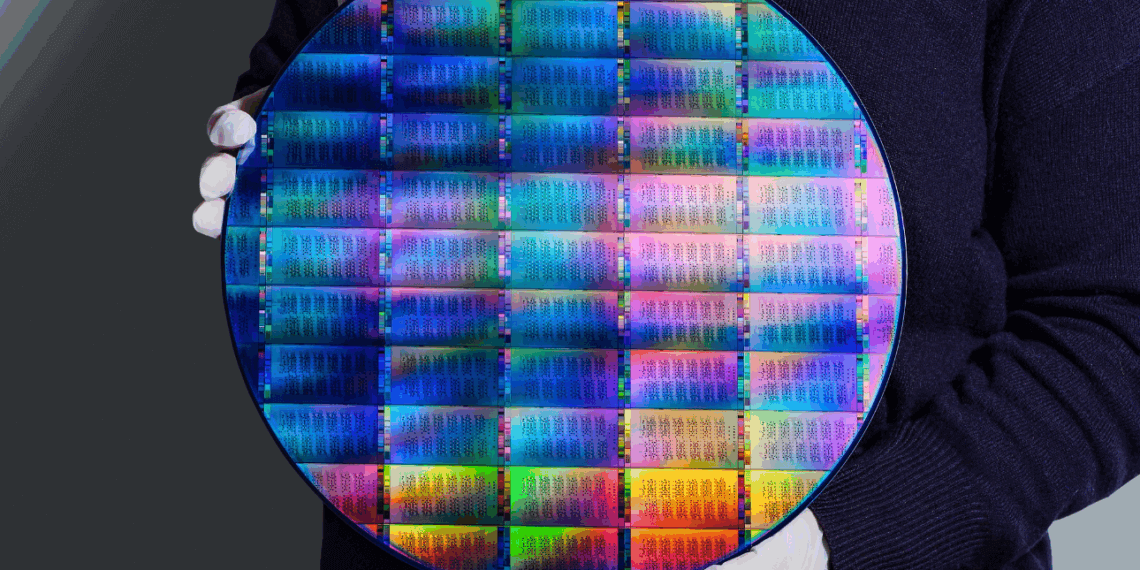
IBM introduced key hardware, software, and fabrication milestones at its Quantum Developer Conference, advancing its roadmap toward quantum advantage in 2026 and fault-tolerant quantum computing in 2029. The new IBM Quantum Nighthawk processor increases circuit complexity by 30% compared with IBM Heron, while a new experimental architecture—IBM Quantum Loon—demonstrates all major building blocks for future fault-tolerant systems. IBM also doubled the pace of quantum chip development after transitioning to a 300 mm wafer line at NY Creates’ Albany NanoTech Complex.
Nighthawk integrates 120 qubits and 218 next-generation tunable couplers, enabling circuits with up to 5,000 two-qubit gates this year and up to 15,000 gates on future systems featuring long-range connectivity. IBM and partners—including Algorithmiq, the Flatiron Institute, and BlueQubit—also contributed three experiments to the new community-led quantum advantage tracker, comparing quantum performance against leading classical simulation methods across observable estimation, variational problems, and classically-verifiable tasks.
On the software side, IBM expanded Qiskit with dynamic circuit controls that improve accuracy by 24% on 100+ qubit systems. A new C-API allows high-performance computing (HPC) integration and reduces the cost of error-mitigated results by over 100×. IBM also reported a 10× faster decoding method for qLDPC error-correction codes—validated in under 480 ns—one year ahead of schedule, marking a major step toward scalable fault tolerance.
Key items
• IBM Quantum Nighthawk: 120 qubits, 218 tunable couplers, supports circuits up to 5,000 two-qubit gates in 2025
• Roadmap projections: 7,500 gates in 2026; 10,000 in 2027; 15,000 by 2028 with long-range couplers
• Three partner-validated experiments added to the community quantum advantage tracker
• Qiskit dynamic circuits: 24% accuracy improvement on 100+ qubit operations
• HPC-integrated error mitigation: >100× reduction in computational extraction cost
• IBM Quantum Loon: first processor to demonstrate all required components for qLDPC-based fault tolerance
• Real-time qLDPC decoding: 10× speedup, <480 ns latency
• 300 mm wafer transition: 2× faster R&D cycles and 10× increase in quantum chip physical complexity
• Multi-design parallel development enabled by advanced Albany NanoTech fabrication tools
“There are many pillars to bringing truly useful quantum computing to the world,” said Jay Gambetta, Director of IBM Research and IBM Fellow. “We believe that IBM is the only company positioned to rapidly invent and scale quantum software, hardware, fabrication, and error correction to unlock transformative applications.”
🌐 Analysis
IBM’s announcement marks a coordinated push across processor architecture, software execution, and classical-assisted error mitigation—reflecting how quantum advantage increasingly depends on hybrid quantum-HPC workflows. The introduction of long-range couplers and faster qLDPC decoding addresses two major open challenges for scalable fault tolerance: routing congestion and decoding latency. Competitors pursuing trapped-ion, neutral-atom, and photonic approaches are also making progress, but IBM’s 300 mm wafer transition demonstrates a manufacturing strategy that more closely parallels leading-edge semiconductor scaling.