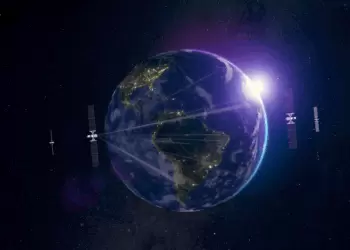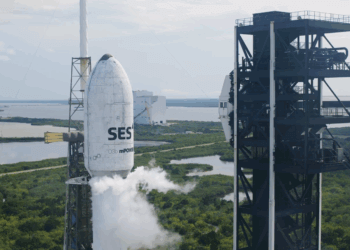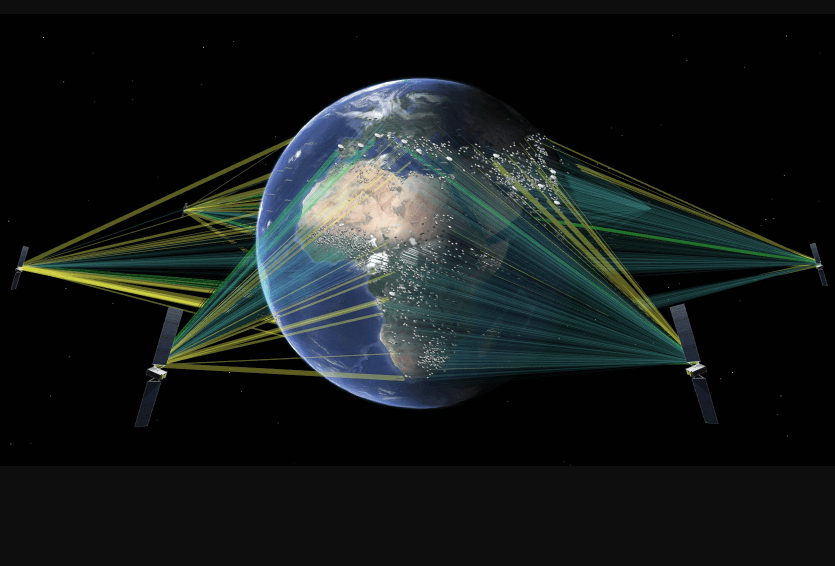
After more than six decades of shaping global communications, Intelsat’s storied run as an independent satellite operator has come to a close. The company has officially been acquired by SES in a $3.1 billion deal, forming one of the largest and most technologically diverse satellite communications networks in the world. With 120 satellites across geostationary (GEO) and medium Earth orbits (MEO)—and access to low Earth orbit (LEO) networks—the newly combined entity is poised to challenge the likes of SpaceX, Amazon, and other global broadband players. But to understand the significance of this merger, one must look back at Intelsat’s remarkable journey.
Intelsat was created in 1964 as the International Telecommunications Satellite Organization (ITSO)—a global consortium of governments led by the United States and operated in partnership with COMSAT. Its founding mission: to ensure worldwide access to satellite communications.
That vision became reality on April 6, 1965, with the launch of Intelsat I, famously known as “Early Bird.” It was the first commercial communications satellite in geostationary orbit, capable of relaying 240 telephone calls or one television broadcast across the Atlantic. The success of Early Bird demonstrated the transformative power of space-based networks and laid the groundwork for an era of global connectivity.
Over the next two decades, Intelsat expanded its fleet with increasingly sophisticated satellites. The Intelsat III, IV, and V series—launched throughout the 1970s and 1980s—introduced higher capacity, longer operational lifespans, and innovations such as cross-strapped transponders and coverage of previously underserved regions.
By the late 1980s, Intelsat had become the world’s dominant provider of international satellite services, enabling everything from long-distance telephone calls to live television broadcasts across continents.
With the liberalization of telecom markets in the 1990s, pressure mounted to privatize Intelsat. That happened on July 18, 2001, when the organization was restructured as a private Luxembourg-based corporation. In 2005, a consortium of private equity firms acquired Intelsat for $3.1 billion.
Then in 2006, Intelsat executed a major acquisition—buying rival PanAmSat for $3.2 billion. This deal cemented Intelsat’s position as the largest commercial satellite operator globally, expanding its customer base in media and enterprise communications.
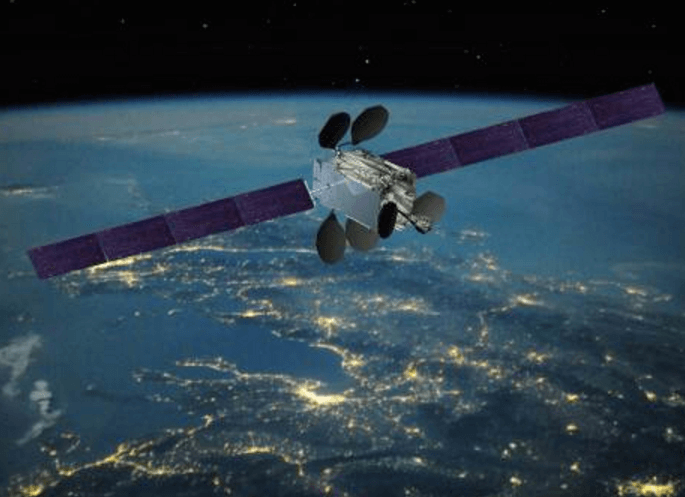
Between 2015 and 2019, Intelsat launched a series of high-throughput satellites (HTS), most notably the EpicNG platform, which provided 10× the capacity of legacy systems. These satellites were tailored for bandwidth-intensive applications like in-flight Wi-Fi, maritime broadband, and military connectivity.

In 2020, Intelsat became the first company to extend the life of an active satellite through on-orbit servicing, when Northrop Grumman’s MEV-1 docked with Intelsat 901. This groundbreaking mission was followed by another successful life-extension docking in 2021 with Intelsat 10-02, confirming a viable model for satellite sustainability.
Despite technical achievements, Intelsat faced heavy financial strain. In May 2020, the company filed for Chapter 11 bankruptcy, citing nearly $16 billion in debt—much of it tied to spectrum reallocation related to the U.S. C-band auction.
Emerging from bankruptcy in February 2022, Intelsat reduced its debt load to around $7 billion, gained new investment capital, and shifted focus toward software-defined satellites and hybrid multi-orbit strategies.
One key move came in September 2020, when Intelsat acquired Gogo’s Commercial Aviation division for $400 million, strengthening its position in in-flight entertainment and connectivity (IFC) services.
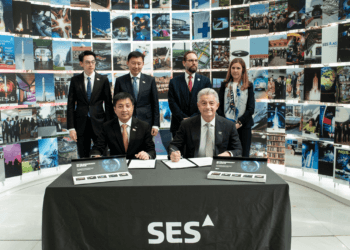
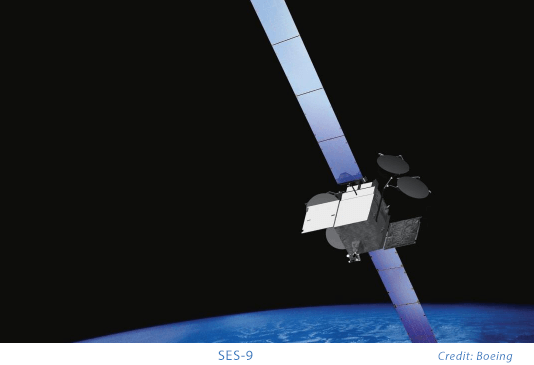
In April 2024, Luxembourg-based SES announced its intention to acquire Intelsat for $3.1 billion. With complementary assets—SES’s O3b mPOWER MEO fleet and Intelsat’s extensive GEO satellite infrastructure—the deal promised a new era of multi-orbit, multi-band, software-defined connectivity.
Following regulatory approval from the European Commission, UK, and U.S. FCC, the acquisition closed on July 17, 2025. The combined company now manages a global fleet of 120 satellites, serving government, enterprise, aviation, maritime, and media markets with expanded capabilities.
From launching the world’s first commercial GEO satellite to pioneering in-orbit servicing and enabling the digital transformation of entire industries, Intelsat’s contributions to global communications are unparalleled.
With SES now at the helm, Intelsat’s legacy will live on in a new, stronger organization built to meet the rising demand for AI-optimized, cloud-integrated, low-latency connectivity. The age of the single-orbit satellite provider is over—and Intelsat helped write the book.