MEF reports substantial advancements in Lifecycle Service Orchestration (LSO) API adoption, with over 160 service providers across 65 countries engaged in deploying its automated ecosystem. These developments highlight MEF’s push to expand Network-as-a-Service (NaaS) capabilities, backed by collaborations with industry standards organizations such as TM Forum. MEF’s latest enterprise-focused APIs and LSO Payload Factory program represent a significant step toward enabling real-time, automated network operations for enterprises.
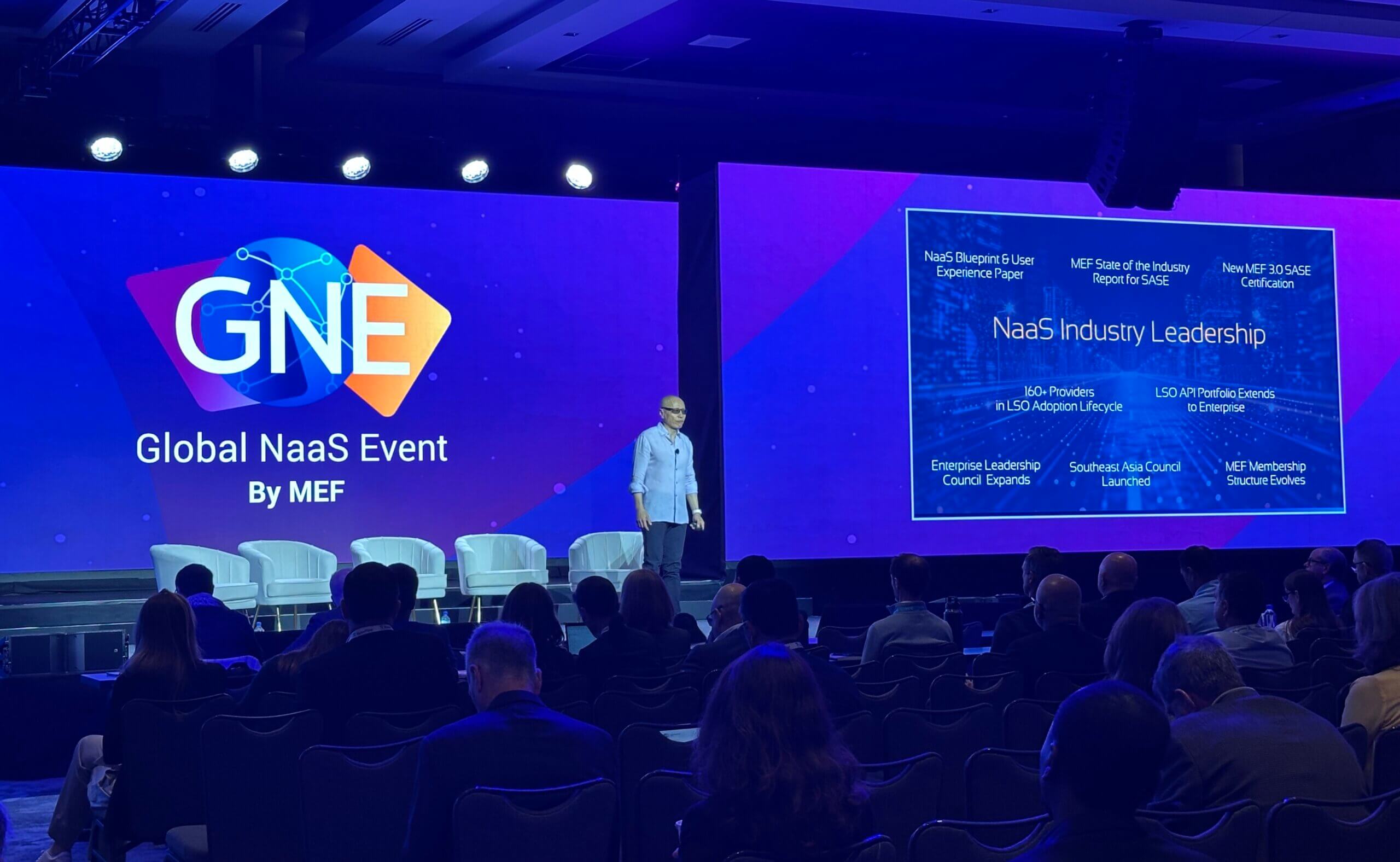
Among recent innovations, MEF’s Circuit Impairment & Maintenance (CIM) Service API provides businesses with direct network management capabilities, demonstrated at the Global NaaS Event (GNE) by major players like AT&T, Verizon, and Bloomberg. The organization’s new LSO Payload Factory program also accelerates the creation of machine-readable product descriptions, allowing service providers to bring standardized NaaS offerings to market faster. Additionally, MEF has pioneered blockchain-based smart contracts to streamline interactions between providers and enterprises, significantly reducing the potential for disputes through real-time SLA enforcement.
Looking ahead, MEF plans to release expanded LSO product payloads for wavelength, cloud connectivity, edge compute, and more in Q4 2024. A new LSO API certification phase will validate API interoperability and ensure market readiness, while a partner identification platform will help participants find compatible collaborators. MEF’s Chief Product Officer, Daniel Bar Lev, noted, “The rapid adoption of MEF’s LSO APIs reflects an ongoing shift towards automated, standardized service delivery, enabling a new standard of efficiency in NaaS.”
Key items:
• Expanded APIs for Enterprises
MEF has broadened its API portfolio to offer new capabilities for enterprises, going beyond traditional business-focused APIs. A key addition, the Circuit Impairment & Maintenance (CIM) Service API, provides real-time network visibility and management tools, allowing enterprises to monitor and respond to network performance issues proactively. This API was demonstrated at the 2024 Global NaaS Event (GNE) by industry leaders including AT&T, Verizon, Bloomberg, Prodapt, and Williams-Sonoma, showcasing its ability to improve network reliability and efficiency through automated notifications. This enterprise-driven approach enables companies to leverage open standards for seamless integration with NaaS, offering enhanced multi-domain connectivity and comprehensive network visibility.
• LSO Payload Factory Program for Product Standardization
The LSO Payload Factory program introduces a collaborative environment for service providers to create and refine machine-readable product descriptions before they become industry standards. By facilitating rapid development of these pre-standard payloads, MEF helps providers bring new services to market more quickly. The program addresses a variety of NaaS offerings, such as connectivity, cybersecurity, cloud resources, and network services, accelerating innovation and deployment across the sector. This initiative allows providers to standardize essential product information, making it easier to integrate new offerings and adjust to changing market demands.
• Blockchain-Based Smart Contracts for SLA Enforcement
MEF is leveraging blockchain technology to develop smart contracts that automate and secure Service Level Agreement (SLA) enforcement in NaaS environments. This innovation includes the telecom industry’s first real-time “mutual endorsement” process, designed to minimize disputes by ensuring immediate agreement on SLA compliance between providers and customers. Demonstrated in a recent NaaS Accelerator project, this approach enables automatic tracking and validation of SLA parameters, offering a secure and transparent way to manage service agreements and improve trust within the ecosystem. These blockchain-based contracts mark a significant move toward reducing operational friction and enhancing automation in multi-partner ecosystems.
• Upcoming Product Payloads for New Services
In Q4 2024, MEF plans to expand its LSO product payload offerings to include standardized descriptions for a variety of new services. These include wavelength services, cloud connectivity, cross-connects, Internet access, edge compute capabilities, and CAMARA Quality on Demand. Developed within the LSO Payload Factory program, these payloads will allow service providers to incorporate these technologies more seamlessly into their NaaS platforms. This expanded product catalog will help providers deploy these services more quickly and effectively, positioning them to meet evolving customer needs and bring innovations to market faster.
• New LSO API Certification Phase for Interoperability
MEF’s upcoming LSO API certification program is set to launch in Q4 2024 with a focus on development-stage IT testing and market-ready certification validation. This new certification phase will offer proof of interoperability, assuring service providers and enterprises of their readiness to implement standardized API solutions in live environments. As API-driven automation becomes essential to modern business operations, this certification will give participants confidence in their API integrations, allowing them to engage in efficient, seamless operations across the NaaS ecosystem. MEF’s certification framework aims to foster greater trust in NaaS automation and standardization.
• Partner Identification Platform for API Compatibility
MEF’s new partner identification platform, also expected to roll out in Q4 2024, will facilitate real-time connections between LSO API implementers and compatible partners. This platform provides a dynamic directory of API capabilities, enabling businesses to find and collaborate with suitable partners efficiently. By connecting companies with shared API capabilities and interests, the platform simplifies and speeds up the process of establishing NaaS partnerships. This tool represents a significant resource for companies looking to leverage MEF’s automated ecosystem by streamlining the discovery of interoperability-ready partners.
“The rapid adoption of MEF’s LSO APIs across our global ecosystem reflects an ongoing shift towards automated, standardized service delivery,” said Daniel Bar Lev, Chief Product Officer, MEF. “With expanded capabilities for enterprises, the LSO Payload Factory program, and blockchain-driven smart contracts, we’re enabling a new standard of efficiency and flexibility in Network-as-a-Service. MEF’s commitment to collaboration and innovation ensures that every stakeholder in our ecosystem—from service providers to enterprises—can leverage open standards to deliver seamless, automated experiences.”