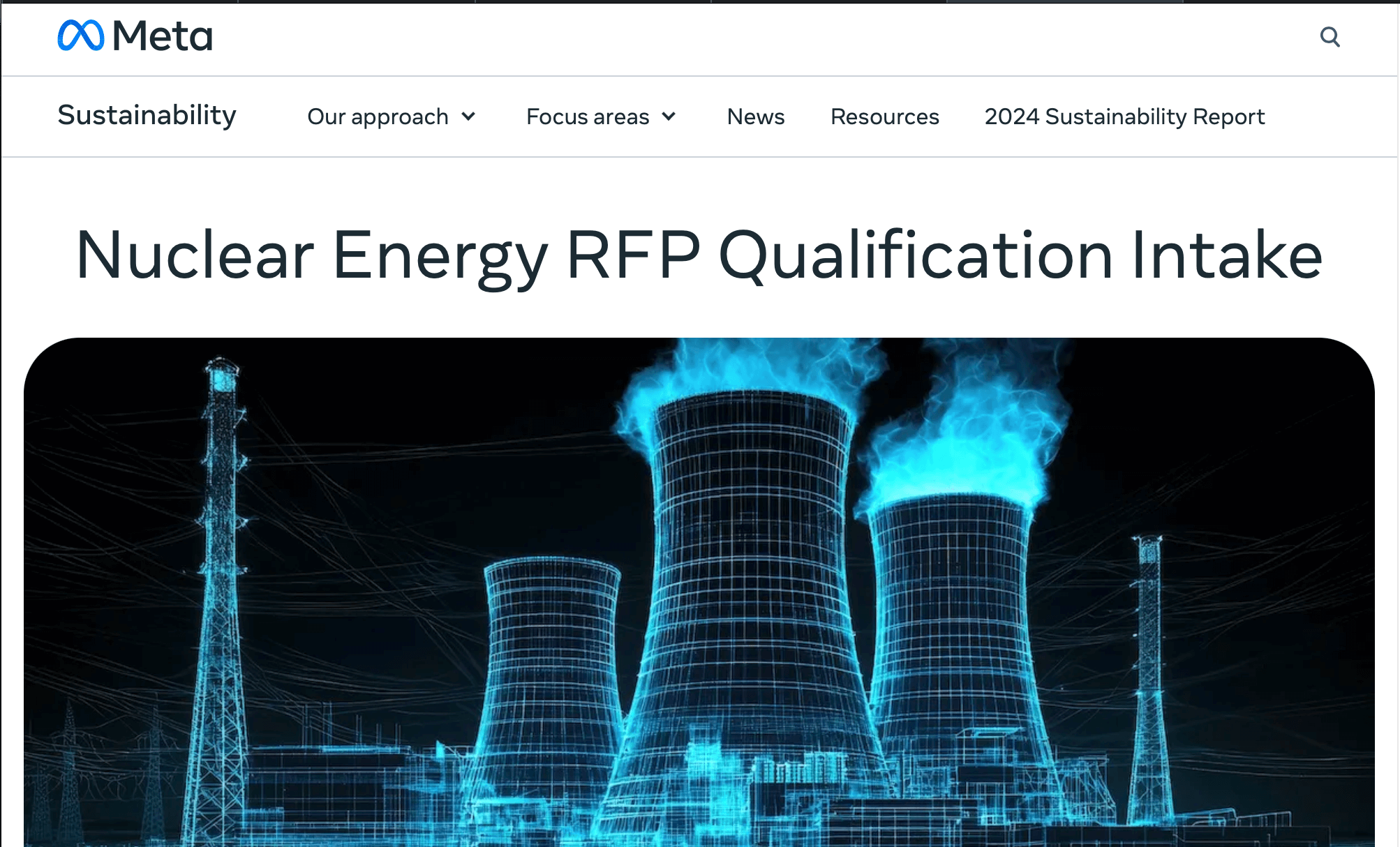
Meta plans to solicit proposals from nuclear energy developers, targeting the addition of 1-4 gigawatts (GW) of new nuclear generation capacity in the U.S. by the early 2030s.
In a blog post, the company says this initiative aims to support Meta’s growing energy demands driven by artificial intelligence (AI) innovation while aligning with its sustainability objectives. Qualified developers can access an intake form to begin the proposal process.
The company emphasized the strategic role nuclear energy could play in creating a diversified and reliable electric grid. Unlike solar and wind projects, nuclear plants require higher upfront investment, longer development timelines, and regulatory considerations, but they provide consistent baseload power. Meta is committed to partnering with developers to design agreements fostering cost-efficient and scalable nuclear deployments, reflecting lessons learned from its decade-long engagement with renewable energy industries.
This announcement builds on Meta’s track record of integrating clean energy into its operations. Since achieving a 100% clean energy match for its global operations in 2020, the company has secured over 12,000 MW of renewable energy contracts globally, spanning solar, wind, and geothermal projects. By incorporating nuclear energy, Meta seeks to strengthen its data center infrastructure while contributing to the long-term transformation of electric grids.
Key Points:
• Capacity Target: Meta seeks to add 1-4 GW of nuclear capacity in the U.S. starting in the 2030s.
• RFP Process: Developers can participate via an intake form; the process will explore permitting, design, engineering, and operation partnerships.
• Strategic Value: Nuclear projects offer stable baseload power but require significant initial investment and regulatory approval.
• Renewable Integration: Meta has secured 12,000 MW of global renewable energy contracts since 2020, supporting 100% clean energy goals.
• Sustainability Impact: The company aims to enhance grid reliability and accelerate decarbonization across sectors.