Microsoft reported a big start to its fiscal year 2026, driven by surging demand for cloud and AI infrastructure. Revenue for the quarter ending September 30, 2025, rose 18% year-over-year to $77.7 billion, while operating income climbed 24% to $38.0 billion. Net income on a GAAP basis reached $27.7 billion, up 12%, and $30.8 billion on a non-GAAP basis, excluding OpenAI-related investment impacts.
The Intelligent Cloud segment remained the engine of growth, generating $30.9 billion in revenue—up 28%—as Azure and other cloud services surged 40%. Microsoft Cloud overall reached $49.1 billion in revenue, up 26%, with commercial remaining performance obligations increasing 51% to $392 billion. Productivity and Business Processes revenue rose 17% to $33.0 billion, led by Microsoft 365, Dynamics 365, and LinkedIn. More Personal Computing edged up 4% to $13.8 billion, buoyed by Windows and advertising revenue gains.
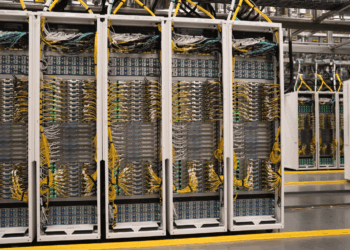
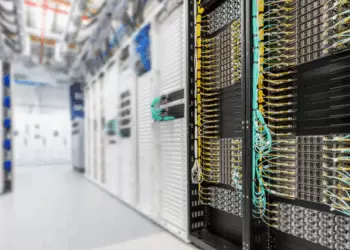
Microsoft continues to emphasize its global AI infrastructure expansion, which CEO Satya Nadella described as a “planet-scale cloud and AI factory.” The company is investing heavily in next-generation data centers and talent to meet rapidly increasing AI demand, extending the reach of Copilot and other generative AI services across productivity, security, and developer platforms.
• Revenue: $77.7 billion, up 18% year-over-year
• Operating Income: $38.0 billion, up 24%
• Net Income: $27.7 billion GAAP; $30.8 billion non-GAAP
• Microsoft Cloud: $49.1 billion, up 26%
• Azure and other cloud services: up 40%
• Commercial RPO: up 51% to $392 billion
• Returned $10.7 billion to shareholders in dividends and buybacks
“Our planet-scale cloud and AI factory, together with Copilots across high value domains, is driving broad diffusion and real-world impact,” said Satya Nadella, Microsoft’s chairman and CEO. “It’s why we continue to increase our investments in AI across both capital and talent to meet the massive opportunity ahead.”
Microsoft’s capital expenditures have accelerated sharply over the past year, underscoring the company’s rapid AI and cloud infrastructure build-out. Total CapEx, including finance leases, reached $34.9 billion in Q1 FY26—up 74% from the prior quarter—as the company ramps construction of large-scale data center sites and deploys next-generation GPUs and CPUs to meet growing Azure and AI platform demand. Roughly half of these expenditures supported short-lived assets tied to compute expansion and hardware replacement, while long-lived assets of $11.1 billion reflected new lease commencements for hyperscale facilities expected to drive monetization over the next 15 years. Over the past four quarters, Microsoft’s total capital spending climbed from $20.0 billion in Q1 FY25 to $34.9 billion in Q1 FY26—an increase of 75% year-over-year—signaling a sustained investment cycle to power its “planet-scale” AI infrastructure.
Infrastructure and AI Capacity Highlights from Microsoft FY26 Q1 Investor Call
• Satya Nadella described Microsoft’s infrastructure strategy as building a “planet-scale cloud and AI factory”optimized for performance, efficiency, and sovereignty. The company is targeting the highest “tokens per dollar per watt” across all AI workloads.
• Microsoft plans to increase total AI capacity by more than 80% this fiscal year and double its total data center footprint over the next two years, driven by AI workload growth and Azure demand.
• The new Fairwater data center in Wisconsin will become one of the world’s most powerful AI campuses, scaling to 2 GW of power capacity when complete.
• Microsoft has deployed the world’s first large-scale cluster of NVIDIA GB300 GPUs and is continuously modernizing its global fleet to maintain fungibility across training, inference, and synthetic data workloads.
• Infrastructure efficiency improvements include a 30% gain in token throughput per GPU for GPT-4.1 and GPT-5, achieved through software optimization rather than new hardware alone.
• The Azure infrastructure fleet spans multiple GPU generations (A100s, H100s, GB200s/GB300s) and is being optimized through continuous modernization cycles that ride Moore’s Law for efficiency gains.
• Roughly half of Microsoft’s $34.9 billion in quarterly CapEx was spent on short-lived assets such as GPUs and CPUs, supporting Azure AI, first-party applications, and R&D acceleration. The remainder supported long-lived data center assets, including $11.1 billion in finance leases for new hyperscale sites.
• Amy Hood emphasized that CapEx growth will outpace FY25 levels, with spending guided by record Azure bookings and a $392 billion commercial RPO balance. Demand for AI infrastructure remains ahead of supply, and Microsoft expects to remain capacity-constrained through FY26.
• CFO Hood confirmed that Azure is prioritizing allocation of limited compute to Microsoft 365 Copilot, GitHub, and security workloads, ensuring first-party and AI-centric services maintain growth momentum even under constraint.
• Microsoft’s fleet fungibility across third-party, first-party, and research workloads was cited as a major hedge against concentration risk and overbuild, allowing data centers and GPUs to be repurposed across multiple demand sources.
• Nadella stated that Microsoft’s “token factory” model integrates silicon, systems, and software efficiency, ensuring each watt of compute delivers measurable AI productivity and customer ROI.
• The company is expanding digital sovereignty regions to 33 countries, enabling governments and enterprises to deploy Azure and AI workloads within their borders, often backed by local partnerships like OpenAI and SAP in Germany.
• Amy Hood reiterated that short-lived GPU assets are matched to contract durations, minimizing risk of overbuilding. She confirmed that Microsoft remains short on GPU and power capacity, not overbuilt—reflecting confidence in sustained utilization.
• Microsoft’s long-term leases for hyperscale sites are 15–20 years, supporting continuous modernization cycles for data center power, cooling, and hardware refreshes.
• Overall, management described infrastructure as the foundation of durable AI monetization, linking CapEx to near-term cloud growth and long-term platform leverage across Copilot, GitHub, and Azure AI Foundry.


🌐 Analysis: Microsoft’s Q1 results reaffirm its position as a dominant AI infrastructure provider, with Azure’s 40% growth reflecting accelerating enterprise and AI factory deployments. The company’s capital spending trajectory, tied to hyperscale AI expansion and Copilot integration, continues to parallel similar AI infrastructure buildouts at Google and Amazon. Microsoft’s deep integration of OpenAI technology remains both a competitive advantage and a financial variable, with related investment impacts now explicitly separated in non-GAAP reporting.