• Home
  • Events Calendar
  • Blueprint Guidelines
  • Privacy Policy
  • Subscribe to Daily Newsletter
  • NextGenInfra.io
No Result
View All Result
Converge Digest
Saturday, April 11, 2026
  • Home
  • Events Calendar
  • Blueprint Guidelines
  • Privacy Policy
  • Subscribe to Daily Newsletter
  • NextGenInfra.io
No Result
View All Result
Converge Digest
No Result
View All Result

Home » Microsoft Positions Windows Server 2012 + Azure as Cloud OS

Microsoft Positions Windows Server 2012 + Azure as Cloud OS

September 4, 2012
in All, Clouds and Carriers
A A

Microsoft officially released Windows Server 2012, a major upgrade featuring significant advancements in virtualization, storage, networking and automation. In combination with Windows Azure and System Center, Microsoft is positioning Windows Server 2012 as its “Cloud OS” for running applications and services seamlessly across private, hosted and public data center infrastructure.

In a launch event, Microsoft said it built Windows Server 2012 “from the cloud up,” applying its experience operating global datacenters that rely on hundreds of thousands of servers to deliver more than 200 cloud services.

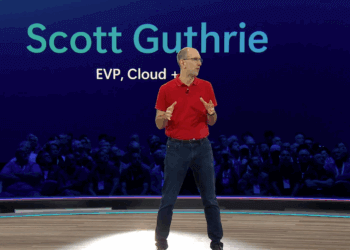
“The operating system has always been the heartbeat of IT and is now undergoing a renaissance in the new world of continuous cloud services, connected devices and big data,” Nadella said. “Microsoft’s unique legacy in the most widely used operating systems, applications and cloud services positions us to deliver the Cloud OS, based on Windows Server and Windows Azure, helping customers achieve a datacenter without boundaries,” said Satya Nadella, president of Microsoft Server and Tools Business.

Among its features:

  • Windows Server 2012 uses a common identity and management framework for more secure connectivity to public cloud services.
  • Virtual Desktop Infrastructure in Windows Server 2012 makes it possible for users to access IT from virtually anywhere on popular devices
  • Windows Server 2012 and Virtual Machine Manager aim to be an end-to-end SDN solution for public, private, and hybrid clouds.  By building all the pieces as part of a solution — the hypervisor, the SDN control surface on the end host, and the management software — Microsoft said it can ensure a set of seamless experiences for datacenter administrators.  
  • Virtual Machine Manager plays a key role in automating configuration of SDN policies for Hyper-V Network Virtualization. 
  • VMM allows customers to unify the individual virtual switches on each Hyper-V host in the datacenter into a distributed logical switch that is dynamically programmed with SDN traffic control policies. 
  • A new Hyper-V Extensible Switch capability enable Microsoft partners to extend SDN policies within the switc, such as integrating the virtual switch with the rest of the physical network infrastructure.

http://www.windows-server-launch.com/

Tags: Blueprint columnsData CenterMicrosoftService Providers
ShareTweetShare
Previous Post

Harnessing Next-Generation Network Timing and LTE

Next Post

Poland’s Polkomtel Picks NSN for Mobile Upgrade

Staff

Staff

Related Posts

Microsoft Details Network, Silicon and Data Center Architecture
AI Infrastructure

Microsoft Details Network, Silicon and Data Center Architecture

November 20, 2025
Microsoft Links Wisconsin + Atlanta Data Centers to Create Distributed AI Superfactory
All

Microsoft Links Wisconsin + Atlanta Data Centers to Create Distributed AI Superfactory

November 12, 2025
Lambda to Build 100MW Data Center in Kansas City 
AI Infrastructure

Lambda and Microsoft Sign Multibillion-Dollar Deal

November 3, 2025
Meta selects Azure as strategic cloud provider for AI research
Financials

Microsoft Cloud and AI Momentum Drive Results, CAPEX Rockets Up

October 29, 2025
OpenAI Completes Recapitalization, Microsoft Expands Partnership
AI Infrastructure

OpenAI Completes Recapitalization, Microsoft Expands Partnership

October 28, 2025
PECC Summit: NVIDIA’s Ashkan Seyedi on AI Networking
All

PECC: Microsoft’s Ram Huggahalli on the Next Phase of AI-Scale Optics

October 23, 2025
Next Post
Poland’s Polkomtel Picks NSN for Mobile Upgrade

Poland's Polkomtel Picks NSN for Mobile Upgrade

Please login to join discussion

Categories

  • 5G / 6G / Wi-Fi
  • AI Infrastructure
  • All
  • Automotive Networking
  • Blueprints
  • Clouds and Carriers
  • Data Centers
  • Enterprise
  • Explainer
  • Feature
  • Financials
  • Last Mile / Middle Mile
  • Legal / Regulatory
  • Optical
  • Quantum
  • Research
  • Security
  • Semiconductors
  • Space
  • Start-ups
  • Subsea
  • Sustainability
  • Video
  • Webinars

Archives

Tags

5G All AT&T Australia AWS Blueprint columns BroadbandWireless Broadcom China Ciena Cisco Data Centers Dell'Oro Ericsson FCC Financial Financials Huawei Infinera Intel Japan Juniper Last Mile Last Mille LTE Mergers and Acquisitions Mobile NFV Nokia Optical Packet Systems PacketVoice People Regulatory Satellite SDN Service Providers Silicon Silicon Valley StandardsWatch Storage TTP UK Verizon Wi-Fi
Converge Digest

A private dossier for networking and telecoms

Follow Us

  • Home
  • Events Calendar
  • Blueprint Guidelines
  • Privacy Policy
  • Subscribe to Daily Newsletter
  • NextGenInfra.io

© 2025 Converge Digest - A private dossier for networking and telecoms.

No Result
View All Result
  • Home
  • Events Calendar
  • Blueprint Guidelines
  • Privacy Policy
  • Subscribe to Daily Newsletter
  • NextGenInfra.io

© 2025 Converge Digest - A private dossier for networking and telecoms.

This website uses cookies. By continuing to use this website you are giving consent to cookies being used. Visit our Privacy and Cookie Policy.
Go to mobile version