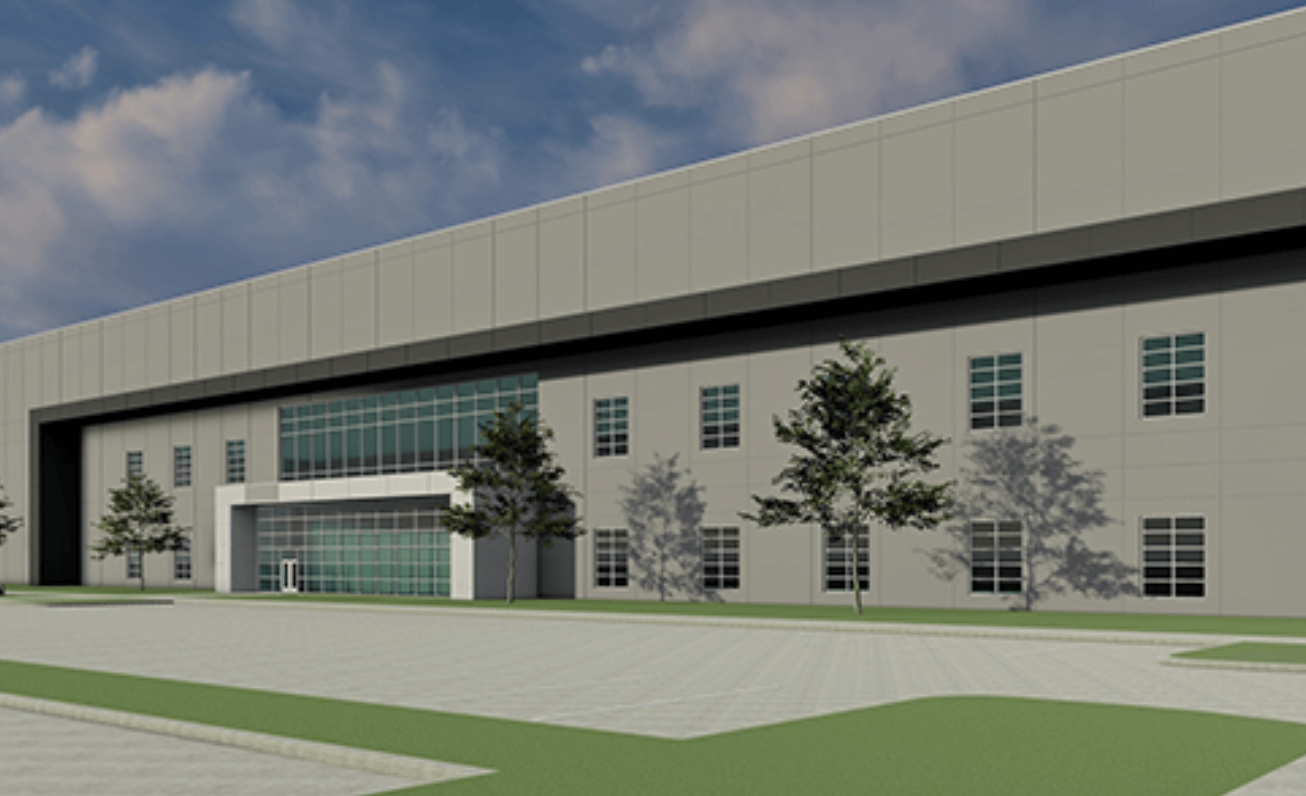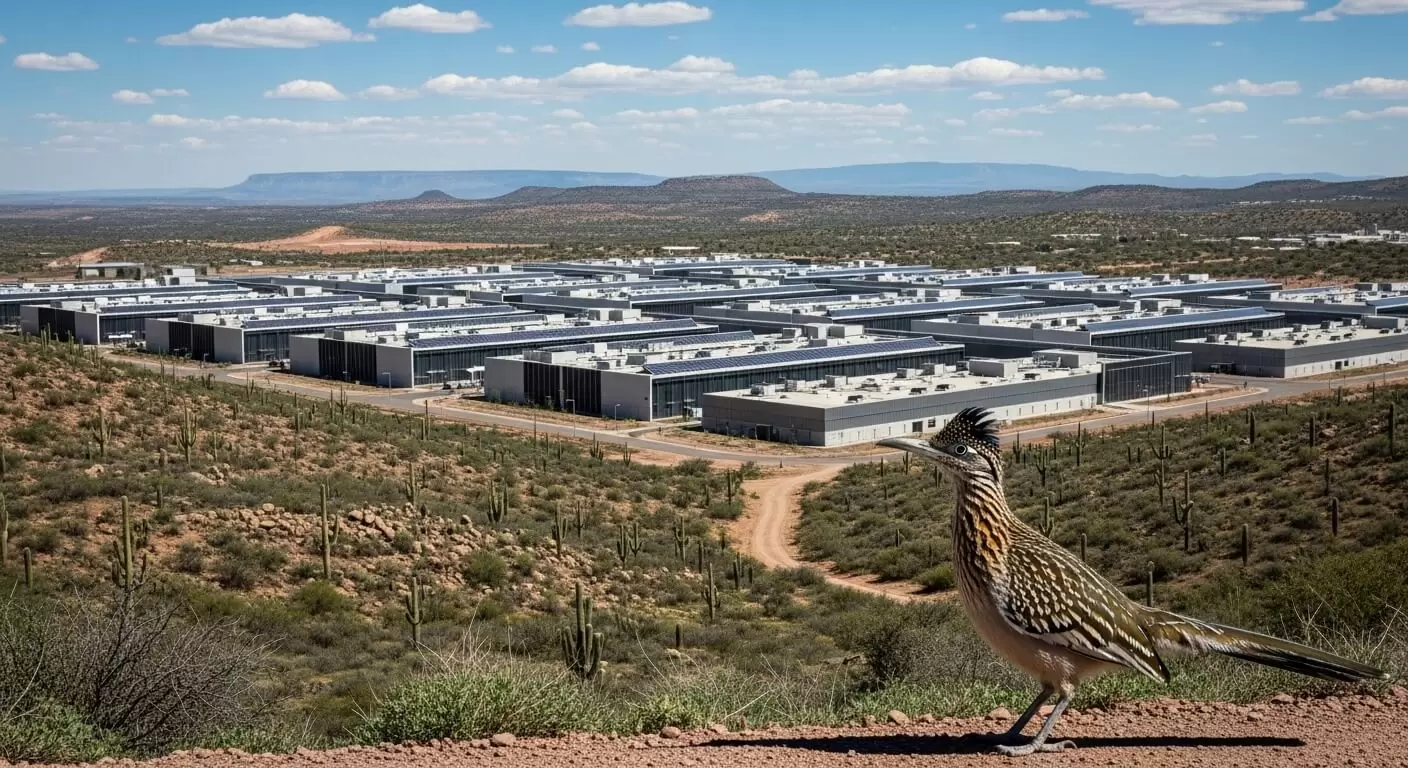
STACK Infrastructure and BorderPlex Digital Assets unveiled plans for Project Jupiter, a massive data center development in Doña Ana County, New Mexico. The project could represent one of the largest private investments in the state’s history, with up to $165 billion planned over its full term. Construction is expected to create more than 2,500 jobs, while operations would support at least 750 permanent high-quality roles. More than $300 million is earmarked for direct county payments to support schools, infrastructure, and local services.
Designed under STACK’s development principles of responsible siting, sustainability, and community stewardship, Project Jupiter incorporates safeguards for water and power resources. The campus will deploy a closed-loop cooling system that requires only a one-time fill, limiting ongoing water use to domestic needs equivalent to a medium office building. In parallel, tens of millions of dollars will be invested in local drinking water and wastewater improvements. Power will be provided by a dedicated microgrid, ensuring the project adds its own capacity without affecting local electric bills or grid stability.
The companies framed the initiative as both a technology and community investment, highlighting its long-term alignment with Doña Ana County’s needs. County officials emphasized the tax and employment benefits, while STACK and BorderPlex positioned the campus as a model for responsible digital infrastructure development in water- and energy-constrained regions.
- Investment up to $165 billion over project term
- 2,500 construction jobs and 750 permanent jobs planned
- $300 million in direct payments to Doña Ana County
- Closed-loop cooling system with minimal water consumption
- Dedicated microgrid to supply independent power under New Mexico’s Energy Transition Act
“At STACK, our responsible development principles are the foundation for every project we pursue,” said Brian Cox, Chief Executive Officer, STACK Americas and STACK EMEA. “With Project Jupiter, our responsibility is clear: to earn the trust of the community by building in a way that is transparent, accountable, and aligned with local priorities.”
🌐 Analysis: Project Jupiter reflects how hyperscale data center operators are reframing growth strategies around local resource protection and self-supplied infrastructure. The water-conserving design and private microgrid are particularly notable as hyperscalers confront scrutiny over environmental impact. The initiative parallels recent moves by Microsoft, Google, and Amazon to deploy clean energy and sustainable cooling at scale, while positioning STACK and BorderPlex as leading advocates for community-first data center development.
The New Mexico Governor’s Office, led by Michelle Lujan Grisham, announced a partnership with BorderPlex in February 2025 via a Memorandum of Understanding (MOU). The governor emphasized the project’s potential to drive economic growth in Southern New Mexico, positioning the state as a leader in digital infrastructure. The MOU allows the microgrid to operate without public utility regulation, provided it powers only the facility. The state is also discussing incentives like the High Wage Jobs Tax Credit, Local Economic Development Act (LEDA) support, and workforce training programs. Governor Lujan Grisham highlighted the project’s alignment with sustainable development and collaboration with local institutions like New Mexico State University (NMSU) and Doña Ana Community College (DACC) for workforce development and water management research.
However, the project faces local opposition due to concerns about water usage and environmental impact, especially given past water quality issues in the region managed by the Camino Real Regional Utility Authority (CRRUA). Critics, including the New Mexico Environmental Law Center, argue the closed-loop system’s minimal water use claims lack scientific backing and could strain local resources. Residents have voiced concerns at public hearings, with signs like “You can’t drink data,” reflecting fears about prioritizing industrial projects over community water needs. Doña Ana County commissioners voted 5-1 on August 26, 2025, to advance the project by approving a notice of intent for up to $165 billion in industrial revenue bonds, which BorderPlex would repay, allowing the company to avoid property taxes in exchange for the $300 million payment. A final vote and public hearing are scheduled for September 19, 2025.
🌐 We’re tracking the latest developments in data center infrastructure and AI power demand. Follow our ongoing coverage at: https://convergedigest.com/category/data-centers/