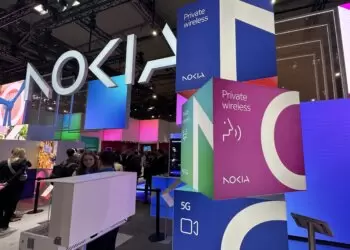
Nokia unveiled a sweeping corporate reset at its 2025 Capital Markets Day, outlining a strategy designed to capture the value of AI-driven network transformation. The company reorganized its operations into two primary segments—Network Infrastructure and Mobile Infrastructure—positioned to serve accelerating demand from hyperscalers, telecom operators, and emerging AI-native networks. Nokia now targets €2.7–3.2 billion in comparable operating profit by 2028, up from €2.0 billion over the past four quarters.
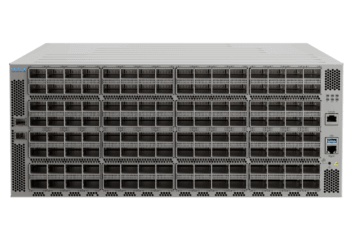
The new structure takes effect January 1, 2026. Network Infrastructure, led by David Heard, absorbs Optical Networks, IP Networks, and Fixed Networks and is positioned as a growth segment tied to global AI data center build-outs. Mobile Infrastructure, led by CEO Justin Hotard on an interim basis, unifies Core Software, Radio Networks, and Technology Standards, consolidating Nokia’s 3GPP-based assets and its licensing business into a single profit engine for 5G, 6G, and AI-native network evolution.
Nokia also carved out a new Portfolio Businesses segment for units no longer considered core: Fixed Wireless Access CPE, Site Implementation & Outside Plant, Enterprise Campus Edge, and Microwave Radio. These units represent €0.9B in annual revenue and will undergo strategic review in 2026. Nokia Defense will operate as an incubation unit anchored in Nokia Federal Solutions, targeting defense-grade connectivity markets in the U.S., Finland, and allied countries.
To support the strategic overhaul, Nokia introduced a focused set of financial and operational KPIs that replace its previous long-term targets. Network Infrastructure aims for 6–8% CAGR through 2028; Mobile Infrastructure pursues a 48–50% gross margin profile; and Group Common & Other expenses will be reduced from €350 million to €150 million by 2028. Nokia also plans to recast 2024–2025 financials under the new structure and begin reporting results by segment in Q1 2026.
• Nokia reorganizes into Network Infrastructure and Mobile Infrastructure
• Portfolio Businesses segment created to evaluate non-core units during 2026
• Nokia Defense launched as a dedicated incubation unit for military and allied markets
• New long-term operating profit target: €2.7–3.2B by 2028
• Network Infrastructure targets 6–8% CAGR from 2025–2028
• Mobile Infrastructure aims for 48–50% gross margin in 2028
• Group Common & Other expense reductions target €150M by 2028
• Free cash flow conversion targeted at 65–75%
“Nokia changed the world once by connecting people — and will again by connecting intelligence,” said Justin Hotard, President and CEO of Nokia.
| Segment | Net Sales (€B) | Gross Margin | Operating Profit (€B) | Operating Margin |
|---|---|---|---|---|
| Network Infrastructure* (proforma Infinera) | 7.8 | 43% | 0.8 | 10% |
| Mobile Infrastructure | 11.6 | 48% | 1.5 | 13% |
| Portfolio Businesses | 0.9 | 22% | -0.1 | N/A |
| Group Common & Other | — | — | -0.2 | N/A |
| Nokia Comparable* (proforma Infinera) | 20.3 | 45% | 2.0 | 10% |
*Provisional figures, shown proforma for the Infinera acquisition.
| Strategic KPI | Target by 2028 |
|---|---|
| Network Infrastructure Net Sales CAGR (2025–2028) | 6–8% (Optical + IP: 10–12%) |
| Network Infrastructure Operating Margin | 13–17% |
| Mobile Infrastructure Gross Margin | 48–50% |
| Mobile Infrastructure Operating Profit | Grow from €1.5B baseline |
| Group Common & Other Operating Expenses | €150M (down from €350M) |
| Free Cash Flow Conversion | 65–75% of comparable operating profit |
🌐 Analysis: Nokia’s new structure centralizes its licensing and radio assets into a single Mobile Infrastructure profit engine while positioning Network Infrastructure to benefit from data center interconnect, optical transport, and AI-era IP networking upgrades. The creation of a Portfolio Businesses segment mirrors broader industry trends as vendors sharpen focus around AI-relevant product lines. Competitors such as Ericsson and Samsung have also tightened portfolios around core mobile offerings, while Cisco and Juniper emphasize routing and AI-centric data center fabrics. Nokia’s financial targets suggest a shift toward margin discipline and capital allocation aligned with AI infrastructure growth.
🌐 We’re tracking the latest developments in AI infrastructure. Follow our ongoing coverage at: