NTT opened its annual R&D Forum in Tokyo with a sharp focus on optical quantum computing, AI, cybersecurity, and autonomous mobility under this year’s theme, “IOWN: Quantum Leap.” The company invests more than $3 billion annually in R&D—approximately 30% of its total profit—and used the invite-only event to highlight how its Innovative Optical and Wireless Network (IOWN) program is maturing into a broad technology platform for next-generation infrastructure.
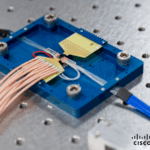
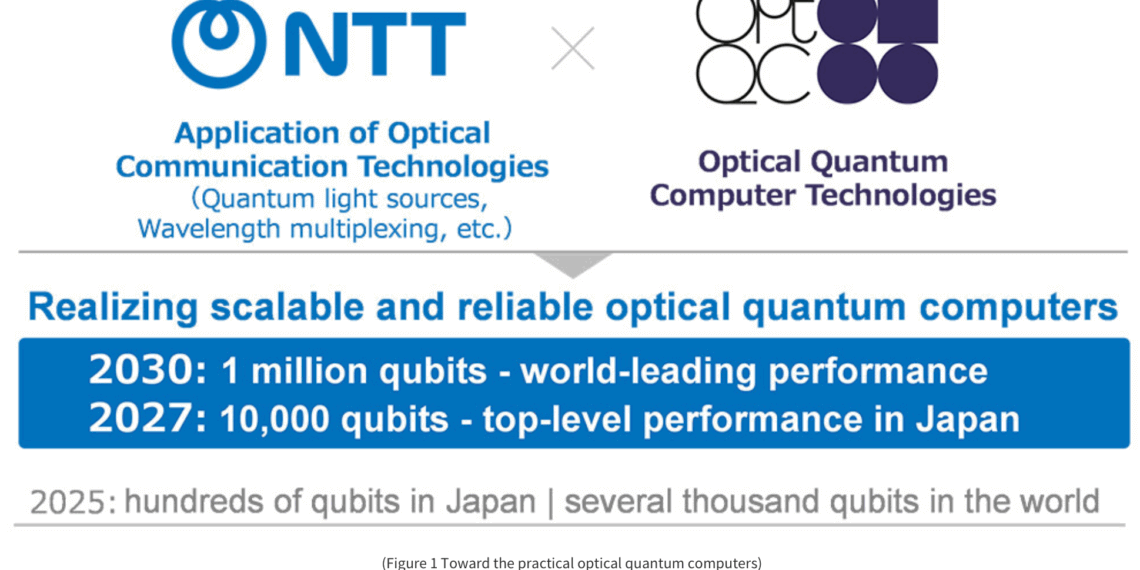
A major announcement centers on NTT’s collaboration with Tokyo-based OptQC to develop a scalable, room-temperature optical quantum computer targeting one million qubits by 2030. The effort combines NTT’s expertise in optical amplification, multiplexing, and photonic error-correction research with OptQC’s work on ultra-broadband quantum measurement and qubit generation for large-scale error-corrected systems. Optical quantum architectures aim to avoid the cryogenic and vacuum requirements of superconducting and ion-trap approaches, positioning photonics as a potentially more manufacturable path to scale.
Beyond quantum, NTT demonstrated new AI systems—including the lightweight tsuzumi 2 LLM and a Large Action Model (LAM) for personalized marketing—along with quantum-secure data protection based on attribute-based encryption. The company also introduced NTT Mobility, which plans to deliver Level 4 autonomous driving services across Japan by fiscal year 2027 with a supporting remote-monitoring platform that automatically assesses video reliability in real time.
NTT’s quantum strategy reflects a multi-year push to fuse photonics, distributed compute, and secure networking under the IOWN umbrella. By aligning optical quantum hardware, algorithm development, and a domestic supply chain, NTT is positioning photonics as the core of its long-term compute roadmap. As Akira Shimada noted, “By applying advanced optical technologies to quantum computing, we aim to tackle some of the world’s most complex challenges.”
- New IOWN theme highlights optical–quantum R&D and Japan’s “first year of quantum industrialization.”
- NTT invests $3 billion annually in global R&D.
- NTT–OptQC collaboration targets one-million-qubit optical quantum computer by 2030.
- Photonic approach operates at room temperature and atmospheric pressure, reducing cooling overhead.
- NTT demonstrated tsuzumi 2 LLM and new Large Action Model for individualized marketing.
- NTT Research introduced quantum-secure data protection based on ABE cryptography.
- NTT Mobility established to deploy Level 4 autonomous driving nationwide by fiscal year 2027.
- New model evaluates remote-monitoring video quality for autonomous vehicle safety.
“One million qubits is an ambitious goal, but by combining optical communications technologies with OptQC’s quantum expertise, we can accelerate practical quantum computing,” said NTT President and CEO Akira Shimada.
🌐 Analysis
Optical–quantum architectures are increasingly viewed as an alternative to superconducting and trapped-ion systems that face scaling and cryogenics constraints. NTT’s strategy leverages decades of photonic R&D, including optical amplification and dense multiplexing, to position photonics as a scalable substrate for quantum error-corrected machines. OptQC’s roadmap to 10,000 qubits and NTT’s target of one million by 2030 mirrors the trend toward modular, room-temperature photonic platforms pursued by PsiQuantum, Xanadu, and ORCA. For NTT, integrating quantum compute into the IOWN framework also creates a unified vision for optical transport, distributed compute, and quantum-secure networking.
🌐 We’re tracking the latest developments in quantum networking. Follow our ongoing coverage at: https://convergedigest.com/category/quantum
🌐 We’re launching the “Data Center Networking for AI” series on NextGenInfra.io and inviting companies building real solutions—silicon, optics, fabrics, switches, software, orchestration—to share their views on video and in our expert report. To get involved, send a note to jcarroll@convergedigest.com or info@nextgeninfra.io.