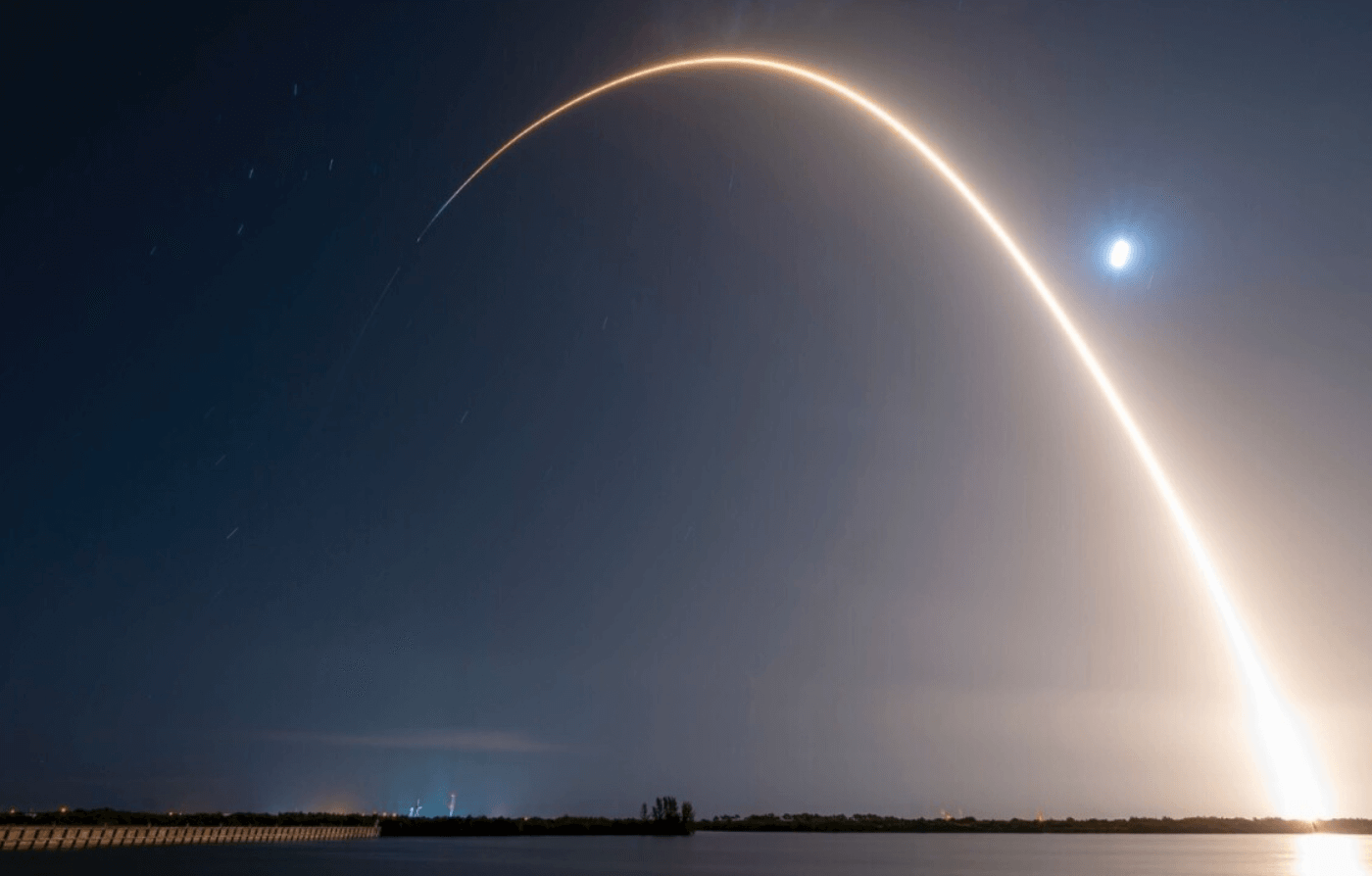
Amazon’s Project Kuiper marked another milestone with the successful launch of 24 additional low Earth orbit (LEO) satellites early Wednesday morning, bringing the total number of Kuiper satellites in orbit to 78. The mission, designated KF-01, was the company’s first to fly aboard a SpaceX Falcon 9 rocket and launched at 2:30 a.m. EDT on July 16 from Space Launch Complex 40 at Cape Canaveral Space Force Station.
The satellites were deployed into an initial orbit of 289 miles (465 kilometers). From there, mission control in Redmond, Washington, assumed operations to initiate health checks and begin orbital maneuvers to raise the spacecraft to their operational altitude of 392 miles (630 km). This launch is part of a larger plan to deploy over 3,200 satellites aimed at delivering global broadband connectivity through the Project Kuiper constellation.
This latest launch follows two earlier missions—KA-01 in April and KA-02 in June—both using ULA’s Atlas V rockets and each deploying 27 satellites. With more than 80 missions planned, Amazon continues ramping up its space-based infrastructure to compete with other satellite internet providers such as SpaceX’s Starlink.
“Our mission is to deliver fast, reliable internet to customers and communities around the world,” said a spokesperson for Project Kuiper.
- Total Kuiper satellites launched to date: 78
- Third mission details:
- Name: KF-01
- Date: July 16, 2025
- Launch vehicle: SpaceX Falcon 9
- Satellites: 24
- Site: SLC-40, Cape Canaveral
- First mission: KA-01, April 28 (27 satellites, Atlas V)
- Second mission: KA-02, June 23 (27 satellites, Atlas V)
- Target constellation size: Over 3,200 satellites