At this week’s SC15 in Austin, Intel is showcasing several advancements to its Scalable System Framework (Intel SSF) that promise to bring high performance computing (HPC) capabilities and benefits to more industries and new workloads.

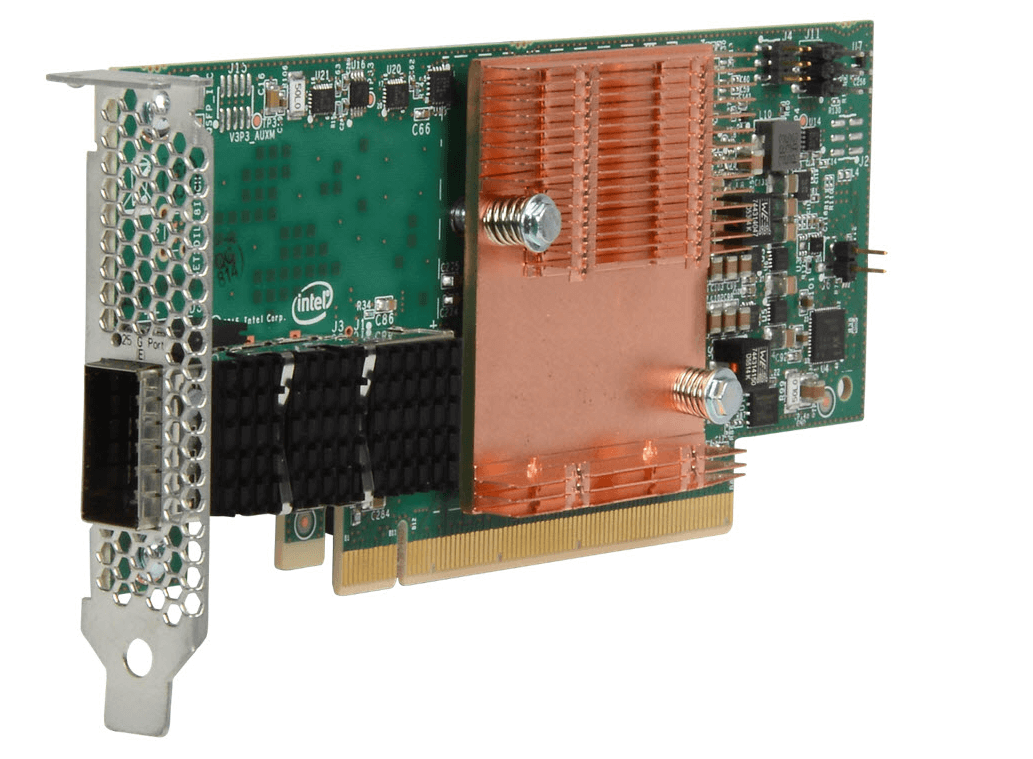
One of the foundational elements of the Intel SSF is its Omni-Path Architecture, a new HPC-optimized fabric technology that makes the performance of HPC clusters more accessible to a broader variety of users.
Some highlights:
- Intel will provide Intel SSF reference architectures, designs and validation tools. These technical system specifications will include hardware and software bill of materials for Intel SSF validated systems.
- Companies planning to launch systems based on SSF include Colfax, Cray, Dell, Fujitsu Systems Europe, HPE, Inspur, Lenovo, Penguin Computing, SGI, Sugon and Supermicro
- Intel OPA’s 48-port switch enables up to 26 percent more servers than InfiniBand EDR within the same budget and up to 60 percent lower power consumption for a more efficient switch and system infrastructure.
- Intel OPA is currently being used at several large sites, including the Texas Advanced Computing Center and the Pittsburgh Supercomputer Center. Colfax, Cray, Dell, Fujitsu Systems Europe, Hitachi*, Huawei*, HPE, Inspur, Lenovo, NEC, SGI, Sugon, Supermicro and other system vendors starting to announce Intel OPA-based switches and server platforms, with volume shipments ramping in the first quarter of next year.
- Intel announced that preproduction Intel Xeon Phi processors (code-named Knights Landing) are running in several supercomputing-class systems. Cray has a system currently running multiple customer applications in preparation for the supercomputer deployments at Los Alamos (Trinity system) and NERSC (Cori system). Systems are also installed at CEA (the French Alternative Energies and Atomic Energy Commission) by Atos and Sandia National Laboratories by Penguin Computing. Intel expects more than 50 system providers to have Intel Xeon Phi product family-based systems in the market at launch.
- Intel is among more than 30 founding members of the OpenHPC Collaborative Project, a new community-led organization focused on developing a comprehensive and cohesive open source HPC system software stack to drive broader adoption. Intel-supported versions of the open source HPC system software stack are expected to be available next year.
- Intel expands HPC ecosystem support and investments with the creation of five new Intel Parallel Computing Centers focused on Lustre software development; through a new long-term strategic partnership with the Alan Turing Institute to further the role of high performance computing and data sciences in the U.K.; and with an expanded collaboration with the Barcelona Supercomputing Center, focused on advancing the exascale capabilities of the Intel SSF.
- Intel announced a multiyear, multimillion-dollar program to increase diversity within the HPC ecosystem consisting of a new scholarship program designed to attract women and underrepresented minorities to pursue graduate degrees in computational and data science programs, as well as a new internship program to increase the diversity of Intel’s HPC workforce.
“We’re entering a new era in which supercomputing is being transformed from a tool for a specific problem to a general tool for many,” said Charlie Wuischpard, vice president and general manager of HPC Platform Group at Intel. “System-level innovations in processing, memory, software and fabric technologies are enabling system capabilities to be designed and optimized for different usages, from traditional HPC to the emerging world of big data analytics and everything in between. We believe the Intel Scalable System Framework is the path forward for designing and delivering the next generation of systems for the ‘HPC everywhere’ era.”
http://supercomputing_intel.tri-digital.com
Intel Unveils Knights Landing Processor and Omni Scale I/O Fabric
 Intel announced microarchitecture and memory details of its next-generation Intel Xeon Phi processor (code-named Knights Landing) and an end-to-end interconnect fabric optimized for fast data transfers, both aimed at powering High-Performance Computing (HPC) systems.
Knights Landing, which is expected to debut in the second half of 2015, will include up to16GB high-bandwidth, on-package memory at launch – designed in partnership with Micron – to deliver five times better bandwidth compared to DDR4 memory, five times better energy efficiency and three times more density than current GDDR-based memory. Knights Landing will be available in a PCIe-based card option, or mounted directly on the motherboard socket to remove the bandwidth bottlenecks of data transfer over PCIe, common in GPU and accelerator solutions.

Powered by more than 60 HPC-enhanced Silvermont architecture-based cores, Knights Landing is expected to deliver more than 3 TFLOPS of double-precision performance and three times the single-threaded performance compared with the current generation.
Intel’s new Omni Scale fabric, which is built upon a combination of enhanced acquired IP from Cray and QLogic along with tis own in-house innovations, addresses the I/O requirements of the HPC sector. Intel Omni Scale Fabric is an end-to-end I/O solution encompassing adapters, edge switches, director switch systems, cables and management software. Intel intends to replace traditional electrical transceivers in the director switches with silicon photonics, enabling increased port density, simplified cabling and reduced costs. Intel Silicon Photonics-based cabling and transceiver solutions may also be used with Intel Omni Scale-based processors, adapter cards and edge switches.
Intel noted continued market gains in powering the HPC sector. The company said its current generation of Xeon processors and Xeon Phi coprocessors powers the top-rated system in the world – the 35 PFLOPS “Milky Way 2” in China, and its designs account for 85 percent of all supercomputers on the 43rd edition of the TOP500 list.