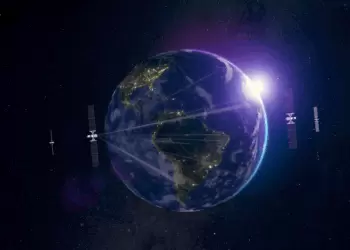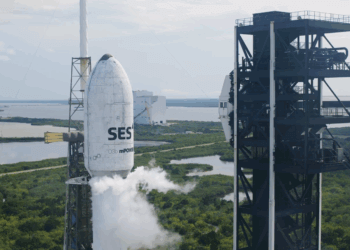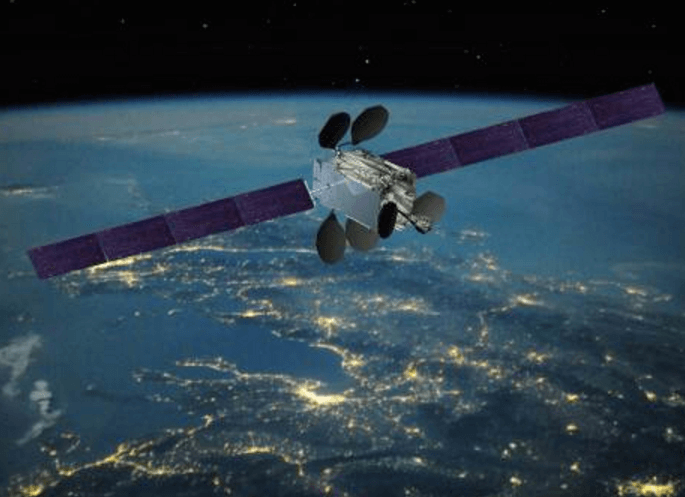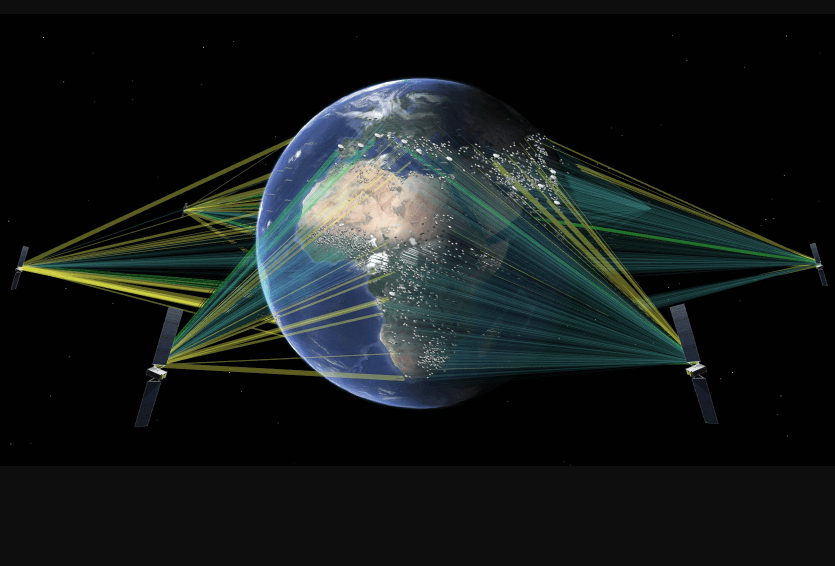
SES launched two new O3b mPOWER satellites on a SpaceX Falcon 9 rocket from Kennedy Space Center at 5:26 p.m. local time. These satellites will expand SES’s medium Earth orbit (MEO) system, joining six previously deployed satellites to deliver high-capacity and low-latency connectivity services globally.
The seventh and eighth O3b mPOWER satellites feature updated payload power modules to enhance throughput and scalability. SES has been providing O3b mPOWER services since April 2024, delivering flexible connectivity solutions across sectors such as telecommunications, maritime, government, and cloud services. The system can deliver bandwidth ranging from tens of Mbps to multiple gigabits per second, catering to diverse customer requirements.
Key customers leveraging the O3b mPOWER network include Microsoft, Princess Cruises, Jio Platforms, Orange, NATO, and the Governments of Luxembourg and the United States. SES plans to deploy five more satellites in the O3b mPOWER constellation within 18 months, completing the 13-satellite first-generation system. CEO Adel Al-Saleh emphasized the system’s growing impact, stating, “We have seen how it has become an integral part of the connectivity experience of our customers.”
• SES launched two O3b mPOWER satellites via SpaceX Falcon 9.
• The system delivers connectivity ranging from tens of Mbps to multiple Gbps.
• Key clients include Microsoft, Princess Cruises, and NATO.
• Five additional satellites will be launched over the next 18 months.
• The O3b mPOWER constellation includes ground infrastructure to support global services.
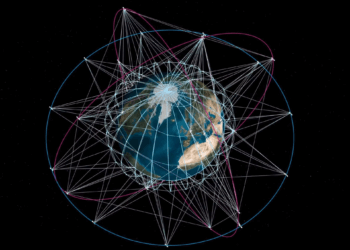
SES’s O3b MEO (Medium Earth Orbit) constellation is a satellite system designed to provide low-latency, high-speed broadband connectivity worldwide, particularly targeting areas that lack reliable internet access. The satellites are positioned in a medium Earth orbit at an altitude of about 8,000 km, which is significantly closer to Earth than geostationary satellites, thus providing lower latency (less than 150 milliseconds roundtrip) compared to traditional geostationary orbit solutions.