• Home
  • Events Calendar
  • Blueprint Guidelines
  • Privacy Policy
  • Subscribe to Daily Newsletter
  • NextGenInfra.io
No Result
View All Result
Converge Digest
Friday, April 10, 2026
  • Home
  • Events Calendar
  • Blueprint Guidelines
  • Privacy Policy
  • Subscribe to Daily Newsletter
  • NextGenInfra.io
No Result
View All Result
Converge Digest
No Result
View All Result

Home » SiTime debuts MEMS-based oscillators for wireless infrastructure

SiTime debuts MEMS-based oscillators for wireless infrastructure

December 7, 2022
in All
A A

SiTime introduced a new precision timing platform for wireless infrastructure including radios in small cells, remote radio units (RRUs), microwave backhaul, and SATCOM equipment. 

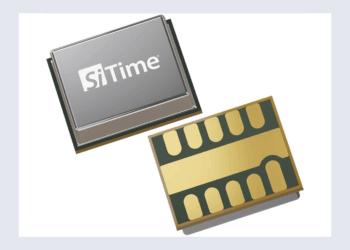
The new SiTime Elite RF Super-TCXO is an entirely new class of MEMS-based temperature-controlled oscillators designedto withstand extreme environments in which 5G radios are deployed, while delivering the phase noise, accuracy, and resilience in a single, highly integrated device. 

SiTime said its new devices also meet the stringent performance requirements specified by the IEEE 1588v2 timing synchronization protocol.

Until now, mini-OCXOs were the primary timing reference for 5G and SATCOM radios. Mini-OCXOs provided the stability over changing temperature that was necessary to clock advanced synchronized radios. While mini-OCXOs are accurate, they are notoriously unreliable, especially in harsh environments, and they consume excessive power and board space and require additional components, such as jitter cleaners and VCXOs for generating RF-capable clocks. One Elite RF Super-TCXO replaces all these components.

“To enable new services, radios are expected to deliver 10x the bandwidth of previous generations with significantly lower latency,” said Piyush Sevalia, executive VP of marketing, SiTime. “To achieve these performance goals, next-gen radios must be deployed closer to the user, and all nodes in the network must be time-synchronized. Past radio architectures used separate timing devices for the radio and for synchronization. The SiTime Elite RF platform integrates these two clocking functions, simplifying the radio timing architecture and delivering on the promise of 5G bandwidth and coverage.”

Elite RF Super-TCXO Family Highlights

  • 1 to 220 MHz any frequency output
  • ±100 ppb stability over temperature
  • -40 °C to +105 °C operating temperature range
  • ±0.9 ppb/°C stability over temperature slope
  • ±400 ppm digital control with ±0.05 ppt (parts per trillion) resolution
  • 100 fs typical integrated phase jitter (19.2 MHz, 12 kHz to 20 MHz integration range)
  • 0.3 ppb/day typical daily aging
  • 144 mW power consumption at 1.8V
  • 5.0 mm x 3.5 mm ceramic package
https://www.sitime.com/products/super-tcxos/sit5376

Tags: Blueprint columnsSiTimetiming
ShareTweetShare
Previous Post

Lumen partners with Genesys on cloud-based contact centers

Next Post

Proxxima Telecom deploys Padtec dual 400 Gb/s transponders

Staff

Staff

Related Posts

SiTime Enters $4B Resonator Market with Titan Platform
Semiconductors

SiTime Enters $4B Resonator Market with Titan Platform

September 23, 2025
SiTime Launches TimeFabric Software Suite to Boost Precision Timing for AI Data Centers
Data Centers

SiTime Launches TimeFabric Software Suite to Boost Precision Timing for AI Data Centers

June 30, 2025
SiTime Unveils Timing Chip Drives 800G for AI Data Centers
Semiconductors

SiTime Unveils Timing Chip Drives 800G for AI Data Centers

January 15, 2025
Adtran Intros Time Scale System with Optical Cesium Atomic Clocks
All

Adtran Intros Time Scale System with Optical Cesium Atomic Clocks

September 19, 2024
SiTime acquires clock products from Aura Semiconductor
Semiconductors

SiTime acquires clock products from Aura Semiconductor

November 1, 2023
SiTime delivers MEMS-based ultra-stable clock for datacenter and network infrastructure
Video

Reimagine precision network timing

September 20, 2023
Next Post
Proxxima Telecom deploys Padtec dual 400 Gb/s transponders

Proxxima Telecom deploys Padtec dual 400 Gb/s transponders

Please login to join discussion

Categories

  • 5G / 6G / Wi-Fi
  • AI Infrastructure
  • All
  • Automotive Networking
  • Blueprints
  • Clouds and Carriers
  • Data Centers
  • Enterprise
  • Explainer
  • Feature
  • Financials
  • Last Mile / Middle Mile
  • Legal / Regulatory
  • Optical
  • Quantum
  • Research
  • Security
  • Semiconductors
  • Space
  • Start-ups
  • Subsea
  • Sustainability
  • Video
  • Webinars

Archives

Tags

5G All AT&T Australia AWS Blueprint columns BroadbandWireless Broadcom China Ciena Cisco Data Centers Dell'Oro Ericsson FCC Financial Financials Huawei Infinera Intel Japan Juniper Last Mile Last Mille LTE Mergers and Acquisitions Mobile NFV Nokia Optical Packet Systems PacketVoice People Regulatory Satellite SDN Service Providers Silicon Silicon Valley StandardsWatch Storage TTP UK Verizon Wi-Fi
Converge Digest

A private dossier for networking and telecoms

Follow Us

  • Home
  • Events Calendar
  • Blueprint Guidelines
  • Privacy Policy
  • Subscribe to Daily Newsletter
  • NextGenInfra.io

© 2025 Converge Digest - A private dossier for networking and telecoms.

No Result
View All Result
  • Home
  • Events Calendar
  • Blueprint Guidelines
  • Privacy Policy
  • Subscribe to Daily Newsletter
  • NextGenInfra.io

© 2025 Converge Digest - A private dossier for networking and telecoms.

This website uses cookies. By continuing to use this website you are giving consent to cookies being used. Visit our Privacy and Cookie Policy.
Go to mobile version