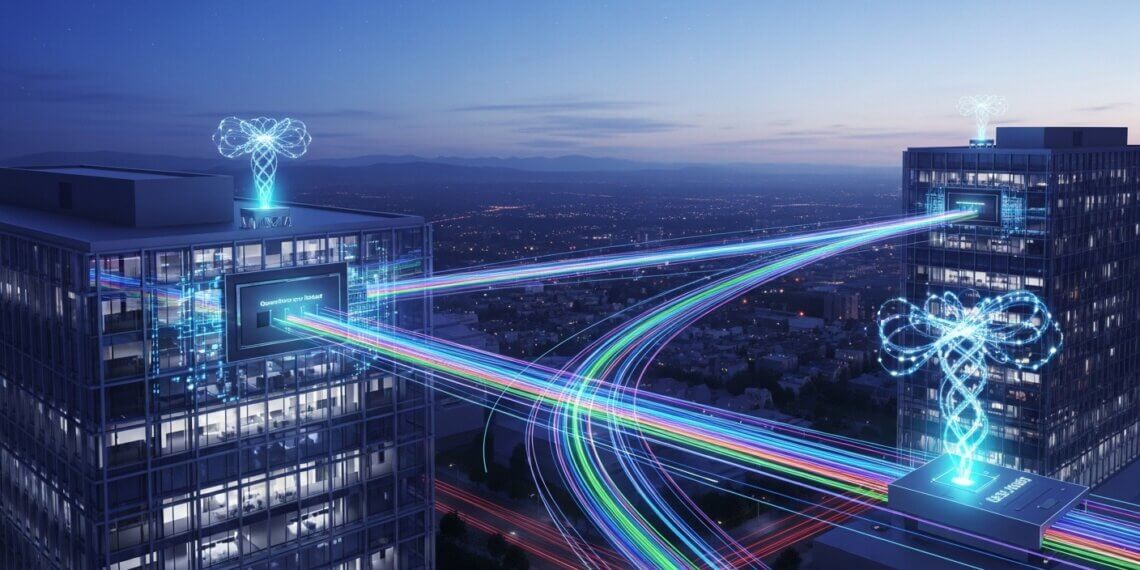
Sparkle introduced a new security framework for autonomous AI systems at the Global NaaS Event in Dallas, unveiling STLS-AI, a patent-pending protocol designed to authenticate and protect communication between AI agents. The company demonstrated the system live across Dallas, London, and Northern Virginia, showing how AI entities can verify each other and exchange data without certificates or centralized authorities. The launch builds on Sparkle’s earlier work in quantum-safe networking, including its QSI and QSO services.
As AI shifts toward agent-based architectures that act, plan, and collaborate independently, providers need a way to ensure identity, mutual recognition, and secure data exchange across distributed digital ecosystems. STLS-AI implements a quantum-resilient trust fabric intended to meet these requirements, supporting emerging multi-agent systems projected to grow at more than 40% annually through the decade. Sparkle positions the service for enterprises building AI agents, AI-native applications, or quantum-enabled platforms.
Sparkle plans to make STLS-AI commercially available in 2026, with proof-of-concept trials open now to partners evaluating secure agent-to-agent infrastructure. The company says the service will enable developers and operators to deploy autonomous systems that interact safely across networks without relying on legacy certificate hierarchies.
• Quantum-resilient AI-agent communication
• No certificates or central authorities required
• Live demos linked Dallas, London, and Northern Virginia
• Complements Sparkle’s QSI and QSO quantum-safe services
• Commercial launch planned for end of 2026; PoCs underway
“We are laying the foundation for a trusted AI ecosystem, where autonomous entities can interact with the same integrity and accountability that define human digital identities,” said Daniele Mancuso, Chief Marketing & Product Management at Sparkle and co-CEO at Mplify.
🌐 Analysis: Sparkle’s move aligns with broader telecom and cloud efforts to harden machine-to-machine communication as AI models evolve into autonomous agents. Related initiatives include emerging agent-to-agent standards from Mplify and work on quantum-safe keying by major carriers and hyperscalers. With STLS-AI, Sparkle expands its quantum-safe portfolio from network transport into the intelligence layer, reflecting a growing industry shift toward identity-centric, AI-native security models.
🌐 We’re tracking the latest developments in quantum networking. Follow our ongoing coverage at: https://convergedigest.com/category/quantum