When the lights go out at a Formula 1 Grand Prix, the roar of hybrid engines is matched by a massive surge of data across global networks. Today’s F1 car is effectively a high-velocity IoT edge device generating more than 1.1 million telemetry data points per second. For the networking, cloud, and semiconductor sectors, the modern F1 paddock is now one of the most challenging validation environments available.
The other reality is financial. F1 sponsorship now commands some of the most expensive branding packages in global sports. Title sponsorships tied to meaningful technical integration routinely exceed $100 million per season. Even secondary technical partnerships involving cloud credits, HPC infrastructure, observability platforms, silicon, or enterprise SaaS represent multi-year commitments aligned to product adoption cycles. These are not throwaway marketing experiments—they are substantial engineering programs deployed under live, time-critical conditions.
With McLaren currently leading the championship, followed by Red Bull, Ferrari, and Mercedes, public attention has shifted toward the teams with the most visible and deeply integrated technology stacks. Their partnerships showcase how networking, compute, and cybersecurity have become decisive performance variables.
Technology companies now account for an estimated $740–$905 million per year in Formula 1 sponsorships when combining team-level partnerships with F1-wide official technology programs. This scale of investment reflects how F1 has become a global stress-test environment for cloud platforms, AI systems, cybersecurity, networking, and high-performance silicon. With each car generating over a million telemetry data points per second and engineering decisions made within milliseconds, the sport offers a live demonstration of the same digital infrastructure challenges facing hyperscalers, enterprises, and service providers. For vendors, F1 delivers both engineering validation and global visibility; for the industry, it signals that motorsport is evolving into a showcase for next-generation computing, connectivity, and AI-driven operations.
McLaren: Connectivity and AI Infrastructure at the Front of the Field
McLaren’s current competitive position has elevated the visibility of its technology partners. The team operates one of the most modernized digital platforms in the paddock, with networking, compute, and edge infrastructure deployed across race operations and the McLaren Technology Centre (MTC).
- Cisco provides the core global networking environment, including MPLS links between racetracks and Woking, secure remote operations, and Wi-Fi 6E systems inside both the factory and garages. This enables engineers to access high-bandwidth telemetry and video streams in real time while moving around the garage.
- Dell Technologies supports simulation, CFD analysis, and large-scale data storage. McLaren uses Dell HPC clusters for model correlation and race-strategy workloads.
- T-Mobile is now a key partner for U.S. races. The company deploys private 5G, edge compute, and network-slicing-ready infrastructure around Las Vegas, Miami, and Austin to support team telemetry, production workflows, and logistics telemetry.
McLaren’s approach—tight integration of cloud, edge, private 5G, and high-bandwidth campus networking—has become a reference for the broader enterprise networking community.
Red Bull Racing: Cloud-Driven Strategy and Global Telemetry Transport
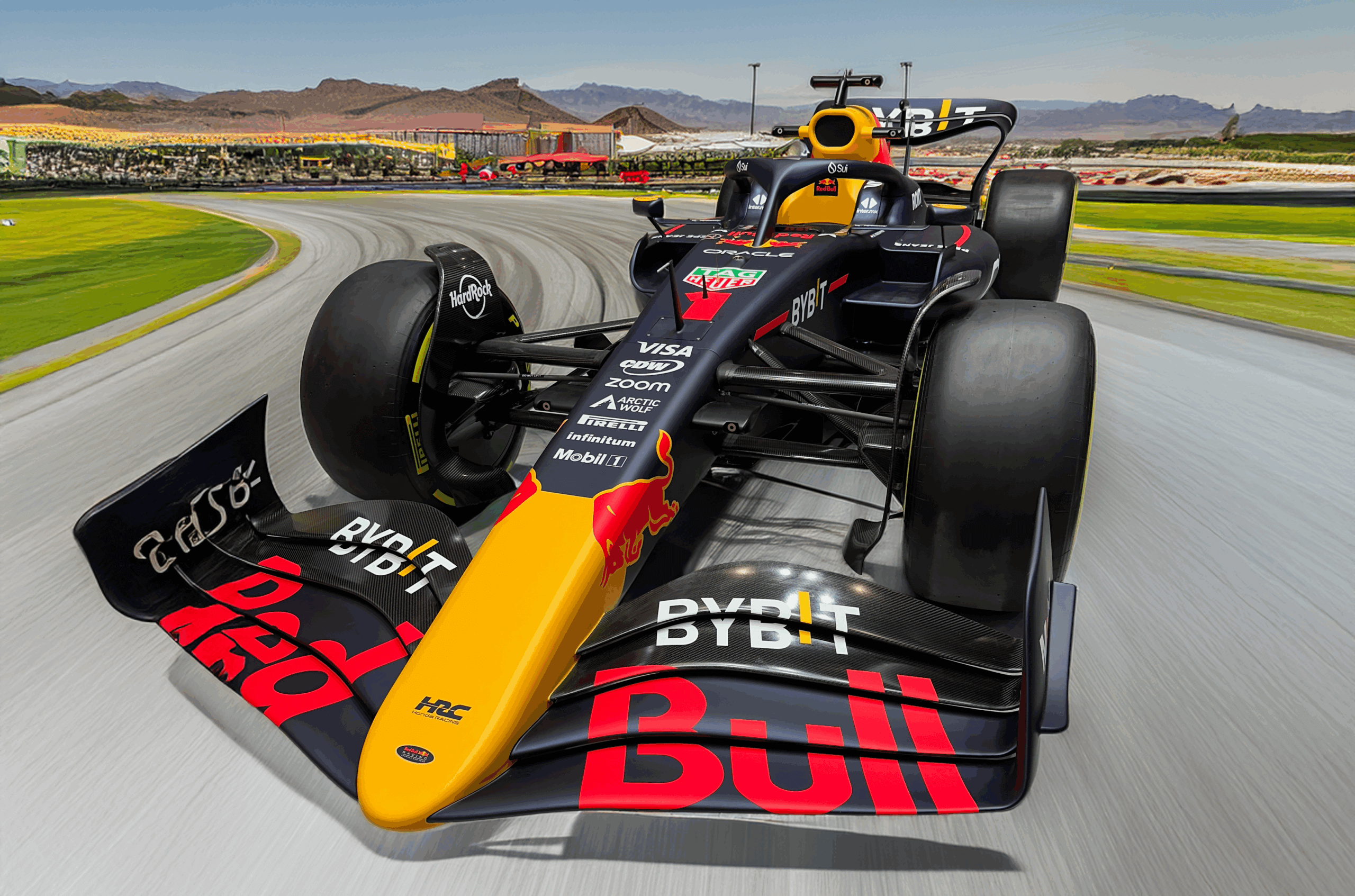
Oracle Red Bull Racing continues to run one of the most advanced simulation environments in global motorsport.
- Oracle Cloud Infrastructure (OCI) handles billions of race-strategy simulations per weekend using cloud-scalable compute. Red Bull reports roughly a 25% gain in simulation throughput after migrating off on-premises systems, aided by Arm-based instances that fit within F1’s cost-cap limits.
- AT&T operates the global telemetry transport backbone between trackside operations, the Milton Keynes mission-control hub, and Honda power-unit operations. The network is engineered for reliability, bandwidth, and low jitter, enabling continuous data movement across continents.
Red Bull’s model illustrates how hyperscale architectures—elastic compute, global backbone transport, and distributed analysis—are now fundamental in competitive motorsport.
Ferrari: Multi-Layer Modernization Across Cloud, AI, and Factory Systems
Ferrari is in the midst of a broad IT modernization effort, reflected in its 2025 partner lineup.
- HP, the team’s new title partner, brings device, PC, and workstation modernization into Maranello, extending across design, manufacturing, and trackside operations.
- IBM, entering as a premium partner for 2025, is focused on data integration, AI orchestration, and digital fan-engagement systems using watsonx and consulting expertise.
- AWS supports Ferrari’s machine-learning workloads, including sensor-replacement models and virtual performance tools built in SageMaker.
This multi-vendor architecture reflects Ferrari’s shift toward high-volume data integration, updated enterprise workflows, and expanded AI-assisted engineering.
Mercedes-AMG PETRONAS: Secure, Distributed Engineering Operations
Mercedes maintains one of the most security-intensive digital environments in the sport, reflecting the scale of its HPC and simulation workloads.
- AMD supplies EPYC processors for Mercedes’ CFD and simulation clusters, supporting aero development and model-correlation workflows.
- TeamViewer provides remote-operations connectivity between Brixworth, Brackley, and global race venues, enabling distributed engineering teams to collaborate on real-time operations.
- CrowdStrike delivers cybersecurity and endpoint protection across Mercedes’ connected infrastructure. With CrowdStrike’s CEO holding an equity stake in the team, cybersecurity has become a primary operational consideration.
Mercedes’ architecture highlights the importance of secure remote access, multi-site HPC, and cyber-resilient engineering operations.
Aston Martin: AI-Driven Campus Networking and Industrial Integration
Aston Martin’s major investment in its new Silverstone technology campus has turned the facility into one of F1’s most advanced enterprise networking deployments.
- Juniper Networks supplies the AI-driven network fabric that links the wind tunnel, manufacturing areas, driver-in-loop simulators, and race-support operations.
- Arm, now a multi-year partner, provides AI compute expertise for instrumentation, sensor fusion, and edge-processing systems.
- SentinelOne covers endpoint security and threat protection across the new campus and race operations.
Aston Martin’s infrastructure resembles a modern industrial enterprise more than a traditional motorsports factory.
Williams, VCARB, Haas, and Sauber: Software, Observability, and Industrial IoT
Several teams outside the front group are aligning with SaaS, observability, and industrial automation partners to streamline operations:
- Atlassian Williams Racing is using Jira, Confluence, and modern workflow automation to rebuild outdated internal systems.
- VCARB (Visa Cash App RB) has partnered with Dynatrace for observability and application-performance telemetry across its digital systems.
- Haas F1 Team has added CSG, bringing telecom-grade BSS/OSS capabilities into fan engagement and operational workflows.
- Sauber works with Extreme Networks for Wi-Fi 6E networking and with Camozzi Group for industrial automation and materials R&D ahead of the team’s transition to Audi.
Each partnership aligns with a clear operational need: visibility, process automation, or manufacturing integration.
Silicon at the Core: CPU, Edge Compute, and Embedded AI
Across the grid, silicon partners play a central but often understated role:
- AMD: HPC CPUs for CFD and simulation.
- Qualcomm Snapdragon: AI-capable processors for digital interfaces, connectivity, and fan-experience systems.
- Arm: Low-power, high-efficiency AI compute for factory instrumentation, edge analytics, and next-generation control platforms.
These relationships reflect how F1 increasingly mirrors enterprise AI and edge-computing architectures.
For the networking, telecom, cloud, and semiconductor sectors, Formula 1 has become a high-value proving ground. Partnerships are substantial in cost, deeply technical in scope, and visible to a global audience. The 2025 grid demonstrates that performance now depends as much on network reliability, data-center throughput, observability, and cyber resilience as on aerodynamics or the power unit.
In an environment where each car streams more than a million data points per second and engineering decisions must be made within milliseconds, the competitive edge increasingly comes from the infrastructure stack. The fastest car can only win if the supporting network, compute, and software systems operate at equal speed.
| Tech / AI Company | Sponsorship Role | Estimated Annual Value (USD) |
|---|---|---|
| Oracle | Title Sponsor, Oracle Red Bull Racing | $100M–$105M |
| HP | Title Sponsor, Scuderia Ferrari HP | $80M–$90M |
| Google (Android + Gemini) | Principal Partner, McLaren (Android wheel covers, Gemini branding) | $50M–$55M |
| AWS | Official Cloud, ML & Data Provider to Formula 1 | $30M–$40M |
| Lenovo | Official Hardware Partner, F1 (servers, PCs, race ops) | $25M–$30M |
| Salesforce | Official CRM & Fan Engagement Partner to F1 | $20M–$25M |
| Zoom | Official Communications Partner, F1 | $15M–$20M |
| Tata Communications | Official Global Connectivity Partner to F1 | $15M–$20M |
| Microsoft | Official Cloud & Productivity Partner (F1 digital ops) | $12M–$15M |
| Cisco | Official Enterprise Network Partner of Formula 1 | $10M–$15M |
| Google Cloud | AI & Cloud Support to F1 Media, Digital & Fan Systems | $8M–$12M |
| AT&T | Global Connectivity Partner, Red Bull Racing | $40M–$50M |
| Dell Technologies | HPC & Infrastructure Partner, McLaren | $25M–$30M |
| Cisco (McLaren-specific) | Official Networking Partner, McLaren | $20M–$25M |
| Qualcomm (Snapdragon) | Official Partner, Mercedes | $20M–$25M |
| IBM | Premium Partner, Ferrari | $20M–$25M |
| AMD | HPC Partner, Mercedes | $15M–$20M |
| TeamViewer | Remote Operations Partner, Mercedes | $15M–$20M |
| Atlassian | Title Sponsor, Atlassian Williams Racing | $15M–$20M |
| T-Mobile | US Connectivity Partner, McLaren | $10M–$15M |
| Juniper Networks | Network Infrastructure Partner, Aston Martin | $10M–$12M |
| Perplexity AI | AI Partner / Branding (Las Vegas GP & digital activations) | $8M–$10M |
| Arm | AI Compute Platform Partner, Aston Martin | $8M–$10M |
| SentinelOne | Cybersecurity Partner, Aston Martin | $8M–$10M |
| Dynatrace | Observability Partner, Visa Cash App RB | $5M–$8M |
| Extreme Networks | Wi-Fi 6E Partner, Sauber | $3M–$5M |
| Keeper Security | Password Security Partner, Williams | $2M–$3M |
| CSG | BSS/OSS Partner, Haas | $2M–$3M |
| Camozzi | Industrial Automation Partner, Sauber / Audi 2026 | $1M–$2M |
About These Estimates
The sponsorship values presented in this table are Converge Digest estimates based on publicly available information, industry benchmarks, commercial-rights disclosures, and typical pricing for Formula 1 title, principal, and technical–partner categories. These figures are not published by the teams or companies. They represent informed ranges derived from comparable deals, historic sponsorship tiers, F1 financial filings, and analyst reporting. Actual contract values may vary, and many include non-cash technical contributions such as cloud credits, hardware, engineering services, or software licensing.
| F1 Team (2025 Ranking) | Technology & AI Sponsors |
|---|---|
| 1. McLaren | • Google (Android + Gemini) • Dell Technologies • Cisco • T-Mobile (U.S.) • Splunk (analytics) • DeWalt (tools, sensors) |
| 2. Oracle Red Bull Racing | • Oracle (OCI cloud, simulations) • AT&T (global connectivity) • Citrix (virtualization tools) • Bybit (digital/crypto platform) |
| 3. Scuderia Ferrari HP | • HP (title technology partner) • IBM (AI & data integration) • AWS (ML & virtual sensors) • Qualcomm (partnership in development) |
| 4. Mercedes-AMG PETRONAS | • AMD (HPC systems) • CrowdStrike (cybersecurity) • TeamViewer (remote ops) • Qualcomm Snapdragon • Nuance Communications (AI voice tools) |
| 5. Aston Martin Aramco | • Juniper Networks • Arm (AI compute & instrumentation) • SentinelOne (cybersecurity) • Cognizant (cloud, digital ops) |
| 6. Ferrari Customer / Haas (Power Unit Links) | • CSG (BSS/OSS) • Alpinestars (smart sensors) • HAAS Automation (CNC, industrial automation) |
| 7. Williams Racing (Atlassian Williams Racing) | • Atlassian (title sponsor, software stack) • Kraken (Web3, digital engagement) • Acronis (cyber backup) • Keeper Security • Genpact (analytics) |
| 8. RB — Visa Cash App Racing Bulls (VCARB) | • Dynatrace (observability) • Cash App (FinTech) • Visa (digital payments) • Rebellion Timepieces (instrumentation) |
| 9. Stake F1 Team KICK Sauber | • Extreme Networks (Wi-Fi 6E) • Camozzi Group (industrial IoT) • EPFL (research) • Zadara (cloud storage) |
| 10. Alpine F1 Team | • Microsoft (cloud & analytics) • KX Systems (telemetry analytics) • Dupont (materials science) • BWT (water tech + sustainability systems) |