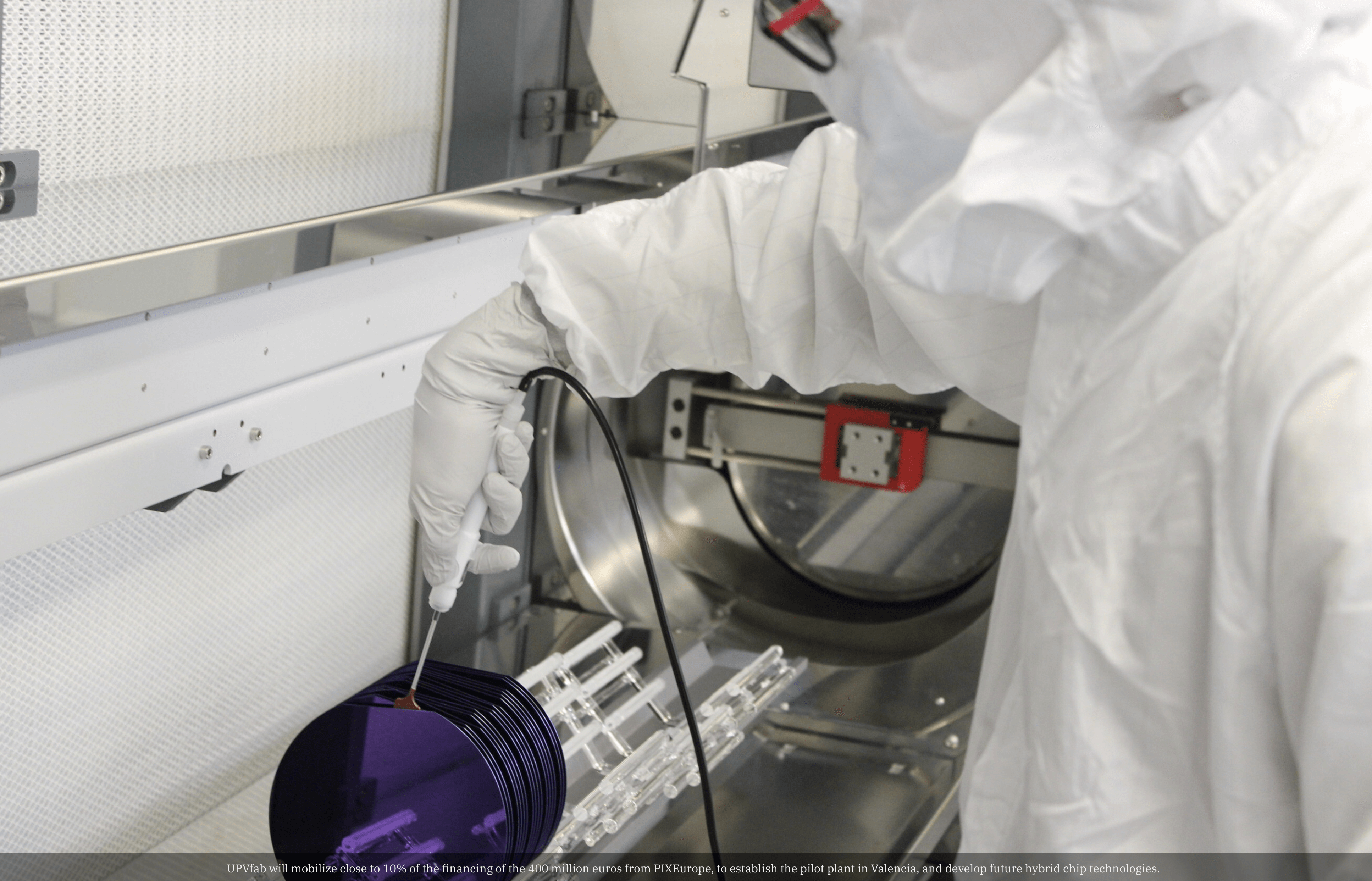
UPVfab, a laboratory at the Polytechnic University of Valencia, is playing a pivotal role in the European Commission’s PIXEurope project, which aims to establish pilot manufacturing plants for hybrid photonic chips. These components are critical for applications in self-driving vehicles, biomedicine, and advanced telecommunications. The project, with a total funding of €400 million ($436 million USD), is led by researchers Pascual Muñoz and José Capmany, renowned figures in the field of photonics.
As part of PIXEurope, UPVfab will mobilize approximately 10% of the total funding to develop a new pilot facility in Valencia. The initiative is co-financed by the European Chips Joint Undertaking (Chips JU) and Spain’s Ministry of Digital Transition. The facility aims to advance hybrid photonic chip technologies, supporting both research and industrial scale-up. Recruitment efforts for the plant are already underway, targeting professionals from the UK, US, Netherlands, and Germany.
The global photonics market, valued at over €1.5 trillion ($1.64 trillion USD) by 2023, is set to expand dramatically, with production of photonic integrated circuits projected to grow by over 400% in the next decade. This growth underscores the strategic importance of initiatives like PIXEurope. “PIXEurope will drive investments in pilot manufacturing plants, allowing companies to develop and transfer cutting-edge manufacturing processes,” stated Pascual Muñoz, director of UPVfab.
• Project Scope: PIXEurope is a €400 million European Commission initiative for hybrid photonic chip manufacturing.
• UPVfab’s Role: The Valencian lab will manage 10% of the project’s funding and oversee the pilot plant’s establishment.
• Co-Financing: The project is supported by the European Chips Joint Undertaking and Spain’s Ministry of Digital Transition.
• Global Hiring: Recruitment spans the UK, US, Netherlands, and Germany to fill 50 positions for the Valencia facility.
• Market Growth: The global photonics market is forecast to surpass €1.5 trillion by 2023, with significant production increases expected.
“PIXEurope will involve investments in pilot manufacturing plants, including for UPVfab, which will be dedicated to hybrid photonic chips, the next technological leap in integrated photonics,” said Pascual Muñoz, director of UPVfab.
Addendum PIXEurope’s Role in Advancing Photonic Chip Manufacturing
The European Commission’s Chips Programme is coordinated by the Institute of Photonic Sciences (ICFO) in Barcelona. The consortium spans 11 countries, with major contributions from Spain’s autonomous regions of Catalonia, Valencia, Madrid, and Galicia.
PIXEurope will offer cutting-edge technological platforms, enabling the design and production of photonic integrated circuits (PICs) for sectors including telecommunications, AI, healthcare, and renewable energy. The pilot line will streamline the transition of research breakthroughs from the lab to industrial production, fostering innovation and creating a European-owned PICs ecosystem. Over the next decade, the project aims to accelerate the commercialization of photonic technologies, support start-ups, and enhance Europe’s technological sovereignty.
• Coordinating Entity: Led by ICFO, based in Barcelona, with consortium partners from 11 European countries.
• Key Spanish Participants: Includes UPV (Valencia), IMB-CNM (Barcelona), UC3M (Madrid), and UVigo (Galicia).
• Strategic Goals: Establish a unified, open-access PICs ecosystem, enhance Europe’s digital autonomy, and scale photonics manufacturing capabilities.