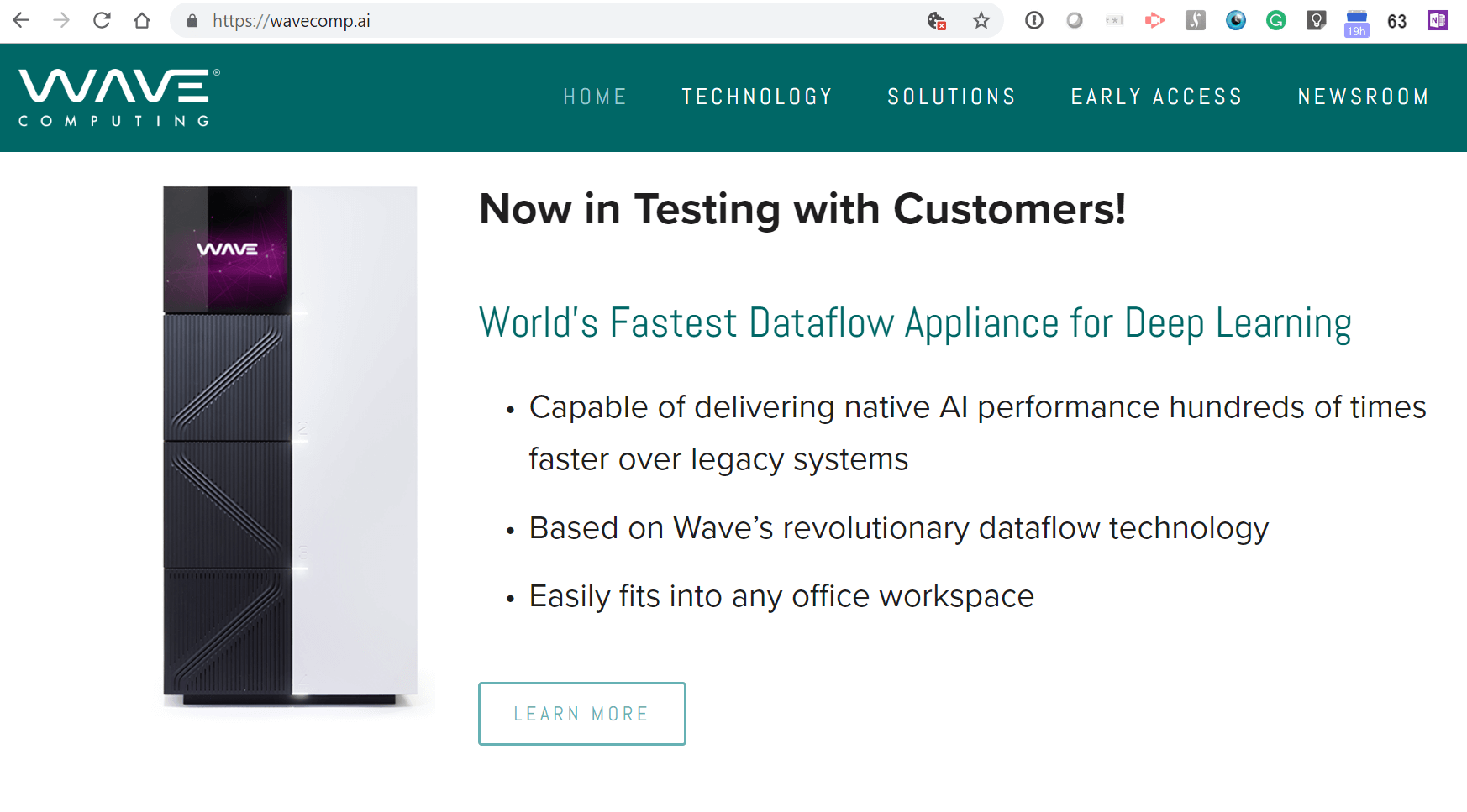
Wave Computing outlined its strategy for an AI-enabled MIPS offering and ecosystem. The company announced a new AI-enabled licensing roadmap and a broader 3rd party ecosystem.
The company said it will pursue a multi-pronged strategy to enable new use cases for AI based on MIPS architecture.
“Wave Computing’s MIPS technology is a key component of the Data Processing Unit we are developing as a fundamental new building block of next-generation data centers. We expect Fungible’s solution to be pivotal in powering modern data-centric applications such as AI and analytics” says, Pradeep Sindhu, CEO of Fungible, Inc.
 “We are well underway in executing on our strategy to bring AI to All. This means delivering AI computing systems for datacenter and customer premise applications, licensable solutions for next-generation SoCs and AI application software for end customers in multiple markets. Since acquiring MIPS in June, we have been blown away by the overwhelmingly positive responses by customers and partners. This underscores the tremendous market opportunity for a common, AI-based development environment and associated suite of solutions. We’ve never been more optimistic on the value MIPS offers, and look forward to extending the market share of MIPS-based designs by enabling native AI performance for edge SoCs,” said Derek Meyer, CEO of Wave Computing.
Under the plan, the company is expanding its IP team globally, including hardware, software, marketing and sales staff. It continues to invest in its 64-bit, scalable multi-threaded MIPS technology roadmap for embedded applications.
Wave Computing will offer new solutions ranging from CPU cores for edge applications to more robust implementations for emerging AI training and inferencing applications. Wave is also addressing the future of functional safety in autonomous vehicles by building on its ISO26262 certification and introducing advanced lock-step functionality for its MIPS cores.
- In August, Wave Computing announced a strategic partnership with Broadcom to bring its dataflow processing unit (DPU) to market at the leading-edge 7nm process node. Specifically, Wave will leverage Broadcom’s design platform, productization skills, and 7nm 56Gbps and 112Gbps SerDes. The device will be fabbed using TSMC’s 7nm process.
In June, Wave Computingacquired MIPS Tech, Inc. (formerly MIPS Technologies), a global leader in RISC processor Intellectual Property (IP) and licensable CPU cores.