by James E. Carroll
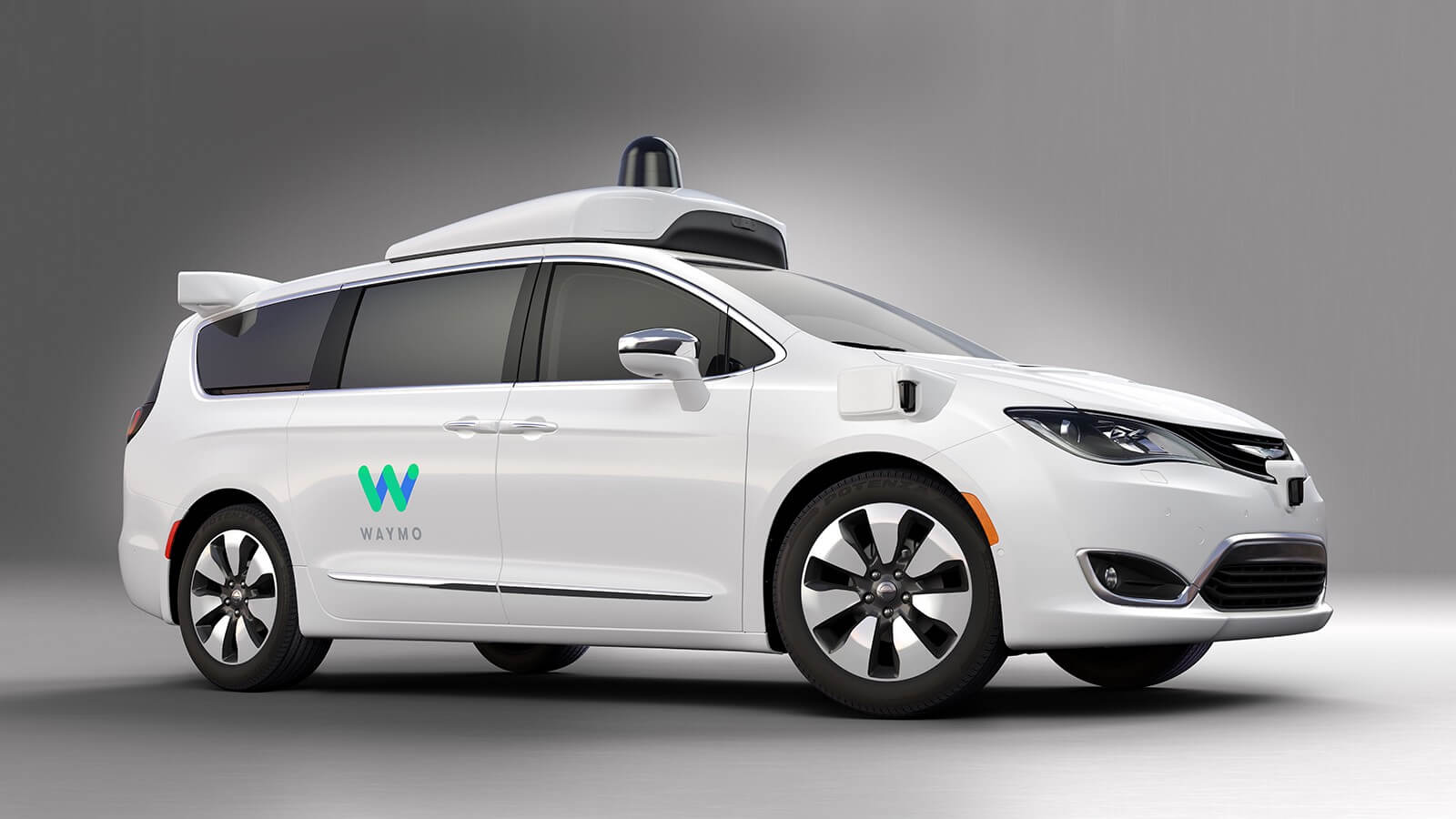
Fiat Chrysler Automobiles (FCA) has confirmed an order for several thousand of the Pacifica Hybrid minivans to be delivered to Waymo, the autonomous car subsidiary of Alphabet (Google’s parent company) this calendar year for deployment in several U.S. cities. Although the actual size of the order was not disclosed, it is believed to be between 3,000 and 10,000 autonomous vehicles. You may have already seen driveless Waymo minivans on the streets in live testing. Last year, FCA delivered 500 of the Pacifica minivans, adapted for self-driving, to Waymo for the test fleet. An earlier batch of 500 Pacificas was delivered in late 2016. The vehicles have racked up over 4 million miles (6.4 million kilometres) of testing on U.S. streets so far.
With this order for thousands of self-driving Waymos, the prospect of a commercial launch is in sight. For mobile network operators, this could be a golden opportunity. The question is whether mobile operators are bidding for this business.
“With the world’s first fleet of fully self-driving vehicles on the road, we’ve moved from research and development, to operations and deployment,” said John Krafcik, CEO of Waymo. “The Pacifica Hybrid minivans offer a versatile interior and a comfortable ride experience, and these additional vehicles will help us scale.”
 Although we do not know which mobile operator(s) Waymo has been working with, we do know that the connection from vehicle to the network must be LTE at best, as none of the big four operators have 5G trial networks in place for this level of testing.
Two conclusions can be drawn. (1) The autonomous vehicle R&D programs are ahead of the 5G movement. (2) the first generation of autonomous vehicles may not require 5G at all.
In many ways, 5G networks promise to be an ideal platform for autonomous vehicle fleets. Think about:
(a) reduced network latency
(b) dense small cell deployments ideally near street level in urban cores
(c) high bandwidth throughput
(d) network slicing
(e) enhanced security
Autonomous vehicle fleets would also be the ideal 5G customer for mobile operators. Let’s say an operator such as Waymo procures and deploys a fleet of 5,000 vehicles. The connectivity requirement will be 24/7. These vehicles are described as “data centers on wheels.” Some estimates say each autonomous vehicle could generate 4TB of data daily. Of course only a percentage of that data would need to be offloaded in real time, if at all, but clearly the
Background on Waymo
Waymo began developing its self-driving platform in 2009. At the time it was known as Google’s Self-Driving Car project and was led by Sebastian Thrun, former director of the Stanford Artificial Intelligence Laboratory and co-inventor of Google Street View. The Waymo identity was adopted in December 2016. The company remains based at the Google campus in Mountain View, California.
Late last year, Waymo began test driving the Pacifica minivans in the Phoenix metro region without anyone in the driver’s seat for some months. The test program has been expanding rapidly since then. Just after the New Year, Waymo announced that Atlanta would be its 35th test city,
In its 9-year of development, Waymo has worked on every aspect of its forthcoming Transportation-as-a-Service platform. Its software is perhaps the key differentiator that will set it apart from the many fast followers. It is also the subject of the ongoing lawsuit launched by Waymo against Uber regarding purportedly stolen intellectual property.
Beside Fiat-Chrysler, we know that Waymo is working with a few other technology suppliers. Waymo’s cloud service provider, of course, is Google. On the hardware side, Intel has disclosed that it supplied sensor processing, general compute and connectivity technologies for Waymo’s test fleet of Pacifica minivans. This includes Xeon processors, Arria FPGAs, and Gigabit Ethernet and XMM LTE modems. The partnership between Intel and Waymo was cited in a blog post by Brian Krzanich in September.
Collecting mapping and other data from the fleet
At CES 2018, Intel disclosed that its Mobileye next-generation aftermarket collision avoidance system is capable of “collecting dynamic data to make cities smarter, safer and Autonomous Ready.”
The idea is to harvest valuable information on city streets and infrastructure to create high-definition crowdsourced maps. Mobileye is developing a Road Experience Management (REM) to make this easier. Many companies, as well as government authorities, will see value in harvesting this data from the vehicle. Collecting this data need not require an autonomous vehicle. Plenty of regular buses, taxis, and trucks criss-cross cities every day on established routes. Retrofitting these vehicles for mass-scale data gathering can be as simple as installing a single camera and sensor, along with a mobile broadband connection. In fact, Mobileye has announced a number of players who are already moving in this direction:
- The city of Dusseldorf, Germany is expected to equip 750 vehicles with Mobileye 8 Connect to investigate the suitability of Dusseldorf’s existing infrastructure for autonomous vehicles and connected driving. The project is funded by the German federal government.
- London black cabs will be fitted with Mobileye 8 Connect to create an HD map of the city. Gett, a start-up working on mobility solutions, will equip approximately 500 London black cabs this year.
- New York City will also get an HD map based on Mobileye crowdsourced data. Buggy TLC Leasing, which provides leasing of vehicles for ride-sharing services such as Uber, is expected to outfit approximately 2,000 New York City-based vehicles with Mobileye Aftermarket.
- Berkshire Hathaway GUARD Insurance will equip approximately 1,000 to 2,000 trucks with Mobileye 8 Connect to generate an HD map of where these vehicles operate.¬¬¬