Toronto-based Xanadu Quantum Technologies plans to go public through a merger with Crane Harbor Acquisition Corp., a SPAC listed on Nasdaq, valuing the combined company at approximately $3.6 billion. The deal, backed by $500 million in expected gross proceeds, includes a $275 million PIPE led by institutional investors such as AMD, BMO Global Asset Management, CIBC Asset Management, and OMERS Ventures. Upon completion, Xanadu will become the first and only publicly traded pure-play photonic quantum computing company, with shares listed on both Nasdaq and the Toronto Stock Exchange.
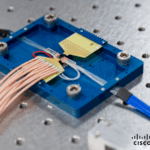
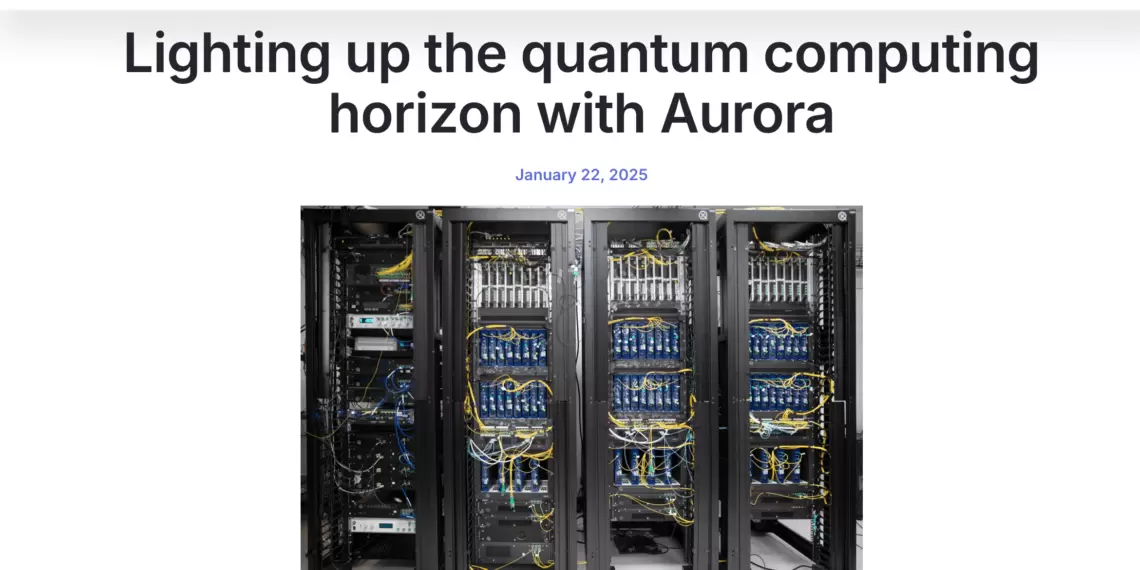
Founded in 2016, Xanadu has emerged as a global leader in photonic quantum computing, a modality that leverages photons instead of superconducting or trapped-ion systems. The company gained international recognition in 2022 after demonstrating quantum supremacy with its Borealis system, a 216-qubit photonic computer that solved a problem in two minutes that would have taken a classical supercomputer seven million years. In 2025, Xanadu introduced Aurora, the first networked, modular, and scalable quantum computer, and demonstrated real-time error correction decoding with photonic qubits. The company aims to achieve full fault tolerance by 2029, scaling to 100,000 physical qubits and 1,000 logical qubits—while computing at room temperature without cryogenics or laser cooling.
Alongside its hardware, Xanadu’s PennyLane software platform has become the most widely used quantum programming environment globally, with 47% of quantum programmers using it. PennyLane integrates across hardware from all major quantum providers and is deployed in academia and industry through 143 university partnerships in 33 countries. Corporate users include Volkswagen, Mitsubishi Chemical Group, and Rolls-Royce. CEO Christian Weedbrook said, “This transaction will provide us with the capital necessary to accelerate our mission of building quantum computers that are useful and available to people everywhere.”
• Xanadu demonstrated quantum supremacy in 2022 with Borealis (216 qubits).
• Introduced Aurora in 2025—the first modular, networked photonic quantum computer.
• PennyLane software holds 47% global market share among quantum programmers.
• Targets full fault-tolerant quantum system by 2029 (100,000 physical / 1,000 logical qubits).
• $3.6 billion pro forma market cap with $500 million expected in funding, including $275 million PIPE.
• Strategic investors include AMD, BMO, CIBC, MMCAP Ventures, PlanetFirst, and OMERS Ventures.
“We are thrilled to partner with Xanadu’s exceptional team to unlock the tremendous potential of photonic quantum computing,” said Bill Fradin, CEO of Crane Harbor.
🌐 Analysis:
Xanadu’s progress underscores photonics’ rising dominance in the quantum race. Its room-temperature operation and use of mature optical technologies stand in contrast to the cryogenic complexity of superconducting systems from IBM and Google. With Borealis proving quantum advantage and Aurora establishing networked scalability, Xanadu now leads a small cohort—including PsiQuantum and ORCA Computing—advancing photonic architectures toward fault tolerance. The public listing will provide critical capital for scaling fabrication and integration, while PennyLane’ssoftware footprint positions Xanadu to influence the broader developer ecosystem that underpins quantum commercialization.
Xanadu Quantum Technologies, headquartered in Toronto, Canada, is a leading developer of photonic quantum computers designed to operate at room temperature using light particles (photons) instead of superconducting or trapped-ion qubits. Founded in 2016 by CEO Christian Weedbrook, the company’s mission is to make quantum computing useful and accessible worldwide. Its core technology combines proprietary photonic hardware—exemplified by its Aurora system, the world’s first modular and networked photonic quantum computer—with software platforms such as PennyLane and Strawberry Fields, which have become key tools for hybrid quantum-classical algorithm development. Xanadu’s architecture enables scalability through interconnected optical racks using kilometers of fiber and specialized photon-number-resolving detectors, positioning it as a pioneer in building cloud-accessible, room-temperature quantum systems.
The company has raised capital from prominent investors including Bessemer Venture Partners, Tiger Global, In-Q-Tel, OMERS Ventures, and the Business Development Bank of Canada. In November 2025, Xanadu announced plans to go public via a merger with Crane Harbor Acquisition Corp., valuing the firm at approximately US $3.6 billion with about US $500 million in expected proceeds. Key milestones include the 2022 demonstration of quantum supremacy with its Borealis system and a 2025 collaboration with Applied Materials to develop wafer-scale photonic detectors. With its open-source software leadership, cloud-based access to photonic quantum processors, and scalable hardware roadmap, Xanadu is emerging as a cornerstone in the global shift toward practical, networked quantum computing.