• Home
  • Events Calendar
  • Blueprint Guidelines
  • Privacy Policy
  • Subscribe to Daily Newsletter
  • NextGenInfra.io
No Result
View All Result
Converge Digest
Friday, April 10, 2026
  • Home
  • Events Calendar
  • Blueprint Guidelines
  • Privacy Policy
  • Subscribe to Daily Newsletter
  • NextGenInfra.io
No Result
View All Result
Converge Digest
No Result
View All Result

Home » Xiaomi Debuts its own 3nm Chipset

Xiaomi Debuts its own 3nm Chipset

May 27, 2025
in Semiconductors
A A

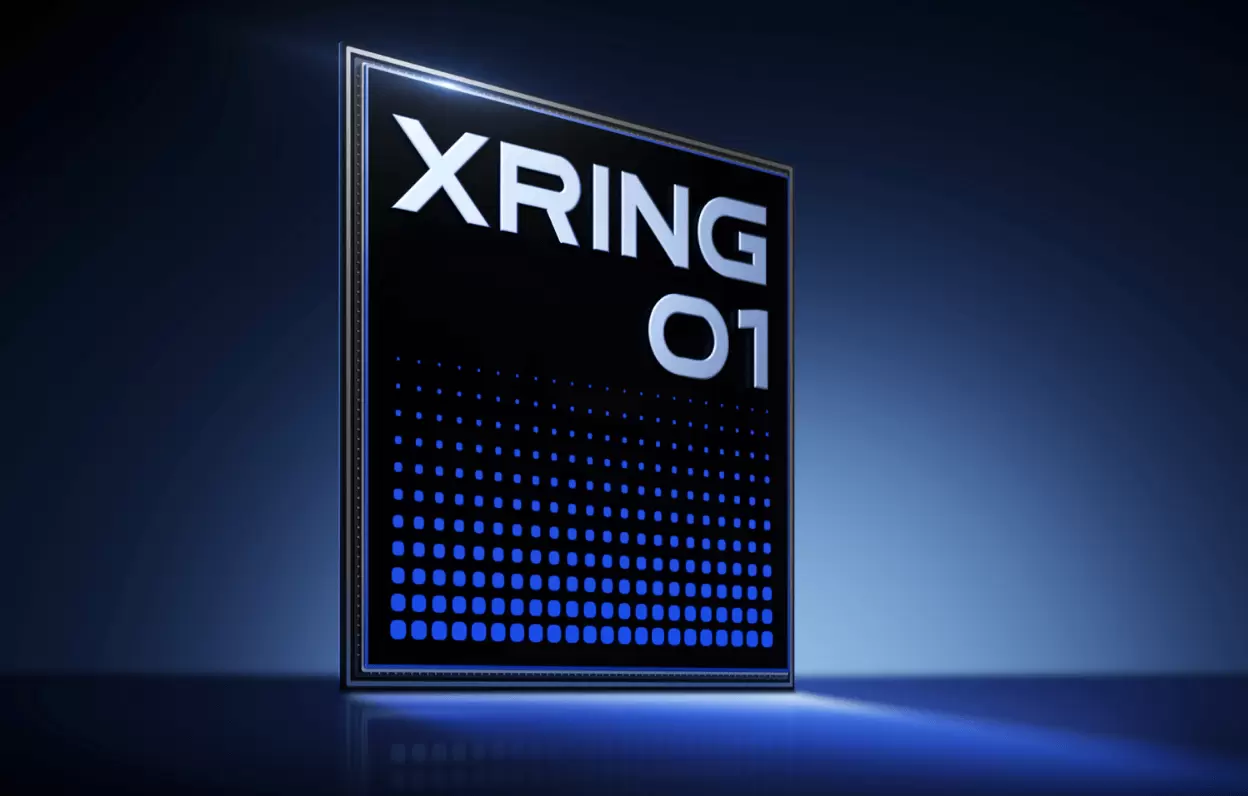
Xiaomi unveiled its first self-developed flagship chipsets—the XRING O1 3nm SoC and XRING T1 4G smartwatch SoC—during a high-profile product launch in Beijing themed “A New Beginning.” The debut marks a major milestone in Xiaomi’s ambitions to become a vertically integrated tech company, aligning chip, software, and AI under a unified development roadmap. The XRING O1 will power the new Xiaomi 15S Pro and Xiaomi Pad 7 Ultra, while the XRING T1 will appear in the 15th Anniversary Edition of the Xiaomi Watch S4.

Built using a second-generation 3nm process node and packing 19 billion transistors, the XRING O1 features a 10-core CPU architecture with dual Cortex-X925 performance cores clocked at 3.9 GHz and a 16-core Immortalis-G925 GPU. The chip integrates Xiaomi’s fourth-generation ISP, a 6-core NPU capable of 44 TOPS, and is optimized for AI-powered functions like semantic search and camera enhancements. The XRING T1 smartwatch SoC, meanwhile, is the first from Xiaomi to incorporate a proprietary 4G baseband and eSIM capability, enabling independent communication with improved power efficiency and performance across more than 100 cities during real-world testing.

The Xiaomi 15S Pro showcases the XRING O1’s capabilities, delivering top-tier benchmark performance with premium design and AI-centric functionality. It features a Leica Summilux triple-camera system, a 2K ultra-bright LTM display, and Xiaomi’s proprietary Surge G1 and P3 chips for advanced battery and charging management. The launch underscores Xiaomi’s long-term commitment to semiconductor R&D, supported by over RMB 13.5 billion in investment to date and a pledged RMB 50 billion over the next decade.

  • XRING O1 is Xiaomi’s first flagship SoC, built on 3nm, with 19 billion transistors, 10-core CPU, and 16-core GPU
  • XRING T1 is Xiaomi’s first smartwatch SoC with in-house 4G baseband and eSIM support
  • Xiaomi 15S Pro launches with XRING O1 chip, Leica optics, and advanced AI features
  • SoC development backed by RMB 13.5B+ in R&D and a team of 2,500+ engineers
  • Xiaomi aligns OS, AI, and chip design into a unified, vertically integrated product strategy

“These chips represent more than a technical milestone — they’re a statement of Xiaomi’s long-term commitment to becoming a leader in core technologies,” the company stated during the event.


Tags: ChinaXiaomi
ShareTweetShare
Previous Post

LambdaTest Launches Automation MCP Server for Debugging with AI

Next Post

NTT Connects Japan and Taiwan Over IOWN Photonics Network

Jim Carroll

Jim Carroll

Editor and Publisher, Converge! Network Digest, Optical Networks Daily - Covering the full stack of network convergence from Silicon Valley

Related Posts

FCC issues 2.5 GHz licenses from Auction 108
Clouds and Carriers

FCC Moves to Expel Hong Kong Telecom from U.S.

October 20, 2025
NVIDIA’s data center revenue hits $18.4 billion, up 409% YoY
Semiconductors

NVIDIA Greenlit to Resume H20 GPU Sales to China

July 14, 2025
Spirent and Nokia show 800G interoperability
Automotive Networking

Spirent Drives Adoption of New Automotive Positioning Standard in China

December 6, 2024
US Tightens Export Rules to Restrict China’s Advanced Chip Development
Semiconductors

US Tightens Export Rules to Restrict China’s Advanced Chip Development

December 3, 2024
Credo Launches 400G HiWire AECs for AI/ML
Data Centers

Credo Launches 400G HiWire AECs for AI/ML

September 13, 2024
Huawei upgrades is Singapore R&D operations
Financials

Huawei’s H1 Revenue Rockets up 34% YOY to US$57.3B

August 29, 2024
Next Post
Innovative Optical and Wireless Network Global Forum builds membership

NTT Connects Japan and Taiwan Over IOWN Photonics Network

Categories

  • 5G / 6G / Wi-Fi
  • AI Infrastructure
  • All
  • Automotive Networking
  • Blueprints
  • Clouds and Carriers
  • Data Centers
  • Enterprise
  • Explainer
  • Feature
  • Financials
  • Last Mile / Middle Mile
  • Legal / Regulatory
  • Optical
  • Quantum
  • Research
  • Security
  • Semiconductors
  • Space
  • Start-ups
  • Subsea
  • Sustainability
  • Video
  • Webinars

Archives

Tags

5G All AT&T Australia AWS Blueprint columns BroadbandWireless Broadcom China Ciena Cisco Data Centers Dell'Oro Ericsson FCC Financial Financials Huawei Infinera Intel Japan Juniper Last Mile Last Mille LTE Mergers and Acquisitions Mobile NFV Nokia Optical Packet Systems PacketVoice People Regulatory Satellite SDN Service Providers Silicon Silicon Valley StandardsWatch Storage TTP UK Verizon Wi-Fi
Converge Digest

A private dossier for networking and telecoms

Follow Us

  • Home
  • Events Calendar
  • Blueprint Guidelines
  • Privacy Policy
  • Subscribe to Daily Newsletter
  • NextGenInfra.io

© 2025 Converge Digest - A private dossier for networking and telecoms.

No Result
View All Result
  • Home
  • Events Calendar
  • Blueprint Guidelines
  • Privacy Policy
  • Subscribe to Daily Newsletter
  • NextGenInfra.io

© 2025 Converge Digest - A private dossier for networking and telecoms.

This website uses cookies. By continuing to use this website you are giving consent to cookies being used. Visit our Privacy and Cookie Policy.
Go to mobile version