• Home
  • Events Calendar
  • Blueprint Guidelines
  • Privacy Policy
  • Subscribe to Daily Newsletter
  • NextGenInfra.io
No Result
View All Result
Converge Digest
Tuesday, April 14, 2026
  • Home
  • Events Calendar
  • Blueprint Guidelines
  • Privacy Policy
  • Subscribe to Daily Newsletter
  • NextGenInfra.io
No Result
View All Result
Converge Digest
No Result
View All Result

Home » Xilinx samples its own telco accelerator card

Xilinx samples its own telco accelerator card

September 16, 2020
in All
A A

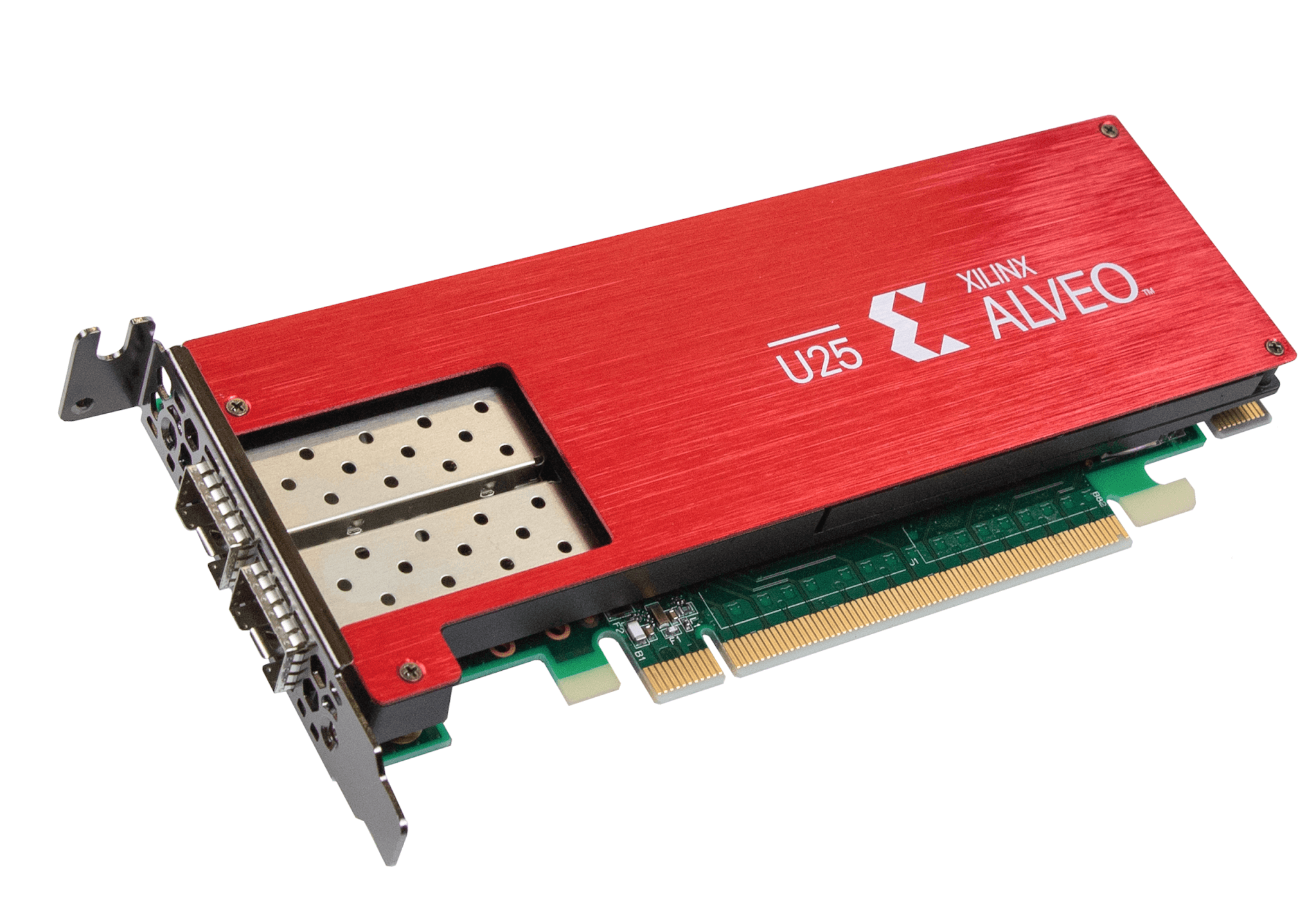
Xilinx has begun sampling its own T1 Telco Accelerator Card for O-RAN distributed units (O-DUs) and virtual baseband units (vBBUs) in 5G networks. 

The card, which uses the same field-proven Xilinx silicon and IP already being deployed in 5G networks, comes in a multi-function PCIe form factor card which performs both O-RAN fronthaul protocols and layer 1 offload. The card provides advanced workload offload capabilities, enabling a dramatic reduction in the number of CPU cores required in a system. The T1 card also enables the O-DU to deliver greater 5G performance and services while reducing overall system power consumption and cost compared to competitive offerings.

The T1 card is a small form factor, single-slot card that can be plugged into standard x86 or non-x86 servers to achieve the real-time protocol processing performance required for 5G virtualized O-DU platforms. In addition, it offloads line-rate and compute-intensive functions including: channel encoding/decoding using hardened LDPC and Turbo codecs, rate matching/de-matching, HARQ buffer management, and more, freeing the processor cores for running other services – the true promise of virtualization. The T1 card simplifies 5G deployments by offering a turnkey solution through ecosystem partners that includes both O-RAN fronthaul and 5G NR layer 1 reference designs, as well as pre-validated software to enable operators, system integrators, and OEMs to get to market quickly.

Xilinx says the offloading of critical channel coding functions from the CPU to the T1 card delivers up to 45x encoding and 23x decoding throughput improvement relative to the same server without acceleration. The T1 card enables the use of fewer CPU cores, driving down system cost and overall power consumption. Additionally, for O-RAN fronthaul termination, it can process multiple sectors of 5G NR 4TRX at 100 MHz OBW with its 50 Gbps of optical ports. The Fronthaul and L1 bandwidths are matched for optimal scalability; the more towers you want, the more cards you add to the server.

“The trend toward network virtualization and O-RAN has given us an opportunity with the Xilinx T1 Telco Accelerator Card to drive the next steps of disaggregation of standard networks, enabling our expansion into every corner of the 5G market,” said Dan Mansur, vice president of marketing, Wired and Wireless Group, Xilinx. “Working closely with our ecosystem partners, Xilinx hardware, IP and software are leading the innovation and realization of 5G O-RAN networks.”

Tags: Blueprint columnsSmartNICsXilinx
ShareTweetShare
Previous Post

Telefónica Deutschland deploys Ciena’s Blue Planet SDN for automation

Next Post

Ericsson introduces Packet Core Firewall powered by A10

Staff

Staff

Related Posts

Crehan: Majority of DPU/SmartNIC Shipments Driven by Two Customers
All

Crehan: Majority of DPU/SmartNIC Shipments Driven by Two Customers

April 8, 2025
Dell’Oro: Wireless LAN revenues defy ongoing supply problems in Q3
All

Dell’Oro: AI Data Centers Drive Ethernet Adapter and Smart NIC Market

August 7, 2024
Dell’Oro: Wireless LAN revenues defy ongoing supply problems in Q3
Research

Dell’Oro: Smart NIC Market to Exceed $5B by 2028

February 1, 2024
Meta selects Azure as strategic cloud provider for AI research
All

Microsoft previews Azure Boost for offloading virtualized network functions

July 20, 2023
Video

Video: Accelerating the 5G core with SmartNICs

March 23, 2023
Blueprint: Brazil looks to municipal Wi-Fi 6E
Blueprints

Blueprint: Brazil looks to municipal Wi-Fi 6E

February 21, 2023
Next Post
Ericsson introduces Packet Core Firewall powered by A10

Ericsson introduces Packet Core Firewall powered by A10

Please login to join discussion

Categories

  • 5G / 6G / Wi-Fi
  • AI Infrastructure
  • All
  • Automotive Networking
  • Blueprints
  • Clouds and Carriers
  • Data Centers
  • Enterprise
  • Explainer
  • Feature
  • Financials
  • Last Mile / Middle Mile
  • Legal / Regulatory
  • Optical
  • Quantum
  • Research
  • Security
  • Semiconductors
  • Space
  • Start-ups
  • Subsea
  • Sustainability
  • Video
  • Webinars

Archives

Tags

5G All AT&T Australia AWS Blueprint columns BroadbandWireless Broadcom China Ciena Cisco Data Centers Dell'Oro Ericsson FCC Financial Financials Huawei Infinera Intel Japan Juniper Last Mile Last Mille LTE Mergers and Acquisitions Mobile NFV Nokia Optical Packet Systems PacketVoice People Regulatory Satellite SDN Service Providers Silicon Silicon Valley StandardsWatch Storage TTP UK Verizon Wi-Fi
Converge Digest

A private dossier for networking and telecoms

Follow Us

  • Home
  • Events Calendar
  • Blueprint Guidelines
  • Privacy Policy
  • Subscribe to Daily Newsletter
  • NextGenInfra.io

© 2025 Converge Digest - A private dossier for networking and telecoms.

No Result
View All Result
  • Home
  • Events Calendar
  • Blueprint Guidelines
  • Privacy Policy
  • Subscribe to Daily Newsletter
  • NextGenInfra.io

© 2025 Converge Digest - A private dossier for networking and telecoms.

This website uses cookies. By continuing to use this website you are giving consent to cookies being used. Visit our Privacy and Cookie Policy.
Go to mobile version