Synopsys is deepening its collaboration with NVIDIA to accelerate semiconductor design workloads using the NVIDIA Grace Blackwell platform and CUDA-X libraries. The partnership aims to significantly reduce runtime across electronic design automation (EDA) processes such as circuit simulation, computational lithography, and materials engineering, while also embedding AI-driven productivity tools.
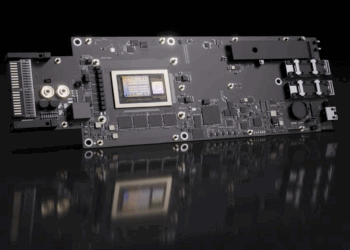
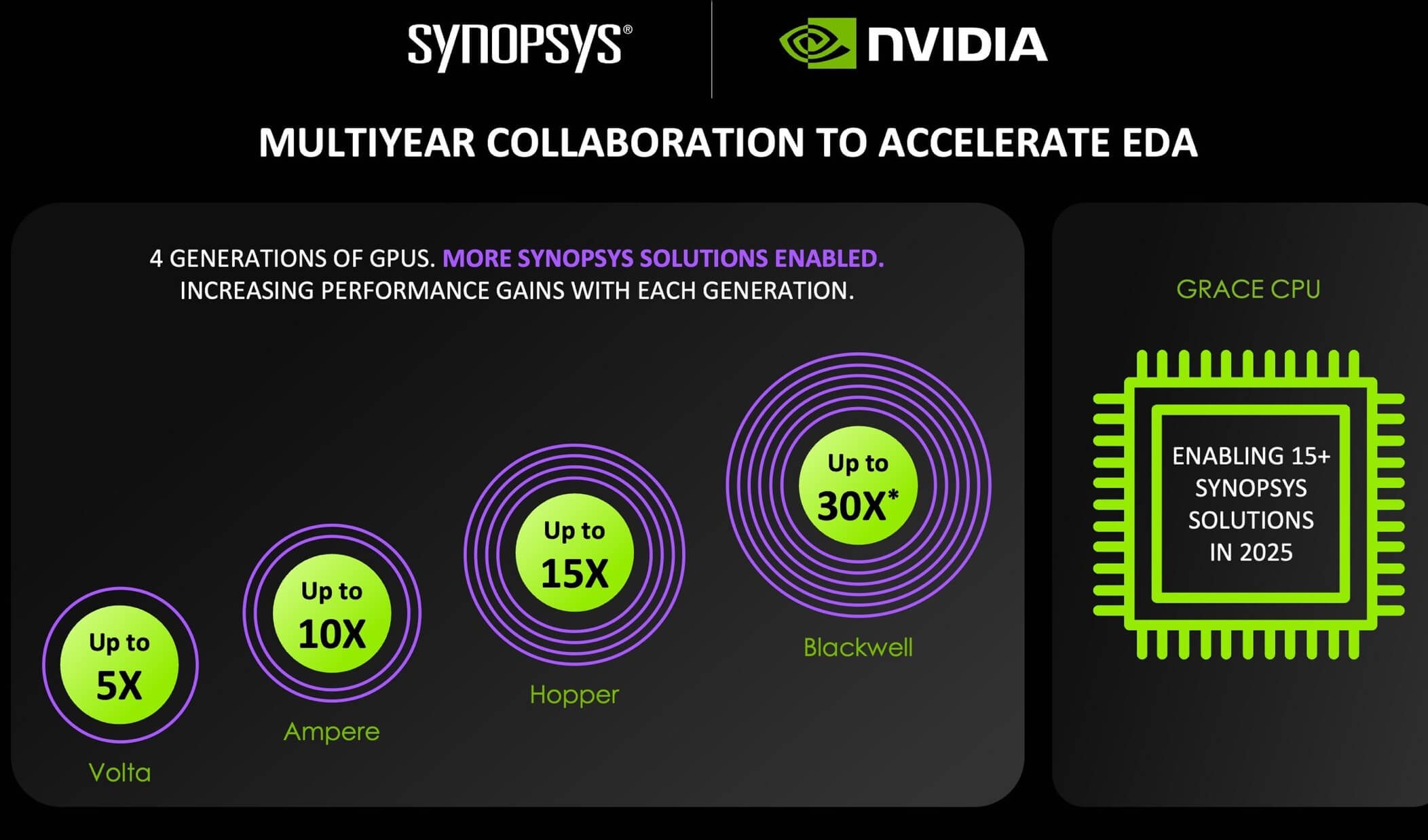
Leveraging the NVIDIA GB200 Grace Blackwell Superchip, Synopsys PrimeSim is projected to accelerate SPICE-level circuit simulation by up to 30x. Synopsys Proteus, optimized for the NVIDIA Blackwell architecture and cuLitho library, is expected to boost computational lithography simulations by up to 20x. Synopsys is also enhancing its Synopsys.ai Copilot with NVIDIA NIM inference microservices, enabling engineers to cut time-to-information by 2x through generative AI-powered insights.
The collaboration will expand further in 2025 as Synopsys brings accelerated computing to more than 15 of its EDA solutions, optimized for NVIDIA Grace CPUs. These developments target key workflows such as TCAD, physical verification, static timing analysis, and materials modeling, aiming to shorten time-to-results and enable more efficient chip development pipelines.
• Synopsys PrimeSim projected to achieve 30x speedup in circuit simulation using NVIDIA Grace Blackwell.
• Synopsys Proteus to accelerate computational lithography by up to 20x on NVIDIA Blackwell GPUs.
• Synopsys.ai Copilot delivers 2x faster insights via NVIDIA NIM-powered generative AI.
• TCAD simulation projected to run up to 10x faster using NVIDIA CUDA-X libraries.
• Synopsys QuantumATK materials simulation accelerated by up to 100x on NVIDIA Hopper GPUs.
• More than 15 Synopsys EDA tools will be optimized for NVIDIA Grace CPUs in 2025.
“By harnessing the performance of NVIDIA accelerated computing, we can help customers unlock new breakthroughs and deliver innovation even faster,” said Sassine Ghazi, president and CEO of Synopsys.