• Home
  • Events Calendar
  • Blueprint Guidelines
  • Privacy Policy
  • Subscribe to Daily Newsletter
  • NextGenInfra.io
No Result
View All Result
Converge Digest
Friday, April 17, 2026
  • Home
  • Events Calendar
  • Blueprint Guidelines
  • Privacy Policy
  • Subscribe to Daily Newsletter
  • NextGenInfra.io
No Result
View All Result
Converge Digest
No Result
View All Result

Home » Despite Tipped Lander, Nokia Validates Cellular Tech on Moon

Despite Tipped Lander, Nokia Validates Cellular Tech on Moon

March 11, 2025
in All
A A

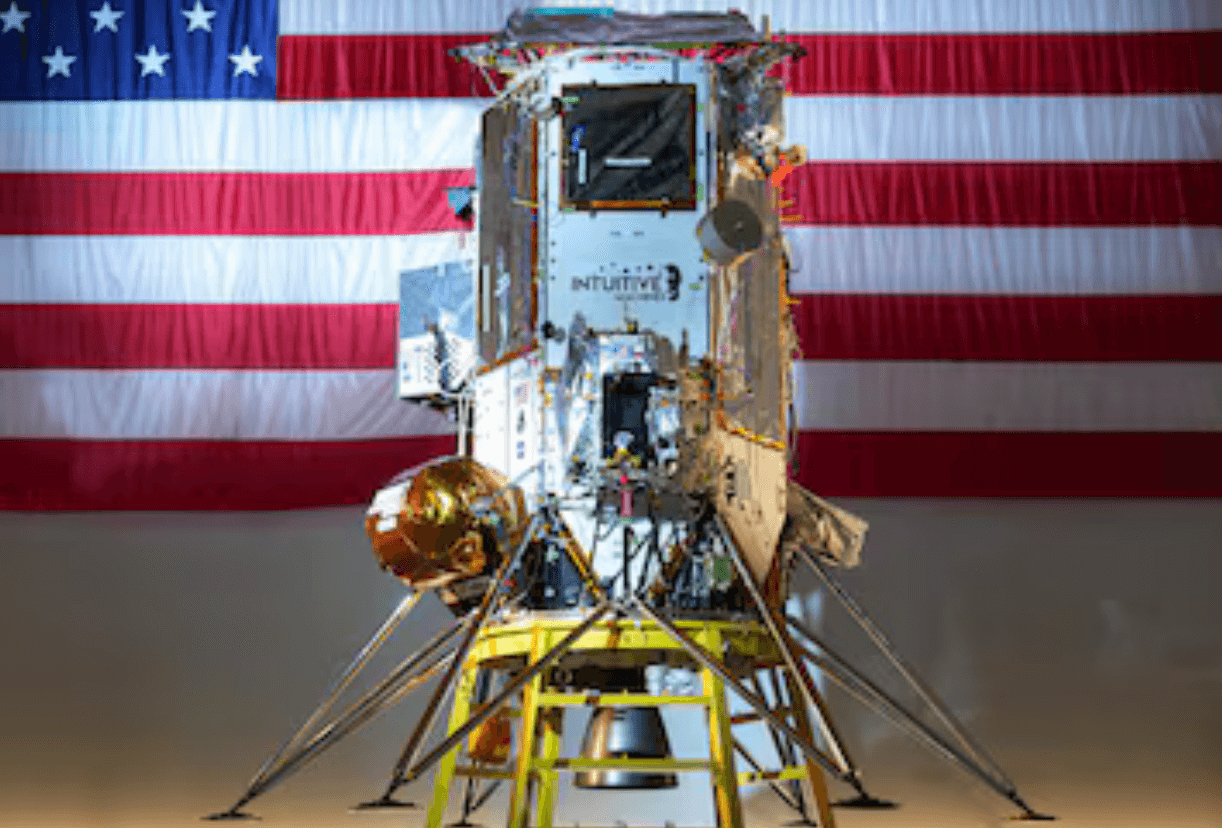
Nokia and Intuitive Machines have deployed the first cellular network infrastructure on the Moon as part of the IM-2 mission to the lunar south pole region. Although the Athena lander tipped over upon landing, significantly limiting available solar power, Nokia’s system briefly operated within a narrow 25-minute power window, successfully activating and transmitting telemetry data back to Earth. This demonstrated the fundamental capability of Nokia’s Lunar Surface Communications System (LSCS) and validated commercial terrestrial technology for use in harsh lunar environments.

The Nokia-built network briefly operated within the constrained power window resulting from the lander’s unfavorable solar panel orientation caused by its tipping over during landing. Despite these challenges, Nokia’s base station, radio, and core network components demonstrated operational readiness, communicating effectively with mission control in California. However, due to severe temperature drops experienced by Intuitive Machines’ Nova-C Micro-Nova Hopper module after the landing, the intended first cellular call on the lunar surface could not be established.

This demonstration is part of NASA’s Commercial Lunar Payload Services (CLPS) program, aimed at developing technology for sustained lunar exploration. Although not all mission objectives were met, Nokia validated that terrestrial-based cellular technology could function in the lunar environment, marking a critical advancement for future lunar and Mars communications infrastructure. Nokia and Intuitive Machines intend to apply these lessons in subsequent lunar missions.

• Nokia successfully activated the first lunar cellular network despite the Athena lander tipping over on touchdown.

• Network briefly operated during a limited 25-minute power window due to compromised solar panel positioning.

• Nokia’s Lunar Surface Communications System demonstrated full system functionality including telemetry transmissions to Earth.

• Communication validated between Nokia’s lunar equipment and Intuitive Machines’ ground station.

• Extreme lunar temperatures prevented establishing device-level cellular connection due to delayed module activation.

• NASA’s CLPS program facilitated the mission to advance technology for future space exploration.

• Nokia utilized commercial terrestrial technology hardened specifically for harsh lunar environments.


ShareTweetShare
Previous Post

Rocket Lab Bets on Space Lasers with Acquisition of Mynaric

Next Post

Vodafone Tests Ericsson’s AI-Based Energy Savings for London 5G Network

Jim Carroll

Jim Carroll

Editor and Publisher, Converge! Network Digest, Optical Networks Daily - Covering the full stack of network convergence from Silicon Valley

Related Posts

Cisco, G42, and AMD to Build AI Infrastructure in the UAE
AI Infrastructure

DigitalBridge Teams with KT for AI Data Centers in Korea

November 26, 2025
BerryComm Expands Central Indiana Fiber with Nokia
5G / 6G / Wi-Fi

Telefónica Germany Awards Nokia a 5-Year RAN Modernization Deal

November 26, 2025
AMD’s Compute + Pensando Network Architecture Powers Zyphra’s AI 
AI Infrastructure

AMD’s Compute + Pensando Network Architecture Powers Zyphra’s AI 

November 25, 2025
Bleu, the “Cloud de Confiance” from Capgemini and Orange
Clouds and Carriers

Orange Business Begins Migration of 70% of IT Infrastructure to Bleu Cloud

November 25, 2025
Dell’s server and networking sales rise 16% yoy
Financials

Dell Raises FY26 AI Infrastructure Outlook as AI Server Shipments Surge 150%

November 25, 2025
GlobalFoundries acquires Tagore Technology’s GaN IP
Optical

GlobalFoundries Acquires InfiniLink for Silicon-Photonics Expertise

November 25, 2025
Next Post
Vodafone Tests Ericsson’s AI-Based Energy Savings for London 5G Network

Vodafone Tests Ericsson's AI-Based Energy Savings for London 5G Network

Categories

  • 5G / 6G / Wi-Fi
  • AI Infrastructure
  • All
  • Automotive Networking
  • Blueprints
  • Clouds and Carriers
  • Data Centers
  • Enterprise
  • Explainer
  • Feature
  • Financials
  • Last Mile / Middle Mile
  • Legal / Regulatory
  • Optical
  • Quantum
  • Research
  • Security
  • Semiconductors
  • Space
  • Start-ups
  • Subsea
  • Sustainability
  • Video
  • Webinars

Archives

Tags

5G All AT&T Australia AWS Blueprint columns BroadbandWireless Broadcom China Ciena Cisco Data Centers Dell'Oro Ericsson FCC Financial Financials Huawei Infinera Intel Japan Juniper Last Mile Last Mille LTE Mergers and Acquisitions Mobile NFV Nokia Optical Packet Systems PacketVoice People Regulatory Satellite SDN Service Providers Silicon Silicon Valley StandardsWatch Storage TTP UK Verizon Wi-Fi
Converge Digest

A private dossier for networking and telecoms

Follow Us

  • Home
  • Events Calendar
  • Blueprint Guidelines
  • Privacy Policy
  • Subscribe to Daily Newsletter
  • NextGenInfra.io

© 2025 Converge Digest - A private dossier for networking and telecoms.

No Result
View All Result
  • Home
  • Events Calendar
  • Blueprint Guidelines
  • Privacy Policy
  • Subscribe to Daily Newsletter
  • NextGenInfra.io

© 2025 Converge Digest - A private dossier for networking and telecoms.

This website uses cookies. By continuing to use this website you are giving consent to cookies being used. Visit our Privacy and Cookie Policy.
Go to mobile version