Intel introduced 17 enterprise-class processors, including its Xeon 5500 series (previously codenamed “Nehalem-EP”), featuring significant performance boosts along with the ability to automatically adjust to specified energy usage levels. Intel is positioning the chips as the server foundation for its vision of an Internet consisting of some 15 billion connected devices driven by high-efficiency cloud computing data centers.

“The Intel Xeon processor 5500 series is the foundation for the next decade of innovation,” said Patrick Gelsinger, senior vice president and general manager of Intel’s Digital Enterprise Group. “These chips showcase groundbreaking advances in performance, virtualization and workload management, which will create opportunities to solve the world’s most complex challenges and push the limits of science and technology.”
Innovations being leveraged by the Intel Xeon processor 5500 series include Intel Turbo Boost Technology, Intel Hyper-Threading Technology, integrated power gates, Next-Generation Intel Virtualization Technology (VT) and triple the memory bandwidth of previous server processors.
Intel Turbo Boost Technology increases system performance based on the user’s workload and environment, dynamically boosting the clock speed of one or more of the individual processing cores. The Xeon 5500 has a processor idle power level of only 10 watts, enabling a 50 percent reduction in system idle power compared to the previous generation. New integrated power gates, based on Intel’s unique high-k metal gate technology, allow idle cores to power down independently. The processors offer up to 15 automated operating states. These create significant improvements in chip power management by adjusting system power consumption based on real-time throughput and without sacrificing performance.
Intel is offering two versions (L5518 and L5508) tailored specifically for communications market segments. These processors include options for thermally constrained environments, such as blades and appliances for communication infrastructure, security, storage, medical applications, carrier-grade rackmount servers, router modules and even submarine technology. The L5518 offers 2.13 GHz and a power level of 60 watts. The L5508 offers 2.00 GHz and a power level of 38 watts. New communications and embedded processors feature 7-year extended lifecycle support; these new chips will enable the technology of the future, such as WiMAX, video-on-demand and holographic communications.
Intel is also announcing new server boards that offer a higher degree of integrated components. In addition, the company is announcing the Intel 82599 10 Gigabit Ethernet Controller, featuring advanced virtualization technology and unified networking support, which improves network I/O performance in virtualized datacenters. It is optimized to support the increased bandwidth provided by platforms based on the Intel Xeon processor 5500 series, which provides more than 250 percent the I/O throughput of previous-generation servers to best meet the needs of the most demanding virtualization applications.
Also available today is the Intel Data Center Manager software development kit that enables management console vendors to extend platform power control and set rack and datacenter level power policies dynamically, responding to changing server workloads to ensure that racks do not exceed those power levels.
For server applications, processor frequencies peak at 2.93 GHz with DDR3 memory speeds up to 1333 MHz and power levels of from 60 to 95 watts. Under certain conditions, Intel Turbo Boost Technology can provide operating frequencies up to 3.33 GHz, depending on the processor and system configuration. Workstation frequencies go up to 3.20 GHz with power levels of 130 watts, and up to 3.46GHz using Intel Turbo Boost Technology depending on the workload and environment. Each processor contains up to 8MB of level 3 cache.
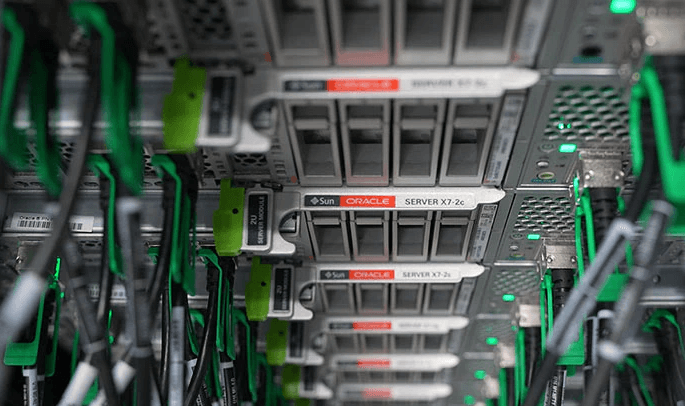
Intel said more than 230 systems based on its Xeon processor 5500 series are expected to be announced by more than 70 system manufacturers — including a new Intel customer, Cisco, along with Dell, Fujitsu, HP, IBM, Sun Microsystems and others.
http://www.intel.com/performance/server/xeon/summary.htm